What Is Crown Cleaning and Why Do Snohomish Trees Need It?
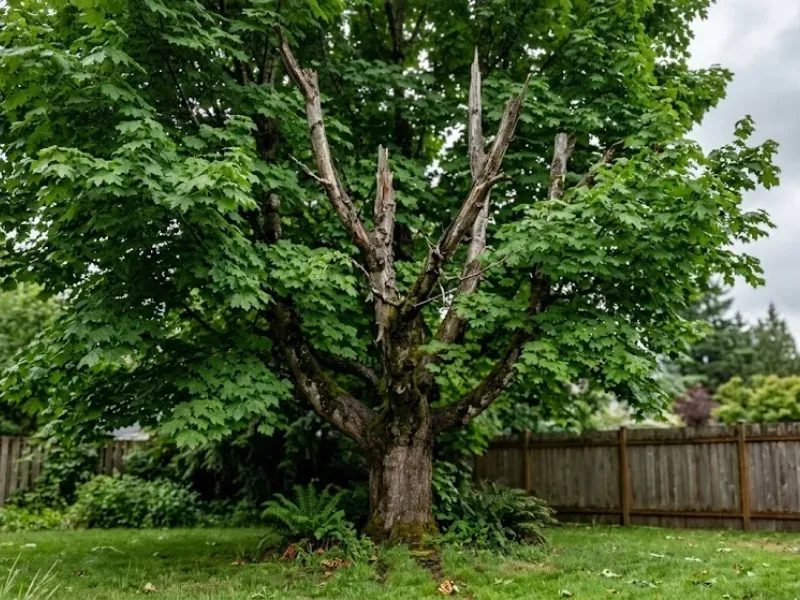
Crown cleaning is the targeted removal of dead, dying, diseased, broken, and crossing branches from a tree’s canopy. Unlike crown thinning, it makes no changes to living canopy structure — it removes only what is no longer functioning or causing damage. In Snohomish, WA’s moist climate, where deadwood accumulates faster than in drier regions, crown cleaning is the foundation of a sound tree maintenance program. Tree Ninjas performs crown cleaning throughout Snohomish County.
By Daniel Montgomery, Co-Founder, Tree Ninjas · Last updated July 2026
Key Takeaways
Crown cleaning removes dead, broken, and diseased branches; crown thinning selectively removes live interior branches.
Crown cleaning in Snohomish typically costs $150 to $700 per tree by size and deadwood load.
Removing dead branches before Snohomish’s storm season directly reduces falling limb risk during windstorms.
Crown cleaning can be done year-round; late winter and pre-storm season are the best windows.
Crown cleaning is the most fundamental tree maintenance service — and the one with the clearest return. Snohomish’s fast-growing tree canopy and year-round moisture create conditions where deadwood accumulates faster than in drier climates, and where unaddressed dead and broken branches are a consistent source of property damage and storm-related outages.
Crown cleaning removes:
Dead branches — branches with no living tissue remaining, from any cause
Dying branches — those in obvious decline with significant die-back or active disease
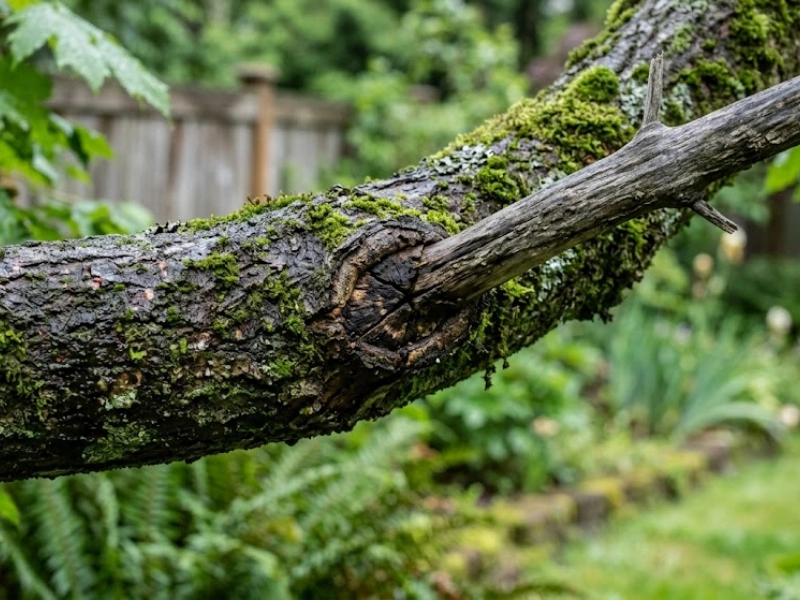
Diseased branches — cankers, bacterial infections, fungal lesions that have compromised the branch structure
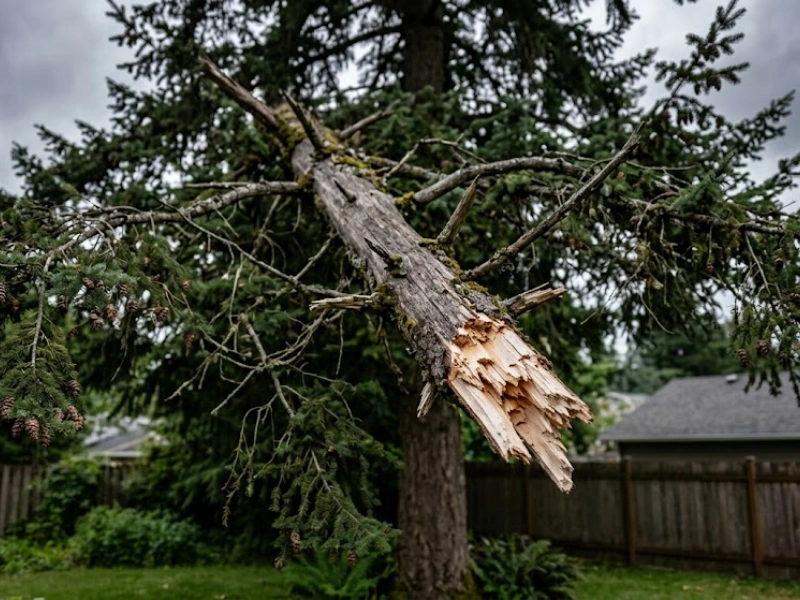
Broken branches — structurally failed branches held in the canopy by friction (“widow-makers”); can fall at any wind speed
Crossing and rubbing branches — where two branches contact each other, creating recurring wounds that invite decay
Crown cleaning does not reduce the size of the crown, does not change its shape, and does not remove any live interior branches that are structurally sound. It addresses what is already a problem, not what might become one.
How Much Does Crown Cleaning Cost in Snohomish?
Crown cleaning in Snohomish typically costs between $150 and $700 per tree, with most residential jobs falling between $200 and $500. It is generally less expensive than crown thinning or crown reduction because the work involves only dead and damaged material — less judgment required per cut, lighter wood, and usually less total material. Trees with significant neglected deadwood or multiple widow-makers run toward the higher end.
What affects the cost:
Tree size and height: accessing the upper crown of a 70-foot Douglas fir with dead top sections costs more than cleaning a 30-foot ornamental
Deadwood volume: a tree that has never been cleaned and has accumulated years of dead interior and scaffold material takes significantly longer than one on a regular maintenance cycle
Widow-maker complexity: hanging broken branches caught in the canopy require careful rigging to lower safely, particularly if positioned over structures
Species: red alder and big-leaf maple accumulate the most interior deadwood of common Snohomish trees; conifers develop their own pattern of lower-crown deadwood and broken top sections
For a free on-site estimate, see our tree pruning service page.
What Is the Difference Between Crown Cleaning and Crown Thinning?
Crown cleaning removes dead, damaged, diseased, and crossing branches — it addresses branches that are already failing or causing harm. Crown thinning removes healthy live branches to reduce canopy density and improve airflow. Crown cleaning addresses what is already wrong; crown thinning is a proactive investment in structure and health.
The practical distinction:
A tree may need crown cleaning without needing thinning: if its density is appropriate but deadwood has accumulated
A tree may need thinning without significant cleaning: if it is healthy but overly dense
Most thinning sessions begin with crown cleaning: the two often happen together; cleaning always precedes thinning in a combined session
Crown cleaning is more urgent: widow-makers and diseased branches can fail at any time, regardless of whether the canopy is too dense
Crown thinning is more planned: timing and frequency are based on canopy development, not reactive to existing damage
For a detailed comparison of crown thinning versus crown reduction, see our crown thinning guide for Snohomish.
Can Crown Cleaning Prevent Storm Damage to Trees in Snohomish?
Yes — directly and measurably. Dead branches are lighter, more brittle, and structurally detached from the living tree in ways that make them far more likely to fail in wind than living branches. Broken branches already held in place only by friction or by surrounding branches can fall at any wind speed. Crown cleaning removes both categories before they become a damage event.
Three specific ways crown cleaning reduces storm damage risk in Snohomish:
Removes widow-makers before storms. A hanging dead branch that has been in the canopy for two or three seasons is not waiting for a major windstorm — it is waiting for the next moderate rain or 20-mph gust. Crown cleaning identifies and removes these before Snohomish’s storm season puts them in motion.
Eliminates load from dead crown sections. Large dead branch sections add weight without structural contribution. In a windstorm, this creates mechanical stress on the scaffold branches that are still holding the dead material up. Removing it reduces the load the living tree carries through the storm.
Addresses crossing branch wounds. Branches that cross and rub develop recurring bark wounds that stay wet longer in Snohomish’s moist climate than in drier regions, inviting fungal entry. Over time, this weakens the attachment of the affected branches — exactly the failure mode that shows up in storm damage.
Snohomish County PUD reports that trees cause nearly half of all power outages in their service area annually. A meaningful portion of that damage comes not from whole trees falling but from individual dead and broken branches contacting distribution lines. Pre-storm crown cleaning is one of the most cost-effective risk reduction measures available to Snohomish homeowners.
Timing recommendation: schedule crown cleaning in September or October — after the dry summer season and before Snohomish’s main storm season begins in November. This window gives maximum protection for the highest-risk months.
How Often Does a Tree Need Crown Cleaning?
Crown cleaning frequency depends on how quickly a species accumulates deadwood, not a fixed calendar. The trigger is observable: visible dead branches in the canopy, broken hanging material, or branches showing disease symptoms warrant cleaning regardless of when the last work was done.
Practical frequency by species in Snohomish County:
Red alder: every one to two years; alders accumulate interior deadwood aggressively after middle age and the dead material can be significant within a single season
Big-leaf maple: every two to three years; Snohomish’s moisture produces frequent fungal die-back of interior scaffold sections; a mature maple that looks healthy from the street often has 15 to 25 percent of its interior branch material as deadwood
Ornamental cherries and plums: every one to three years; these species are prone to bacterial canker in PNW conditions; infected sections should be removed promptly
Douglas fir: every three to five years; lower-crown deadwood accumulates as the canopy closes; dead tops from fungal infection should be addressed as soon as identified
Western red cedar: every three to five years; similar pattern with additional attention to flagging sections that have died back
For trees that have gone five or more years without cleaning, the first session typically takes significantly longer than subsequent maintenance visits.
What Is the Best Time of Year for Crown Cleaning in Snohomish?
Crown cleaning can be performed any time of year — unlike pruning for form or structural development, removing dead and damaged material has no bad season. There is no biology concern for cut placement on dead branches and no disease risk from cuts on non-living material.
Three windows are particularly practical for Snohomish County:
Late winter (January to March): the best window for structural visibility on deciduous trees; bare branches make it straightforward to distinguish live from dead, and dead branch attachment quality is clearly visible without foliage obscuring the scaffold
Pre-storm season (September to October): the most protective timing; cleaning before November removes the deadwood load before the highest-risk storm months; particularly recommended for any tree with known widow-maker material
Midsummer (June to August): a practical alternative; dead branches contrast visibly against full green live foliage — brown, gray, or leafless sections stand out clearly — and dry weather means crews can access sites without soil damage concerns
For emergency situations — a partially broken branch caught in the canopy, a dead section identified after a storm — crown cleaning should not wait for an ideal season. These situations are time-sensitive.
Crown Cleaning Near Snohomish: Where We Work
Tree Ninjas provides crown cleaning and certified arborist tree care throughout Snohomish County. Our crews regularly serve Snohomish and surrounding neighborhoods, Lake Stevens, Monroe and the Highway 2 corridor, and Everett.
For the full service area, see our Washington locations page.
Get a Free Crown Cleaning Estimate in Snohomish
Deadwood load and widow-maker count need to be assessed on-site — both affect scope significantly. Tree Ninjas provides free crown cleaning estimates throughout Snohomish County.
Call or text: (206) 601-9390
Or request a quote at treeninjaspnw.com/contact-us.
Contact Tree Ninjas
Tree Ninjas
31524 NE Cherry Valley Rd
Duvall, WA 98019
Phone: (206) 601-9390
Hours: Available 24/7 for emergency service; office hours Monday through Friday, 8am to 5pm
Serving Snohomish, Lake Stevens, Monroe, Everett, Mukilteo, and surrounding Snohomish County and King County communities.
