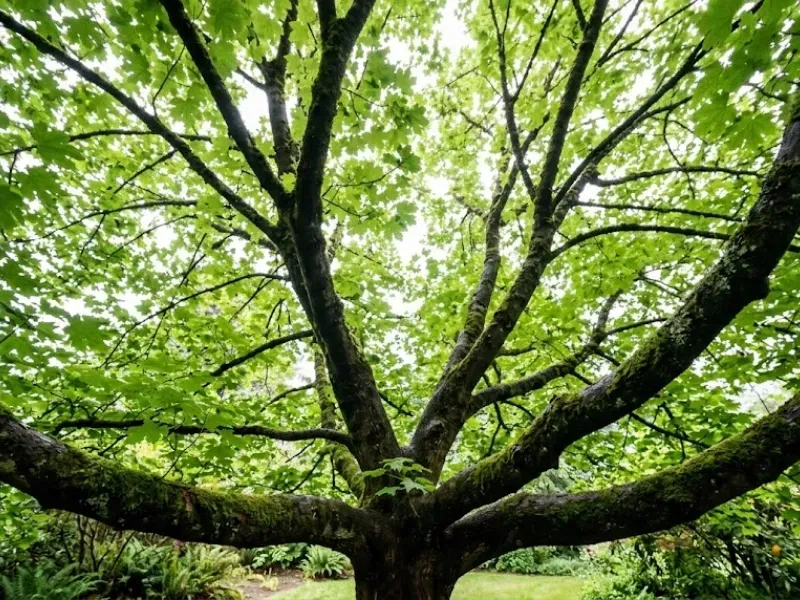
What Is Crown Thinning and When Should It Be Done in Snohomish, WA?
Crown thinning is the selective removal of interior live branches to reduce canopy density, improve airflow, and increase light penetration — without changing the tree’s overall size or shape. In Snohomish, WA, where moist Pacific conditions promote foliar disease in dense canopies, crown thinning is one of the most beneficial services for long-term tree health. Tree Ninjas perform crown thinning throughout Snohomish County.
By Daniel Montgomery, Co-Founder, Tree Ninjas · Last updated July 2026
Key Takeaways
Crown thinning reduces density without changing size; crown reduction shrinks the overall canopy footprint.
Crown thinning in Snohomish costs $250 to $800 per tree depending on size and canopy.
In Snohomish’s moist climate, regular crown thinning directly reduces fungal disease pressure in the canopy.
Most Snohomish trees benefit from crown thinning every three to five years depending on species.
Of all the tree services homeowners in Snohomish ask about, crown thinning is the one most often confused with other work — sometimes used interchangeably with crown reduction, sometimes confused with trimming for height. It is a distinct practice with a specific goal, and in Snohomish’s climate it has measurable benefits that go beyond aesthetics.
How Much Does Crown Thinning Cost in Snohomish?
Crown thinning in Snohomish typically costs between $250 and $800 per tree for most residential specimens. The work involves smaller branch removal with less material generated than crown reduction or full removal, which generally makes it less expensive — but the cost varies by tree size and how much of the interior canopy needs to be addressed.
What affects crown thinning cost:
Tree size: a 30-foot ornamental takes two to three hours; a 70-foot big-leaf maple with dense horizontal scaffolds and heavy moss accumulation can take a full day
Canopy density: a tree that has never been thinned and has accumulated years of interior crossing branches takes significantly longer than one on a regular maintenance cycle
Species: big-leaf maple and red alder develop the densest interior canopies in Snohomish County and typically represent the longer end of the cost range; Douglas fir and Western red cedar require a different approach
Access: aerial equipment is usually not required for crown thinning, which reduces setup cost compared to crown reduction or removal
For a free on-site estimate, see our tree pruning service page.
What Is the Difference Between Crown Thinning and Crown Reduction?
Crown thinning and crown reduction both involve removing live branches, but they address different problems and produce different results.
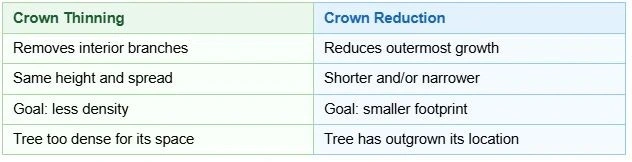
Thinning: targets interior, crossing, rubbing, and competing branches; same height and spread; the tree looks like the same tree with the same silhouette, but lighter inside and better ventilated
Reduction: targets outermost growth; makes cuts back to lateral branches; different height and spread; the tree is physically smaller
Tree too dense, right size: needs thinning, not reduction
Tree too large, right density: needs reduction, not just thinning
Both too large and too dense: may benefit from both in the same session
For a full explanation of crown reduction including species candidates and cut technique, see our crown reduction guide.
When Is the Best Time of Year for Crown Thinning in Snohomish?
Late winter — late January through early March — is the preferred window for most crown thinning in Snohomish. The dormant season makes scaffold structure fully visible, wounds compartmentalize quickly with spring bud break, and pathogen activity is at its annual low. But crown thinning is also one of the services where midsummer assessment has a genuine advantage: with full foliage present, actual live canopy density can be directly evaluated rather than inferred from the bare scaffold.
Timing guide for crown thinning in Snohomish:
Late winter (January to March): best for structural decisions — which interior branches are competing, which scaffolds are rubbing; the skeleton is visible and wounds heal quickly as spring begins
Midsummer (June to August): appropriate and often productive for thinning; actual live canopy density is visible; this is also the required window for stone fruits where late-winter wounds risk bacterial canker infection in the Pacific Northwest’s wet springs
Fall (September to November): the worst window in Snohomish; wound compartmentalization is slow as trees enter dormancy, and the long wet season means exposed cuts remain vulnerable through months of high moisture and fungal pressure
Practical note: the dry July-to-early-August window in Snohomish is the midsummer sweet spot — after most fungal disease spore seasons have passed and before fall moisture returns.
For a full seasonal pruning guide, see our Pacific Northwest timing post.
How Often Should Crown Thinning Be Done?
Most established trees in Snohomish benefit from crown thinning every three to five years. Fast-growing species, younger trees, and trees in high-disease-pressure environments typically need attention every two to three years. A tree that has never been thinned may need more work in the first session and a shorter follow-up interval to catch up.
Frequency guide by species and condition in Snohomish County:
Big-leaf maple: every two to three years; fast growth and heavy moss accumulation rebuild canopy density quickly
Red alder: every two to three years; rapid interior deadwood accumulation alongside dense live growth
Ornamental cherries, plums, flowering ornamentals: every two to three years; prolific interior watersprout growth
Douglas fir and Western red cedar: less frequent; crown thinning on conifers is more limited in scope than on deciduous trees
Established hardwoods on a maintenance cycle: every three to five years maintains benefits without over-stimulating regrowth
The easiest prompt to know it’s time: if significant shade is building under the tree, if the canopy feels heavy in wind, or if foliar disease has increased in recent seasons, a thinning assessment is warranted regardless of the last service date.
Does Crown Thinning Hurt Trees in Snohomish?
Crown thinning done correctly does not hurt trees — and in Snohomish’s climate, it actively supports tree health. The branches removed are interior, crossing, rubbing, or competing: structurally non-essential branches that are already receiving reduced light. What matters is following the ANSI A300 guideline of removing no more than 25 percent of the live crown in a single visit.
Where crown thinning goes wrong:
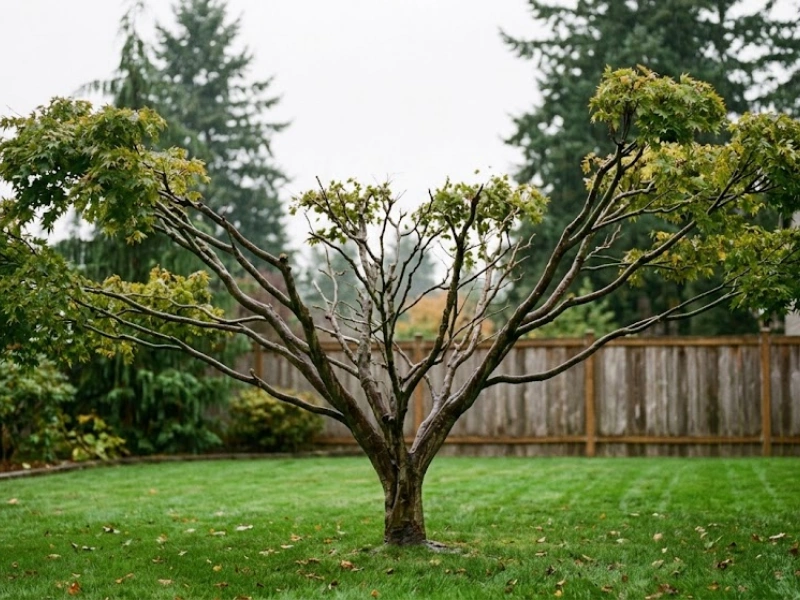
Lion’s-tailing: stripping all interior branches from a scaffold so foliage exists only at the tips. This creates a heavy sail effect at branch ends and dramatically increases limb failure risk in Snohomish’s winter windstorms. It is not proper arborist practice. Any crew proposing to leave only tip foliage on your branches is proposing lion’s-tailing, not crown thinning.
Over-thinning: removing more than 25 percent of the live crown stimulates excessive watersprout regrowth. This regrowth fills the canopy back within one to two seasons, often more densely packed than before.
Why crown thinning is especially beneficial in Snohomish’s climate:
Snohomish’s high annual rainfall and mild temperatures create ideal conditions for foliar fungal diseases — powdery mildew, leafspot, and anthracnose — that thrive in humid, still canopy environments. Crown thinning directly reduces this disease pressure by improving airflow throughout the canopy. The same moisture that makes Snohomish a productive growing environment makes dense, unthinned canopies significantly more disease-prone than equivalent trees in drier climates.
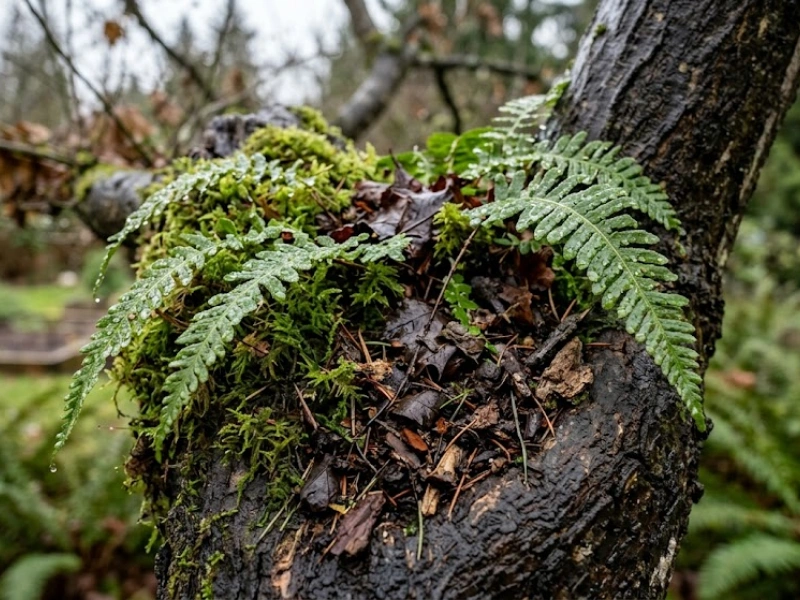
For big-leaf maples in Snohomish specifically: these trees accumulate substantial loads of licorice fern, moss, and organic matter in their branch crotches and on horizontal scaffolds. This material adds significant weight and retains moisture in the crown year-round. Crown thinning reduces both the foliage density and the substrate that supports this epiphyte accumulation. A mature big-leaf maple that has been regularly thinned in Snohomish looks and performs noticeably differently from one that has been left unmanaged.
Crown Thinning Near Snohomish: Where We Work
Tree Ninjas provides certified arborist crown thinning throughout Snohomish County and surrounding communities. Our crews regularly serve Snohomish and surrounding neighborhoods, Lake Stevens, Monroe and the Highway 2 corridor, and Everett.
For the full service area, see our Washington locations page.
Get a Free Crown Thinning Estimate in Snohomish
Crown thinning scope depends on the specific tree — species, size, interior density, and any disease pressure visible on-site. Tree Ninjas provides free on-site estimates for crown thinning throughout Snohomish County.
Call or text: (206) 601-9390
Or request a quote at treeninjaspnw.com/contact-us.
Contact Tree Ninjas
Tree Ninjas
31524 NE Cherry Valley Rd
Duvall, WA 98019
Phone: (206) 601-9390
Hours: Available 24/7 for emergency service; office hours Monday through Friday, 8am to 5pm
Serving Snohomish, Lake Stevens, Monroe, Everett, Mukilteo, and surrounding Snohomish County and King County communities.
