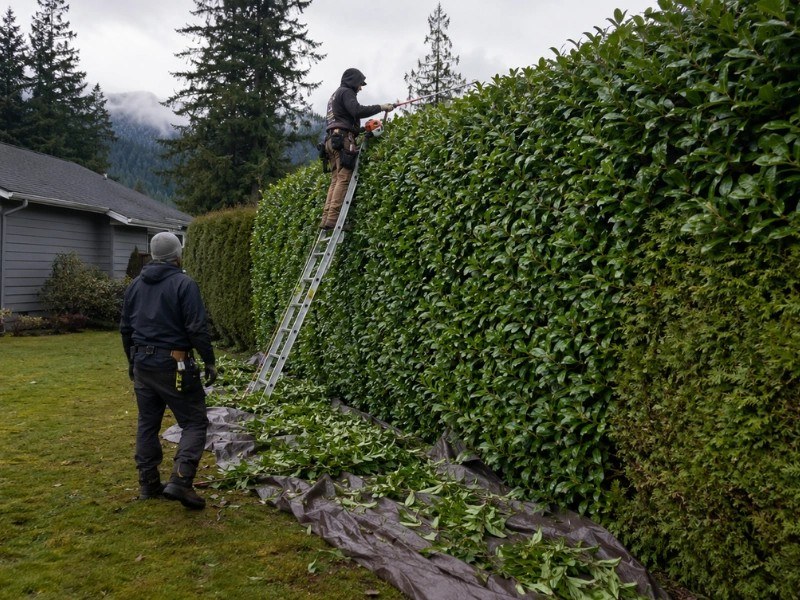
How Much Does Hedge Trimming Cost in Monroe, WA?
Hedge trimming in Monroe, WA typically costs $150 to $600 per visit for most residential hedges, with tall or overgrown hedges and first-time restoration work running higher. Cost depends on hedge height, linear footage, species, and how long since the last trim. Tree Ninjas trims hedges throughout Monroe and Snohomish County.
By Daniel Montgomery, Co-Founder, Tree Ninjas · Last updated August 2026
Key Takeaways
Hedge trimming in Monroe runs $150 to $600 per visit depending on height and species.
English laurel in Monroe’s Skykomish climate needs trimming two to three times per year.
Trim arborvitae once per year in late summer; cutting into bare wood leaves permanent gaps.
Tree Ninjas chips clippings on-site or hauls them off depending on volume and site access.
Hedges in Monroe’s Skykomish River valley grow faster than in almost any other part of Washington State. The combination of Cascade orographic lift, mild winters, and alluvial soils produces the same accelerated growth that affects trees here. Monroe also has a landscape character unlike most Puget Sound communities: a mix of formal residential privacy screens in newer subdivisions, ornamental hedges in established neighborhoods, and agricultural hedgerows from the city’s farming heritage. Each type has different maintenance needs and seasonal timing.
Hedge trimming cost breakdown for Monroe, WA:
Standard maintenance trim, hedge under 6 feet (50 to 100 linear feet): $150 to $400 per visit
Tall hedge trimming, 6 to 12 feet (50 to 100 linear feet): $200 to $600
Very tall hedge, 12 feet and over: $400 to $1,200 or more; aerial work platforms or extension equipment required
Restoration trim (hedge not maintained for two or more years): $500 to $2,000 depending on species, height, and achievable reduction
Agricultural hedgerow and mixed-species boundary trimming: priced per visit based on linear footage and species complexity
How Often Should Hedges Be Trimmed?
Frequency in Monroe’s Skykomish Valley climate is almost always higher than national guidance suggests — Cascade orographic precipitation produces growth rates at the upper range for every common hedge species.
Frequency by species for Monroe, WA:
English laurel (Prunus laurocerasus): two to three times per year; needs trimming after the spring flush (late May to June), again in late summer (August to September), and sometimes a cleanup trim in late winter before the next flush
Arborvitae (Thuja species): once per year in late summer (August to early September); the timing constraint is firm — see the timing section below
Photinia: two times per year, following each new growth flush; trimming stimulates the attractive red new growth
Leyland cypress / Leylandii: once or twice per year in July to August; does not regenerate from bare wood — poor timing causes permanent brown patches
Privet: two to three times per year for a formal look; once per year for informal maintenance
Hawthorn, lilac, forsythia (agricultural hedgerows): once per year immediately after flowering; trimming before flowering removes the seasonal bloom
The Skykomish growth-rate factor: a laurel hedge in Monroe trimmed twice per year will be significantly more manageable than the same hedge trimmed once. Once a laurel hedge has accumulated two or more seasons of untrimmed growth, the restoration job is substantially more work than the annual maintenance cost would have been.
For full species depth, the arborvitae bare-wood rule, and boxwood blight guidance, see our hedge trimming guide for Snohomish.
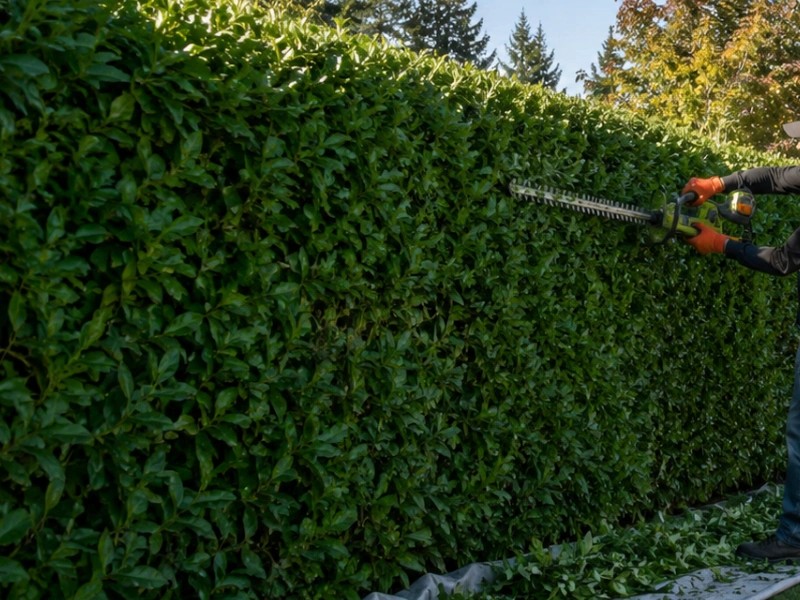
When Is the Best Time of Year to Trim Hedges?
Monroe’s wet Skykomish Valley climate makes timing more consequential than in drier Pacific Northwest communities. Open cuts during sustained wet conditions face longer pathogen exposure, reinforcing the two best trimming windows available here.
Best timing by hedge type:
English laurel: two windows — late May to June (after the spring flush, when new growth has just begun to harden) and August to September (before fall rains return)
Arborvitae: August to early September only — this is the single most important timing rule for arborvitae owners; this window prevents bare wood exposure problems and avoids late-season regrowth stimulation
Photinia: immediately after each new growth flush
Leyland cypress: July to August
Hawthorn, lilac, forsythia: immediately after spring flowering
What to avoid: trimming laurel, arborvitae, or most ornamental hedges in October and November; Monroe’s wet fall conditions maximize wound-pathogen pressure
The pre-storm benefit: arborvitae trimmed in late August before Monroe’s Cascade gap wind season (November through March) holds their shape through winter. Arborvitae trimmed in fall carry the stress of winter immediately after cutting.
Do You Shape and Maintain Formal Hedges?
Yes — formal hedge shaping is part of Tree Ninjas’ regular work in Monroe, where newer residential subdivisions along the Highway 2 corridor include arborvitae privacy screens and boxwood accent hedges that benefit from consistent, precisely maintained shaping.
What formal hedge shaping involves:
Top leveling: maintaining a flat, consistent top line at a specified height using a string line for precision over longer runs
Side shaping: trimming with a slight inward taper (wider at base than at top) that allows light to reach lower portions; perfectly vertical sides cause gradual base sparseness over several seasons
Consistent scheduling: a formal hedge maintained on the same schedule each season holds its form better; each trip takes less time and produces cleaner results when the hedge hasn’t overgrown between visits
Agricultural hedgerows and informal boundary screens: Monroe’s farming heritage left informal mixed-species hedgerows along field edges and property boundaries — typically hawthorn (Crataegus), lilac, forsythia, spiraea, and sometimes English laurel interplanted with native species. These are managed informally: the goal is controlling size and encouraging seasonal flowering, not geometric precision.
Do You Haul Away Hedge Clippings and Debris?
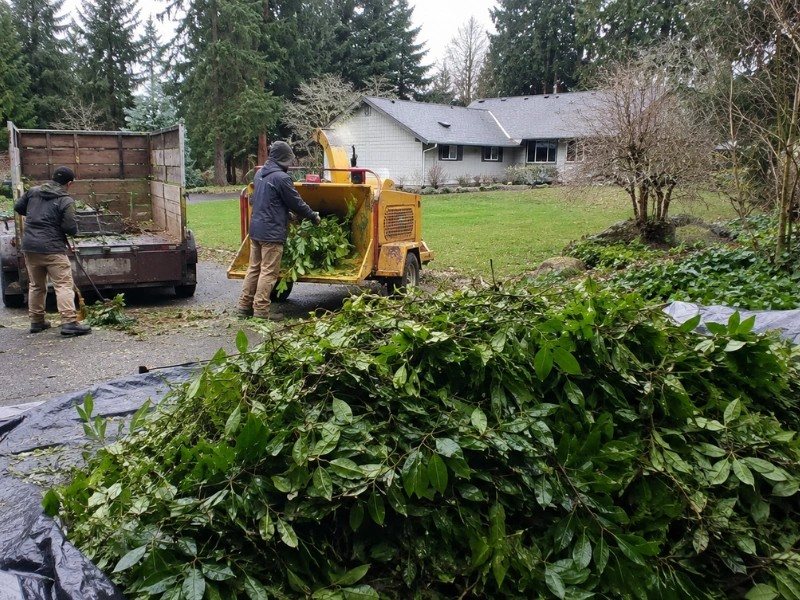
Yes. Clippings are handled on a project basis depending on volume, species, and site access.
English laurel clippings are the most voluminous of any common Monroe hedge plant. A single maintenance trim of a 100-foot laurel hedge at ten feet tall can produce several truck-bed volumes of debris. Standard maintenance trims are typically chipped on-site and spread elsewhere on the property. Restoration trims of heavily overgrown laurel usually require hauling because the volume exceeds on-site chipping capacity.
Arborvitae and conifer hedge clippings are less bulky. Annual maintenance trims produce a manageable volume that is usually chipped on-site or bagged for green waste.
Three disposal options:
Chipped on-site and spread as mulch: included in standard trimming; cost-effective and good for garden beds or woodland edges
Chipped on-site and piled: for the property owner to use or dispose of
Hauled off-site: add-on appropriate for restoration trims or properties without space for mulch spreading
For Monroe’s rural and agricultural properties with more available space, on-site chipping and spreading is the most practical and cost-effective option for most jobs.
Hedge Trimming in Monroe: What’s Different Here
The Skykomish Valley growth rate. Monroe’s combination of Cascade precipitation and alluvial soils produces hedge growth that outpaces most Pacific Northwest averages. English laurel planted as a modest three-foot screening hedge can become a ten-foot barrier within three to four years without consistent trimming. This is faster than most homeowners expect and is the most common reason Monroe hedge trimming jobs become restoration projects rather than maintenance visits.
Agricultural hedgerows. Monroe’s farming heritage created informal mixed-species hedgerows along field edges and property boundaries — hawthorn, lilac, forsythia, and spiraea that have been in place for decades. These require different trimming technique and timing than formal residential hedges; the goal is controlling size and maintaining the seasonal flowering and form that makes them valuable, not clipping them to a geometric panel.
Newer residential privacy screens. Monroe’s newer subdivisions along the Highway 2 corridor include many residential lots with arborvitae or Leyland cypress privacy screens established when the homes were built. These screens are now maturing and in many cases need their first significant maintenance trim — a job that involves assessing green-zone depth, establishing the long-term intended height, and setting a maintenance schedule that keeps the hedge manageable from this point forward.
Hedge Trimming Near Monroe: Where We Work
Tree Ninjas provides hedge trimming throughout Monroe and the Skykomish Valley. Our crews regularly serve Monroe and surrounding communities, Snohomish, Duvall and the upper Snoqualmie Valley, and Sultan.
For the full service area, see our Washington locations page.
Tree Ninjas provides free on-site estimates for hedge trimming throughout Monroe and Snohomish County.
Phone: (206) 601-9390 | treeninjaspnw.com/contact-us
Contact Tree Ninjas
Tree Ninjas
31524 NE Cherry Valley Rd
Duvall, WA 98019
Phone: (206) 601-9390
Hours: Available 24/7 for emergency service; office hours Monday through Friday, 8am to 5pm
Serving Monroe, Sultan, Snohomish, Duvall, and surrounding Snohomish County and King County communities.
