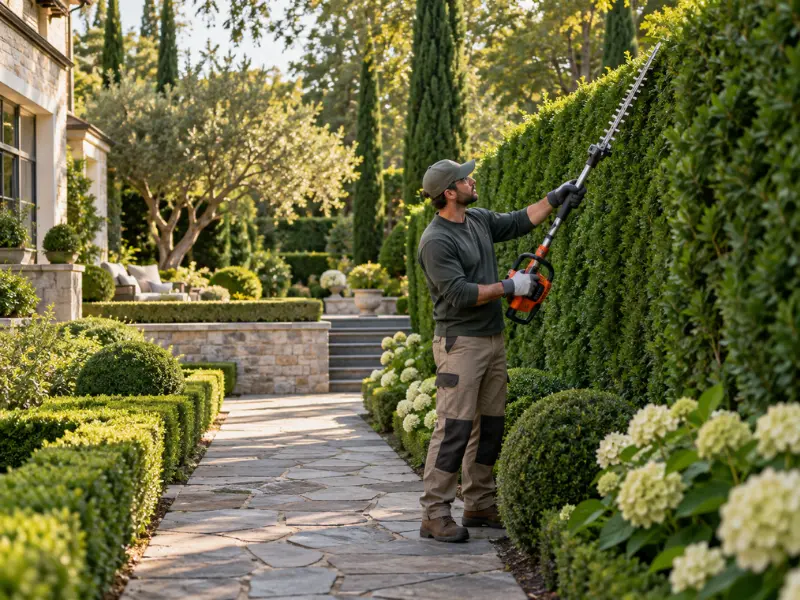
Who Does Hedge Trimming Near Me in Kirkland?
Whoever it is, they need to know two species and one City policy. Laurel and arborvitae make up most of the hedges we trim in Kirkland, and they don't forgive the same mistakes — one grows back from a hard cut, the other usually doesn't. Tree Ninjas handles both, and we check the second thing, the City's sight-triangle rule, before we touch a corner-lot hedge.
By Daniel Montgomery, Co-Founder, Tree Ninjas · Last updated September 25, 2026
Why Laurel and Arborvitae Hedge Trimming Kirkland Needs Different Rules for Each
Same job title, different plants, different risk if you get it wrong.
Laurel (usually English or Portuguese laurel in Kirkland yards) is forgiving. It's a broadleaf evergreen that buds back readily from old wood, so a hard renovation cut — taking a badly overgrown hedge back hard in one go — will look rough for a season but recover. Laurel's real risk isn't the cut, it's timing: shearing it in humid, wet weather opens fresh cuts to shot hole fungus, which shows up as small round holes and blackened spots on the leaves later in the season.
Arborvitae is the opposite. It's a conifer, and conifers carry their live growth in a thin green shell around a woody, light-starved interior. Cut back into that bare interior and there are no dormant buds waiting to resprout — that section stays bare, permanently. Every arborvitae hedge reduction has to stop inside the green, which is exactly why a badly overgrown arborvitae hedge often can't be brought back to a smaller size in one visit.
Boxwood shows up often too, especially on older Kirkland properties near Houghton and Market Street, and it splits the difference between the other two. It tolerates a fairly hard shearing better than arborvitae, but it's slow-growing enough that a heavy-handed cut can leave a hedge looking thin for a full year rather than filling back in by the next season the way laurel does. Boxwood also carries its own disease pressure worth watching for in this climate — boxwood blight and leaf miner both spread faster through wet foliage, so we avoid shearing it right after rain and clean tools between properties to keep from carrying spores from one yard to the next.
Anyone comparing laurel and arborvitae hedge trimming Kirkland companies offer should ask which rule applies to their specific hedge before agreeing to a height reduction — the answer changes the whole plan.
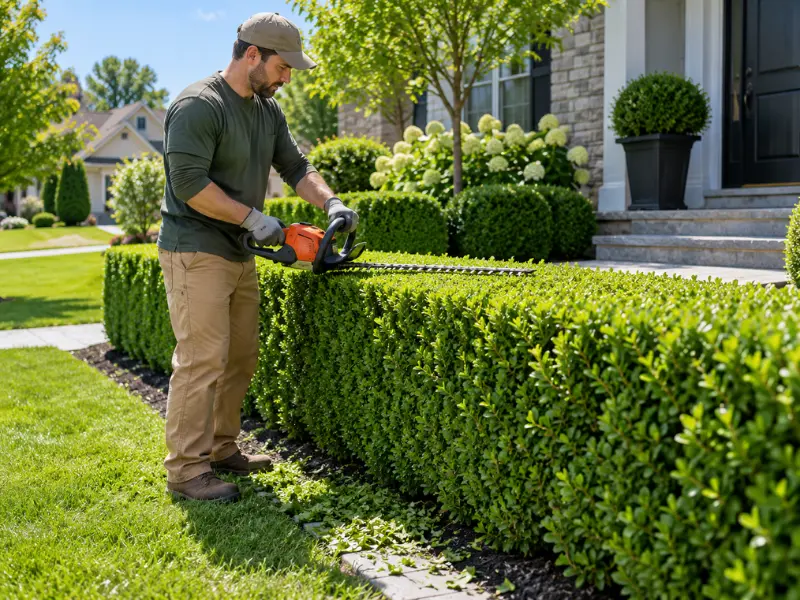
What Does Kirkland's Sight-Triangle Rule Mean for Hedge Shaping and Height Reduction?
This is the part that's specific to Kirkland, and it only applies if your hedge sits near a corner, intersection, or driveway.
The City's Policy R-13: Intersection Sight Distance requires that vegetation stay clear of the sight distance triangle at intersections and driveways — specifically, nothing is permitted between three and eight feet above finished grade within that triangle unless the Public Works Director approves an exception. The triangle itself is measured out from the intersection or driveway (roughly 10 to 14.5 feet back, extending further along the road depending on the speed limit and type of intersection), and it applies to existing hedges being investigated after a sight-distance complaint, not just new construction.
In practice, that means hedge shaping and height reduction Kirkland corner-lot properties need isn't optional trimming — it's compliance. A laurel or arborvitae hedge that's crept up past eight feet at a driveway apron or street corner can be cited if it's blocking a driver's or pedestrian's line of sight. We check whether a hedge sits inside that triangle before we quote the job, because the target height on a corner lot isn't "however tall you'd like" — it's "clear between three and eight feet."
Enforcement here is complaint-driven rather than something the City patrols for on its own. Policy R-13's guidelines exist for reviewing new development plans and for investigating an intersection or driveway once someone reports a sight-distance problem, not for routine inspection of established hedges. That means a hedge can sit past the eight-foot line for years without incident — right up until a neighbor calls it in, or a near-miss at the corner prompts someone to look. Getting ahead of it with a scheduled trim is cheaper and far less disruptive than reacting to a City notice after the fact.
There's a real tension behind all of this: most Kirkland homeowners plant a laurel or arborvitae hedge specifically for privacy and street noise, and the tallest, densest version of that hedge is exactly what a sight-triangle problem looks like from the City's side. The fix usually isn't tearing the hedge out — it's keeping the section nearest the corner or driveway lower while letting the rest of the run grow to full privacy height, which most laurel and arborvitae hedges tolerate fine as an uneven profile along their length.
Who Trims Laurel and Arborvitae Hedges in Kirkland?
Two things worth checking before you book anyone: do they know the difference between a laurel cut and an arborvitae cut, and are they actually registered to do the work.
Washington contractor registration is administrative, not a skills test, so "licensed" alone doesn't tell you much. Run the name through L&I's Verify a Contractor tool and confirm the registration is active and the bond and liability coverage are current before anyone starts cutting.
Which company near me offers recurring hedge maintenance is often the more useful question than who's cheapest for a one-time trim, since a hedge kept on schedule rarely needs the kind of hard renovation cut that risks an arborvitae's interior. Tree Ninjas is WA licensed (TREENNL752Q1), locally owned, and one of the names homeowners searching for the best hedge trimming service near Kirkland already know — our certified arborists have handled laurel, arborvitae, boxwood, and cedar hedges across the Eastside for years.
Show Image
We serve Kirkland, Redmond, Bellevue, Sammamish, Issaquah, Duvall, and the wider Eastside. See our hedge trimming page, the full area list on our locations page, and finished work in our portfolio. Estimates are free.
Frequently Asked Questions
1. How much does hedge trimming cost in Kirkland?
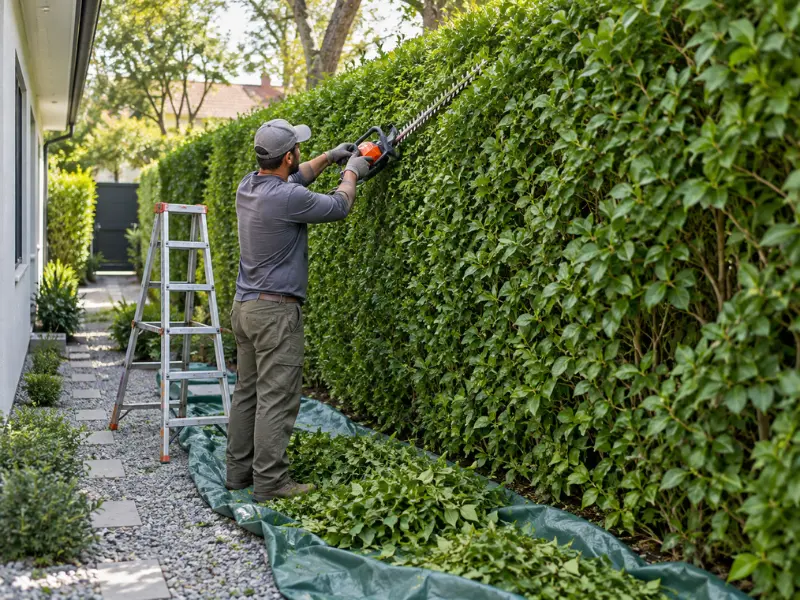
Length and height of the hedge drive it first, then species — arborvitae and other conifers generally take longer to cut carefully than laurel, since overcutting can't be undone the way it can on laurel. Access, how much debris there is to haul, and whether it's a one-time renovation cut versus a maintenance trim also move the price. We quote from a walk of the hedge rather than a phone estimate, and the quote is free either way.
2. How often should hedges be trimmed to stay tidy?
It depends on the species more than people expect. Laurel is a fast grower and typically needs two to three trims a year in Kirkland's climate to stay tidy. Arborvitae grows slower and usually holds its shape with one, sometimes two, trims a year. A hedge trimmed on that schedule almost never needs the kind of hard reduction cut that's risky on a conifer.
3. When is the best time of year to trim a hedge?
For laurel, late spring through summer, once the new flush of growth has hardened off — cutting into soft new growth in wet weather is when shot hole fungus takes hold. For arborvitae, late spring to early summer works best, and we avoid trimming late in the season, since new growth stimulated in fall doesn't harden before frost and can brown out over winter. Both species do better trimmed in a dry stretch than a wet one.
4. Can you reduce the height of an overgrown hedge without killing it?
For laurel, usually yes, even from significantly overgrown — it buds back from old wood, so a hard cut looks rough for a season and fills back in. For arborvitae, only down to where green growth still exists on the plant; cutting into the bare woody interior leaves a permanent hole, since conifers don't resprout from old wood. A badly overgrown arborvitae hedge sometimes has to come down gradually over a couple of seasons, or get replaced, rather than reduced in one visit.
5. Do you offer recurring seasonal hedge maintenance?
Yes. Most Kirkland clients land on two visits a year for mixed laurel and arborvitae hedges, timed to each species' growth pattern rather than a single fixed schedule. Recurring maintenance also keeps a corner-lot hedge inside the City's sight-triangle clearance without a surprise renovation cut down the road.
Contact Tree Ninjas
Tree Ninjas 31524 NE Cherry Valley Rd, Duvall, WA 98019 Phone: (206) 736-3757 Hours: Monday–Friday, 8:00 AM – 5:00 PM Locally owned, licensed, bonded and insured (WA Licensed · TREENNL752Q1), serving Kirkland, Redmond, Bellevue, Sammamish, Issaquah, Duvall, and the wider Eastside.
Not sure if your hedge is inside the sight triangle? Request a free estimate or call (206) 736-3757, and we'll check before we quote.
