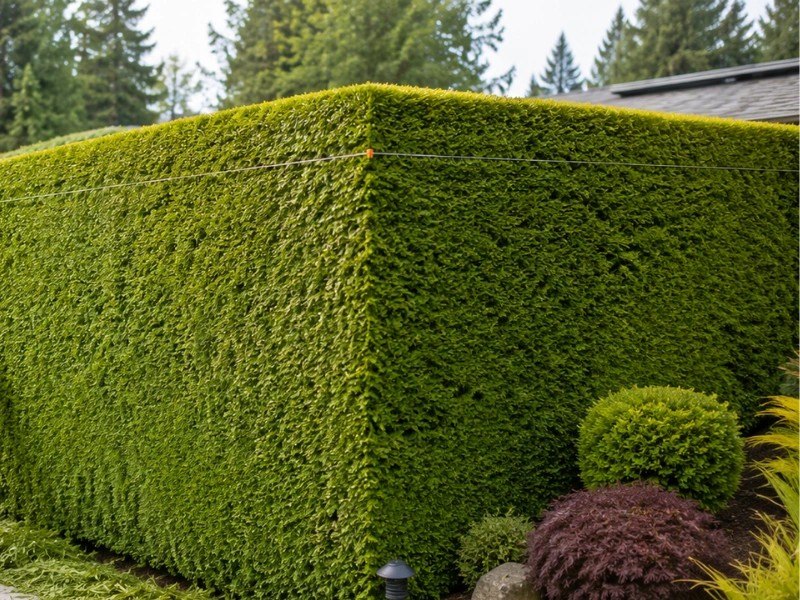
How Much Does Hedge Trimming Cost in Snohomish, WA?
Hedge trimming in Snohomish, WA typically costs $150 to $600 per visit for most residential hedges, with tall laurel and arborvitae hedges and first-time restorations running higher. Cost depends on hedge height, linear footage, species, and how long since the last trim. Tree Ninjas trims hedges throughout Snohomish and Snohomish County.
By Daniel Montgomery, Co-Founder, Tree Ninjas · Last updated August 2026
Key Takeaways
Hedge trimming in Snohomish runs $150 to $600 per visit depending on height and species.
English laurel needs trimming two to three times per year in Snohomish’s moist climate.
Arborvitae needs a once-yearly late-summer trim; bare wood cuts leave permanent brown gaps.
Tree Ninjas chips clippings on-site or hauls them off depending on volume and site access.
Hedges in western Washington grow faster than in almost any other region of the country. English laurel can put on two to four feet in a single season in Snohomish County’s mild, moist climate — which means a hedge that looks neat in June can look unruly by August and overgrown by October. Understanding what your specific hedge species requires, and what happens when maintenance has been deferred, is the starting point for any hedge work.
Hedge trimming cost breakdown for Snohomish, WA:
Standard maintenance trim, hedge under 6 feet (50 to 100 linear feet): $150 to $400 per visit
Tall hedge trimming, 6 to 12 feet (50 to 100 linear feet): $200 to $600
Very tall hedge, 12 feet and over: $400 to $1,200 or more for 50 to 100 linear feet; aerial work platforms typically required
Restoration trim (hedge not trimmed in two or more years): $500 to $2,000 depending on height, species, and achievable reduction
How Often Should PNW Hedges Be Trimmed?
Frequency depends almost entirely on species. The Pacific Northwest’s mild winters and high rainfall push hedge growth rates to the upper limit of what’s normal for each species — which means national guidance on trimming frequency usually underestimates what Snohomish County hedges actually need.
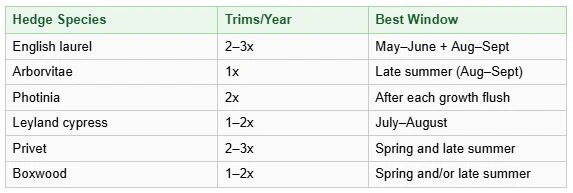
English laurel (Prunus laurocerasus): two to three times per year; in Snohomish’s climate, a maintained laurel hedge needs a trim after the spring growth flush (late May to June), a second trim in late summer (August to September), and sometimes a light cleanup in winter; a laurel hedge trimmed only once per year will look overgrown for most of the season
Arborvitae (Thuja species): once per year, ideally late summer (August to early September); far more forgiving than laurel about skipping a season — the more pressing constraint is timing, not frequency
Photinia (Red tip photinia): two times per year; the incentive for trimming is the attractive red new growth that follows each cut
Leyland cypress / Leylandii: once or twice per year in July to August; does not regenerate from bare wood — aggressive or poorly timed trimming causes permanent brown patches
Privet (Ligustrum): two to three times per year for a formal maintained look
Boxwood (Buxus): one to two times per year; in Snohomish’s wet climate, boxwood blight is a growing concern; trimming tools must be cleaned between properties
General rule for Snohomish County hedges: if you’re trimming less than twice per year for any fast-growing species, the hedge will accumulate growth faster than it’s being removed, and each subsequent trim becomes a larger job.
Can You Trim Tall Laurel and Arborvitae?
Yes — tall hedge trimming is one of the more common requests in Snohomish, where deferred maintenance on English laurel and arborvitae hedges can result in screens that have grown to 15 feet, 20 feet, or more.
Tall English laurel: English laurel is remarkably tolerant of hard cutting compared to most hedge plants. A laurel hedge that has grown to 20 feet can typically be cut back significantly because laurel readily regenerates from old wood. The practical constraints:
Very drastic reductions (cutting more than half the height) are typically phased over two seasons to reduce stress and maintain screening function during recovery
After a heavy reduction cut, a laurel hedge will look raw for one to two growing seasons before filling back in
Tall arborvitae and Leyland cypress — the bare wood rule:
Unlike laurel, arborvitae and leylandii do not regenerate from bare, browned wood. Once you cut past the green foliage zone into the interior of the plant, that area will remain brown permanently.
You can reduce the height by cutting the top, since the top typically still has green growth
You cannot significantly reduce the width once the hedge has grown dense and the interior is bare wood
A very wide arborvitae hedge cannot be significantly narrowed without leaving permanent brown patches
Tall arborvitae that have leaned or lost their shape due to snow or wind are often candidates for removal rather than restoration
Before committing to a tall arborvitae restoration, Tree Ninjas assesses the current green-zone depth to determine what reductions are possible without permanent damage.
Do You Shape Privacy Hedges?
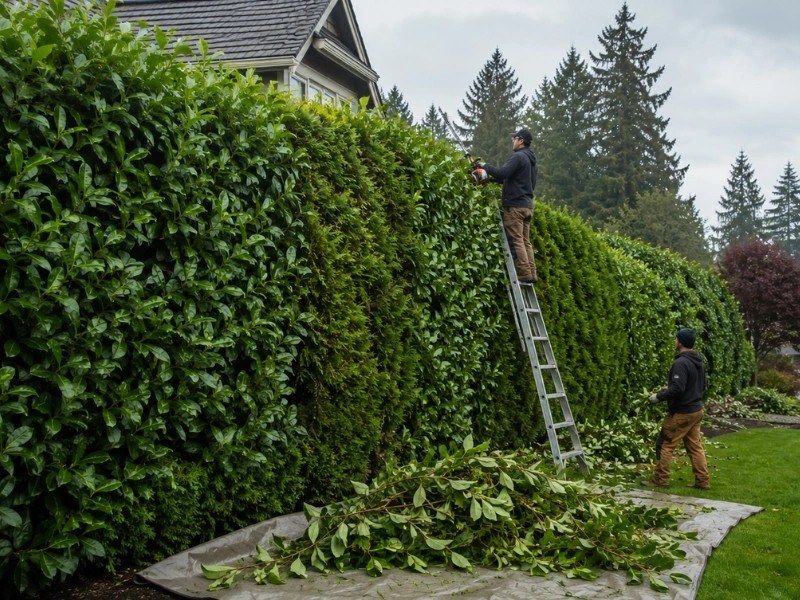
Yes. Privacy hedge shaping is different from utility trimming — the goal is a clean, defined form maintained consistently over time, and the technique used affects both how the hedge looks and how it responds to repeated trimming.
What hedge shaping involves:
Top leveling: maintaining a flat, consistent top line at a specified height; requires a string line or laser level for precision over longer runs
Side shaping: trimming sides with a slight inward taper — wider at the base than at the top — that allows light to reach lower portions and prevents the base from becoming sparse
Corner and angle work: hedges that turn corners or form enclosures require consistent technique at each transition to avoid step-down effects
A privacy hedge shaped consistently on the same schedule each season holds its form better and requires less corrective work per visit. Hedges trimmed at variable intervals or by different crews develop uneven walls and inconsistent height lines that accumulate over time.
Do You Haul Away the Clippings?
Yes. Hedge clipping disposal is handled on a project-by-project basis depending on volume, site access, and the specific hedge species.
English laurel clippings volume: laurel is the most voluminous hedge plant to trim in Snohomish County. A single trim of a 100-foot laurel hedge at 10 feet tall can produce several dump-truck-bed volumes of clippings if the hedge was significantly overgrown. For most standard maintenance trims, laurel clippings can be chipped on-site or hauled to a yard waste facility. For first-time restorations or heavy reductions, hauling off-site is typically necessary because the volume is too large for on-site chipping to manage efficiently in a single visit.
Arborvitae and other conifer hedge clippings: arborvitae clippings are less bulky than laurel. Standard annual maintenance trims produce a manageable volume that is usually chipped on-site or bagged for green waste pickup. Larger volumes from infrequent trims are hauled off-site.
What to do with laurel clippings yourself: English laurel clippings can go in most municipal green waste bins in Snohomish County. Laurel should not be left as a mulch pile in areas where horses, goats, or other livestock have access; fresh laurel leaves contain compounds that can be harmful to some animals in large quantities.
Snohomish Hedge Trimming: Timing and Local Notes
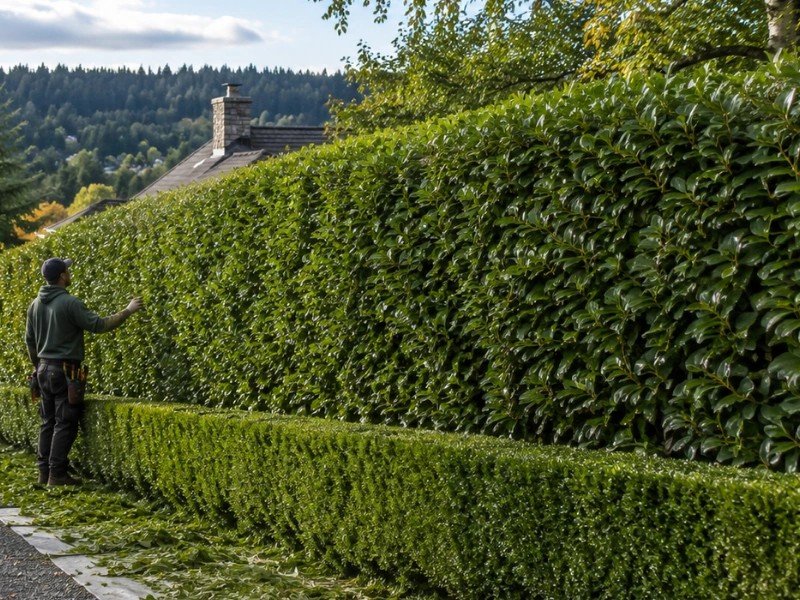
The spring growth flush timing: English laurel in Snohomish County typically begins its main growth flush in late April, with the most aggressive growth occurring in May and June. The first trim of the season should follow this flush — trimming before or during the flush accelerates new growth rather than managing it. Waiting until late May or early June, when the new growth has extended and just begun to harden, gives the cleanest results and the most growth-free period before the next flush.
The late-summer window: the August-to-early-September window is the best time for arborvitae trimming and the second trim window for laurel. New growth has hardened off, the trim doesn’t stimulate additional growth before the slower fall season, and the results hold through winter.
Overgrown hedges from Snohomish’s development era: many properties near Snohomish’s historic district and along the river corridor have mature English laurel that was planted as screening in the 1970s and 1980s — screens that have grown to 15 to 25 feet. These represent the most common restoration inquiry Tree Ninjas receives in the Snohomish area. Most can be brought back to a manageable height over one to two seasons, but the work is more involved than standard maintenance and is priced accordingly.
Boxwood blight awareness: Snohomish County’s wet climate is favorable for boxwood blight pathogen (Calonectria pseudonaviculata). Boxwood hedge owners in Snohomish should confirm that any crew trimming their hedges cleans tools between sites. Tree Ninjas sanitizes trimming equipment between properties.
Hedge Trimming Near Snohomish: Where We Work
Tree Ninjas provides hedge trimming throughout Snohomish and Snohomish County. Our crews regularly serve Snohomish and surrounding neighborhoods, Lake Stevens, Monroe and the Highway 2 corridor, and Everett.
For the full service area, see our Washington locations page.
Tree Ninjas provides free on-site estimates for hedge trimming throughout Snohomish County.
Phone: (206) 601-9390 | treeninjaspnw.com/contact-us
Contact Tree Ninjas
Tree Ninjas
31524 NE Cherry Valley Rd
Duvall, WA 98019
Phone: (206) 601-9390
Hours: Available 24/7 for emergency service; office hours Monday through Friday, 8am to 5pm
Serving Snohomish, Lake Stevens, Monroe, Everett, and surrounding Snohomish County and King County communities.
