How Much Does Land Clearing Cost Per Acre in Monroe, WA?
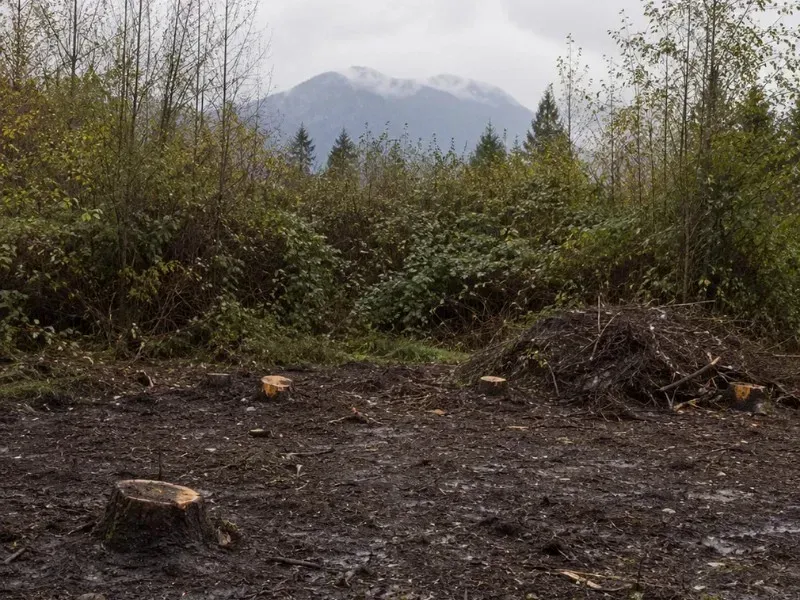
Land clearing in Monroe, WA typically costs $1,500 to $5,000 per acre for most residential and rural jobs, with heavy second-growth forest and grubbing running higher. Overgrown lots with invasive blackberry and pioneer tree species may require more time per acre than a clean timber stand. Tree Ninjas provides land clearing throughout Monroe and Snohomish County.
By Daniel Montgomery, Co-Founder, Tree Ninjas · Last updated August 2026
Key Takeaways
Monroe land clearing runs $1,500 to $5,000 per acre depending on vegetation type and terrain.
An LDA permit is required for clearing 7,000 square feet or more in Snohomish County.
Tree Ninjas clears brush, trees, and stumps together in a single coordinated scope of work.
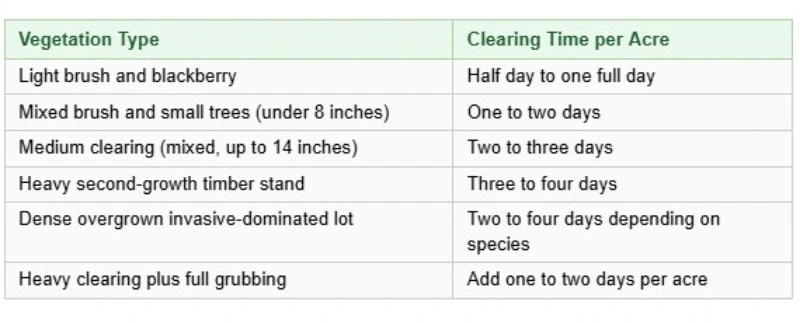
Light clearing runs half to one day per acre; dense second-growth clearing takes two to four days.
Monroe’s Skykomish River valley produces two distinct clearing challenges. Properties with managed timber stands of Douglas fir and Western red cedar are straightforward clearing work — the trees have value, the debris is manageable, and equipment moves efficiently. Properties left unmanaged for a decade or more are a different situation: dense Himalayan blackberry tangles above, root systems interleaved below, and pioneer alder and cottonwood throughout. Both types appear regularly in Monroe’s rural residential landscape.
Land clearing cost breakdown for Monroe, WA:
Light clearing (brush, blackberry, small trees under 6 inches): $500 to $2,000 per acre
Medium clearing (mixed brush and trees up to 12–14 inches): $1,500 to $4,000 per acre
Heavy clearing (dense second-growth Douglas fir, cedar, or large hardwoods): $3,000 to $7,000 per acre
Grubbing (stump and root ball removal to construction depth): add $500 to $2,000 per acre
Invasive-species-dominated lots (blackberry, Scotch broom, ivy): often priced in the medium-to-heavy range due to density and tangled root systems
Do I Need a Permit to Clear Land in Snohomish County?
Permit requirements depend on clearing footprint size, land classification, and proximity to critical areas.
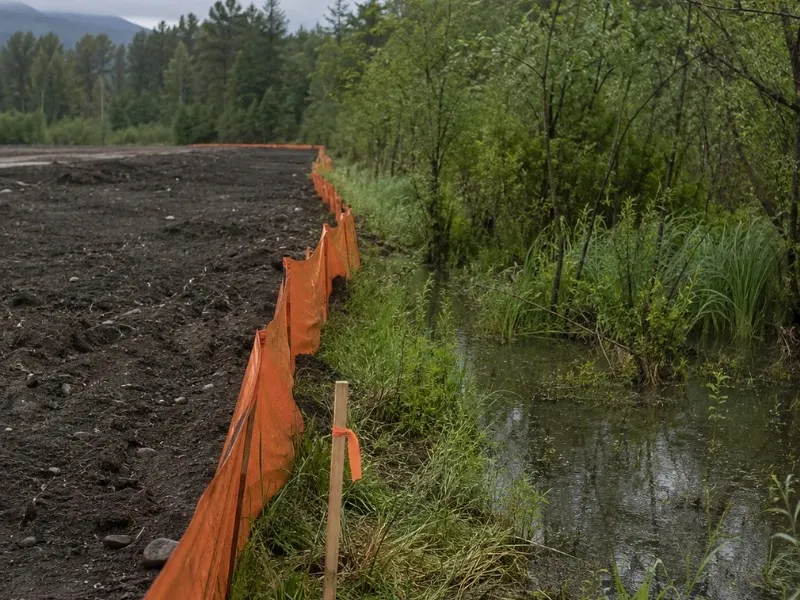
Land Disturbing Activity (LDA) permit — SCC 30.63B: in unincorporated Snohomish County, clearing 7,000 square feet or more requires an LDA permit from Snohomish County PDS. Clearing that threshold below outside critical areas is generally exempt — but all clearing activity must comply with stormwater Minimum Requirement 2, requiring erosion and sediment control measures.
Critical area review: any clearing within or adjacent to critical areas triggers additional review regardless of clearing size. Monroe’s Skykomish River tributaries, wetlands, and mapped flood hazard zones cover a significant portion of the valley floor. Properties within 500 feet of mapped critical areas must identify those areas in the site plan before permits can be processed.
City of Monroe permits: for properties within Monroe’s city limits, contact Monroe’s Planning Department at 360-863-4609 before beginning any clearing work.
Commercial timber harvesting: if clearing involves commercial timber harvest or removes more than 5,000 board feet, a Washington State Forest Practices Application is required — separate from the county LDA system. For FPA class detail, see our logging guide for Monroe. Contact Snohomish County PDS at 425-388-3311 for unincorporated parcels.
Do You Clear Brush, Stumps, and Debris Together?
Yes — Tree Ninjas handles the full clearing sequence as a single coordinated scope: brush and understory removal, tree felling, stump grinding, and full grubbing where the project requires construction-ready soil.
What the phases involve:
Brush and understory clearing: blackberry, shrubs, and small-diameter trees removed first; forestry mulchers process this material in place or it is chipped for removal
Tree felling and bucking: larger trees felled, limbed, and bucked; logs offered to the property owner for firewood or hauled off; merchantable timber coordinated with mill buyers when volume justifies
Stump grinding: stumps ground to below grade; grindings left in-ground for non-building areas or removed for building footprints
Full grubbing: stump and root ball excavation using an excavator; required for building footprints, driveway subgrades, and utility corridors
For full detail on chip vs. haul debris options, see our land clearing guide for Snohomish.
Can You Clear Wooded or Overgrown Lots?
Yes — both wooded timber stands and long-neglected overgrown lots are within our standard scope, though they require different approaches.
Wooded lots with timber-quality trees: properties with mature or semi-mature Douglas fir, Western red cedar, or western hemlock are the most efficient clearing projects when access is available. Tree Ninjas coordinates with licensed timber buyers when merchantable volume is present.
Overgrown lots — the Monroe specialty challenge: Monroe’s rural residential landscape includes a significant number of lots that have been left to naturalize after farming or earlier clearing. In the Skykomish Valley’s growing conditions, ten years of neglect produces:
Himalayan blackberry: the most aggressive invasive in western Washington; mature thickets develop stems two to three inches in diameter and root systems that require mechanical removal
Scotch broom (Cytisus scoparius): common on disturbed sites and gravel margins; seeds prolifically, flammable when dry
Red alder and black cottonwood: fast-growing pioneer species; can reach 30 to 40 feet within ten years of canopy abandonment; high debris volume when cleared
English ivy: on lots with older ornamental plantings; can blanket the ground and smother native understory
For overgrown lots, the per-acre cost is often higher than for a clean timber stand of similar acreage — because invasive-dominated sites combine the physical difficulty of dense tangled material with lower timber value per unit area. A realistic assessment on-site is the only reliable way to estimate scope.
How Long Does It Take to Clear an Acre?
Timeline is one of the most common questions for land clearing and one of the most variable. These ranges assume a standard Tree Ninjas crew with appropriate equipment for the job type.
Monroe-specific factors that affect timeline:
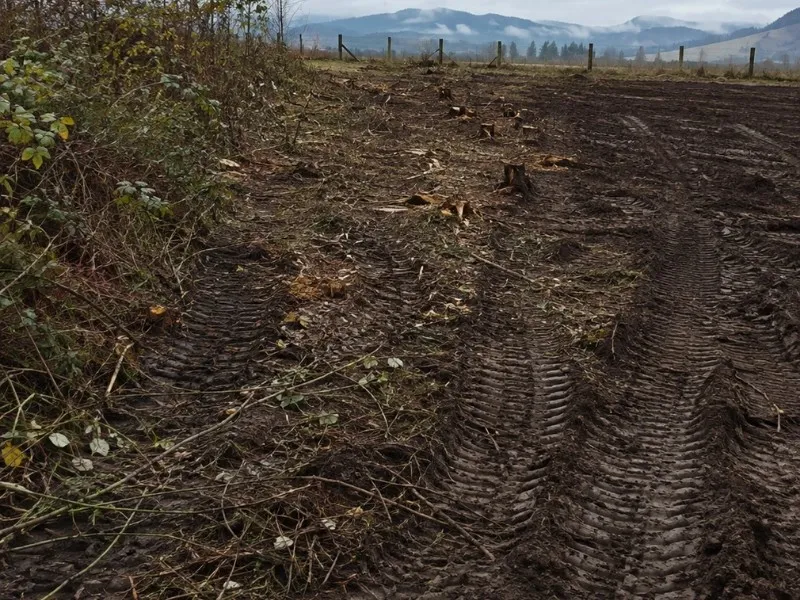
Wet soil conditions: the Skykomish Valley’s high water table and clay-loam soils can limit equipment movement during and after rain events; jobs scheduled in late spring or early fall may be affected by conditions that add delays for tracked equipment
Debris handling method: chipping and spreading on-site is faster than loading and hauling; if the site needs full debris removal, expect the haul-away portion to add 25 to 50 percent to job duration
Critical area proximity: jobs adjacent to Skykomish River tributaries or wetland buffers require more careful work near the transition zones, adding time at those edges
Access: properties with narrow or soft driveways may require equipment staging on adjacent roads, adding setup time per visit
These ranges assume continuous working conditions. Jobs paused for weather, access issues, or phased permit approvals will take longer in calendar time while actual crew hours remain similar.
What Makes Land Clearing Near Monroe Specific
The Skykomish Valley growth rate. Monroe’s combination of Cascade orographic precipitation and alluvial soils produces vegetation growth that compresses what would be a five-year regrowth window in drier areas into two to three years. A lot cleared in 2022 without follow-up maintenance may already need re-clearing in 2026.
Agricultural legacy parcels. Monroe’s agricultural history created a pattern of cleared pasture land that was subsequently abandoned. These parcels often have fence lines, drainage ditches, buried irrigation lines, and old agricultural infrastructure that creates obstacles for clearing equipment. A pre-clearing walk-through to identify these features is standard for Monroe agricultural parcels.
Skykomish tributary critical areas. The Skykomish River’s many tributaries drain Monroe’s eastern slope properties and create riparian critical area buffers on a large number of parcels. Properties that appear to be upland may still have seasonal stream channels or wetland depressions that trigger buffer requirements. A critical area assessment before clearing begins is the only reliable way to know what portions of the property can be cleared.
Land Clearing Near Monroe: Where We Work
Tree Ninjas provides land clearing, brush clearing, and site preparation throughout Monroe and the Skykomish Valley. Our crews regularly serve Monroe and surrounding communities, Snohomish, Duvall and the upper Snoqualmie Valley, and Sultan.
For the full service area, see our Washington locations page.
Tree Ninjas provides free on-site assessments for land clearing throughout Monroe and Snohomish County. Always confirm permit requirements with Snohomish County PDS at 425-388-3311 or Monroe Planning at 360-863-4609 before any clearing begins.
Phone: (206) 601-9390 | treeninjaspnw.com/contact-us
Contact Tree Ninjas
Tree Ninjas
31524 NE Cherry Valley Rd
Duvall, WA 98019
Phone: (206) 601-9390
Hours: Available 24/7 for emergency service; office hours Monday through Friday, 8am to 5pm
Serving Monroe, Sultan, Snohomish, Duvall, and surrounding Snohomish County and King County communities.
