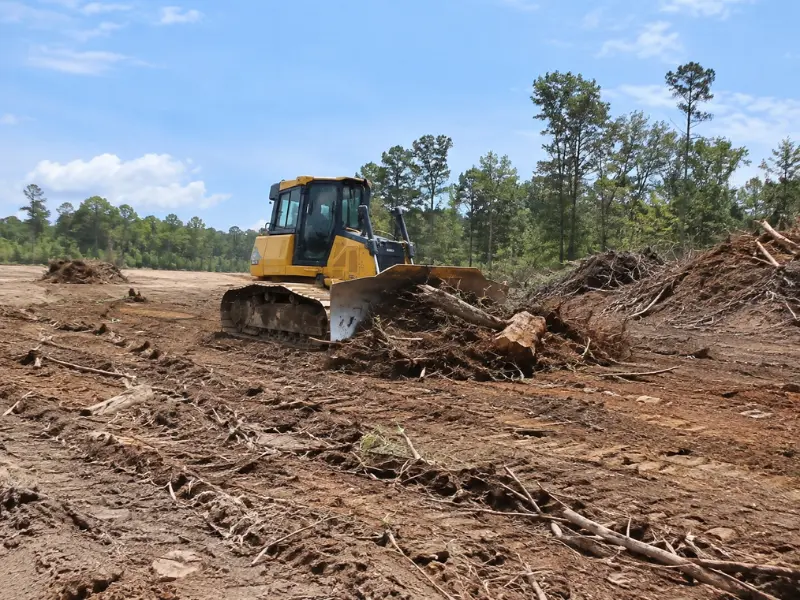
What Do Land Clearing Services Involve in Kirkland?
Paperwork before machinery, if you want to keep your schedule. Kirkland's tree code puts a hard gate in front of site clearing, and builders who find out about it after closing on a lot lose weeks they had already priced into the program.
By Daniel Montgomery, Co-Founder, Tree Ninjas · Last updated September 23, 2026
Why Does the Retention Plan Control Your Schedule?
Because until it is approved, nothing comes down.
KZC 95.30 is explicit: no trees may be removed from a development site until a tree retention plan is approved and permits are issued for the development activity. There is a second line that catches teardown projects specifically, and it is the one worth writing on the wall. Tree removal is not authorized during the demolition permitting phase unless approved in writing by the Planning Official.
Read that as a sequencing constraint rather than a formality. A builder who assumes the lot can be stripped alongside demolition has built an assumption into the programme that the code does not support. For teardown site clearing Kirkland projects, the retention plan needs to be moving well before the machines are booked.
The plan itself is not a sketch. KZC 95.30 requires all existing regulated trees identified by a numbering system that stays consistent across the arborist report, the site plan and physical tags on the trees themselves. It also requires critical root zones drawn to scale around every tree that grading, demolition or construction might affect.
One piece of good news for feasibility. The City states it does not require retention that would reduce your allowed density, lot count, floor area ratio or lot coverage, preclude an ADU, or block required access and utility connections. So retention shapes the design, it does not quietly delete your yield.
What Is Involved in Clearing a Lot Before Construction?
Five stages, and the first two are the ones that slip.
Survey and inventory. Regulated trees identified, measured, numbered and tagged, with the arborist report feeding the retention plan.
Retention plan approval and permits. The gate described above.
Protection installed before anything moves. KZC 95.34 requires protection for retained trees, including no construction material or equipment inside the protected area and a visible temporary chain link fence at least four feet high. Fencing goes up before the first machine arrives, not after.
Clearing and removal. Felling, sectional takedown where drop zones are tight, brush removal, and stump grinding or extraction depending on what follows.
Debris handling. Chipping, haul-off, or leaving material on site where a use exists for it.
Reversing any of the first three is how a project acquires a stop-work notice.
What Suits a Constrained Eastside Lot?
Access decides the method more than acreage does.
Most Kirkland infill sits on small lots with neighbours close on three sides, mature conifers, and a single narrow access. That rules out a lot of standard equipment and pushes the work toward sectional takedown with rigging, where pieces are roped down under control rather than dropped. Slower and more skilled, and the reason bids on visually similar lots differ.
Brush removal on a tight site is often a chipping operation, since there is nowhere to stockpile.
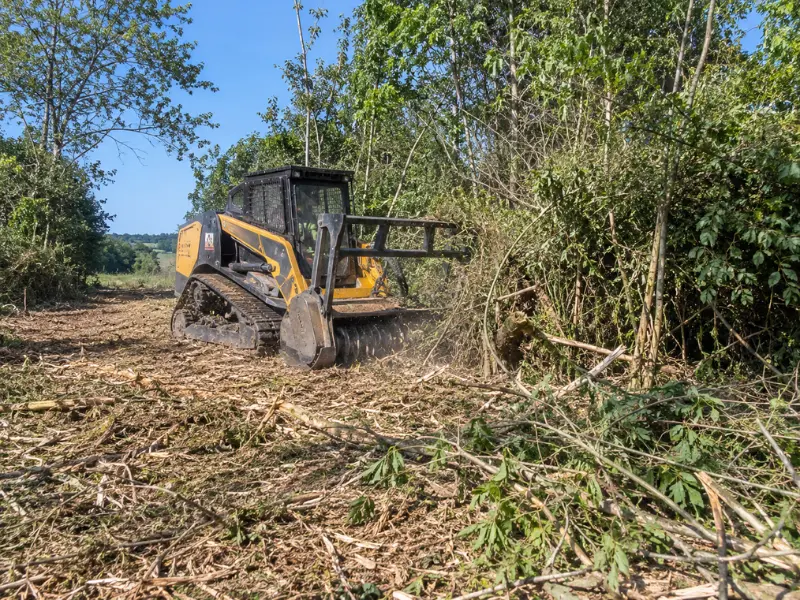
Forestry mulching is worth understanding as an option. A mulching head processes standing brush and small trees into chip on the spot, which removes the haul-off entirely and leaves a mulch layer that helps with erosion until the site is built. It suits open ground with room to manoeuvre, and suits it far less where access is tight or retained trees have protected root zones a machine cannot enter.
Stump grinding versus extraction depends on what is going on top. Grinding suits landscape and lawn. Where foundations, utilities or hardscape are going in, full extraction is usually what the next trade needs, so decide it with the builder rather than for them.
What Should You Budget for Lot Clearing?
Lot clearing cost turns on tree count and size, access for equipment, how much has to be rigged rather than felled, what happens to the debris, and how many trees are being retained.
That last one surprises people. Retention adds cost rather than removing it. Protected root zones constrain machine movement, fencing has to go in and stay in, and work near retained trees is done more carefully and more slowly. A lot with eight trees coming out and four staying is a more complex job than a lot with twelve coming out.
How much does it cost to clear a residential lot for a rebuild adds one more item: whether clearing is coordinated with demolition, and under whose permit. Given the demolition-phase restriction above, that coordination is a scheduling question before it is a pricing one.
Bids are free and, on anything beyond a single tree, delivered after a site visit. Too much of the cost sits in access and rigging to price from a plan set.
How Do You Work With Builders and Developers?
Early, and with the permit package rather than alongside it.
Three things are worth involving a tree contractor in before you bid a lot. Feasibility, meaning what the retention picture looks like and whether it constrains the footprint. Program, meaning how long plan approval realistically takes before clearing can start. And the arborist report, which is part of the submission rather than a follow-up.
On constrained sites we work to the builder's sequence: protection fencing before the excavator, clearing phased around other trades, and debris handling scheduled so the site is not blocked by material waiting for a truck.
Anyone asking which contractor near me does teardown site prep for builders should be asking about the first stage, not the last. The clearing is the easy part. The approval that permits it is where programmes are won or lost.
Where Do You Work, and What Should You Ask?
We cover Kirkland, Redmond, Sammamish, Issaquah, Duvall, Carnation and Bellevue. See our services, locations, the portfolio and about us. Related work sits on our Sammamish removal guide, which covers permit-driven removal on developed lots.
Two checks before appointing anyone. Confirm registration, bond, liability cover and the workers' compensation account through L&I's Verify a Contractor tool, since clearing is high-hazard work. And ask who produces the arborist report, because if the answer is a third party you are adding a handoff to your programme.
Comparing lot clearing and site prep Kirkland options, searching the best land clearing company near Kirkland, or asking who clears building lots in Kirkland? Ask what the retention plan timeline looks like before you ask what the clearing costs. Land Clearing services are only as fast as the approval in front of them, and brush removal and forestry mulching Kirkland sites need is the straightforward part by comparison.
Frequently Asked Questions
1. How much does lot clearing cost in Kirkland?
Tree count and size set the baseline, then access for equipment, how much has to be rigged rather than felled, and what happens to the debris. The variable builders underestimate is retention: keeping trees costs more rather than less, because protected root zones constrain machine movement, protective fencing has to go in and stay in, and work near retained trees runs slower. A lot with eight trees out and four staying is a more complex job than one with twelve coming out and nothing staying.
2. Do you provide site-visit bids for clearing projects?
Yes, and on anything beyond a single tree that is the only honest way to bid it. Four things can only be judged on the ground: access and what equipment can physically reach the work, which trees need rigging because there is no drop zone, where retained trees sit and how their protected root zones constrain movement, and where debris can be staged. A bid produced from a plan set alone tends to move once someone stands on the site, which helps nobody.
3. Do you handle debris haul-off, chipping and stump grinding?
Yes to all three, and the choice between them should be made with the next trade rather than after. Chipping suits tight sites with nowhere to stockpile. Haul-off suits volume. Stump grinding suits ground going to lawn or landscape, but where foundations, utilities or hardscape follow, full extraction is usually what the next contractor actually needs, so agree that before the machine arrives rather than regrinding later.
4. Do you work with builders and developers on constrained sites?
Yes, and constrained infill is most of the Eastside. Small lots with neighbors on three sides, mature conifers and a single narrow access rule out much standard equipment, which pushes work toward sectional takedown with rigging rather than felling. We sequence to the builder's program: protection fencing before the excavator arrives, clearing phased around other trades, and debris handling timed so material waiting on a truck does not block the site.
5. Can you advise on tree retention requirements before we bid?
Yes, and that is the most useful point to involve us. Kirkland's KZC 95.30 blocks tree removal on a development site until a retention plan is approved and permits issued, and specifically does not authorize removal during demolition permitting without the Planning Official's written approval. The plan needs an arborist report with trees numbered consistently across the report, site plan and physical tags, plus critical root zones drawn to scale. Knowing the retention picture before you bid tells you what the lot can actually carry.
Contact Tree Ninjas
Tree Ninjas 31524 NE Cherry Valley Rd, Duvall, WA Phone: (206) 601-9390 Email: [email protected] Serving Kirkland, Redmond, Sammamish, Issaquah, Duvall, Carnation and Bellevue. Locally owned, licensed, bonded and insured.
Bidding a Kirkland lot? Request a site visit or call (206) 601-9390, and tell us where you are in the permit process.
