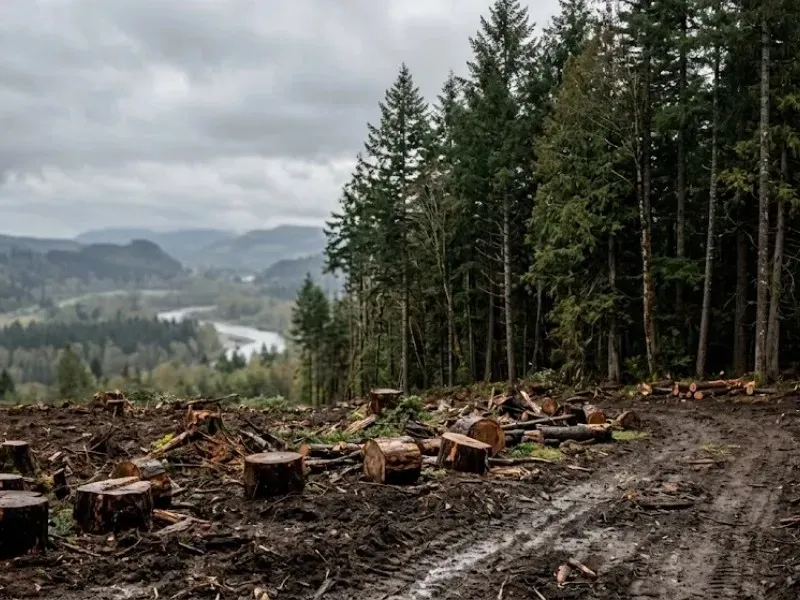
Do You Need a Forest Practices Application to Log in Monroe, WA?
Whether you need a Forest Practices Application (FPA) to log in Monroe, WA depends on the scale of your operation and your land’s classification. Commercial timber harvesting and operations that remove more than 5,000 board feet typically require, at minimum, a Class II notification or a full FPA from WA DNR. Tree Ninjas handles small-acreage logging and land clearing throughout Monroe and Snohomish County in compliance with Washington Forest Practices requirements.
By Daniel Montgomery, Co-Founder, Tree Ninjas · Last updated July 2026
Key Takeaways
Washington requires a Forest Practices Application for timber harvesting above 5,000 board feet.
Timber harvesting before development triggers a 6-year development moratorium under Washington law.
WA DNR’s Small Forest Landowner Office offers free technical guidance at 1-800-523-TREE.
Tree Ninjas handles small-acreage logging, timber removal, and land clearing in Monroe under proper permits.
Monroe sits at the transition zone between Snohomish County’s residential growth corridor and the forested Skykomish River valley — and it is one of the most active areas in western Washington for property owners navigating the difference between tree removal, land clearing, and regulated timber harvesting. Getting that distinction wrong has real consequences: Washington’s Forest Practices Act carries enforcement authority, and harvesting timber without a required FPA — or failing to understand the development moratorium — can derail building plans by years. Here is what Monroe property owners need to know.
How Much Does Logging Cost in Monroe, WA?
Small-acreage logging and land clearing in Monroe typically costs $1,500 to $5,000 per acre depending on tree density, terrain, access, and debris management requirements. Properties with marketable timber may have timber value that offsets or reduces the net cost. Tree Ninjas provides free on-site assessments throughout Monroe and Snohomish County.
What affects cost:
Tree density and species: a dense stand of marketable Douglas fir requires more equipment time; merchantable timber may have resale value that offsets costs
Terrain and site access: Monroe’s Skykomish River valley ranges from flat alluvial bottomland (easy access) to steep side-slope lots where equipment staging is more complex
Debris management: slash and debris must be managed per Forest Practices rules; chipping, piling for burning, or mastication carry different costs
Riparian buffers: properties adjacent to the Skykomish River or its tributaries have Riparian Management Zones (RMZs) where harvesting is restricted; additional planning required
How much timber per acre in Monroe: a mature second-growth Douglas fir stand in Snohomish County (40 to 60 years old) typically holds 15,000 to 30,000 board feet per acre; older stands may exceed 50,000 board feet per acre. A professional timber cruise — a formal measurement of standing timber volume — is the accurate way to assess value before any harvest. Tree Ninjas can coordinate with licensed timber cruisers as part of pre-harvest planning.
What Is the Difference Between Logging and Timber Harvesting?
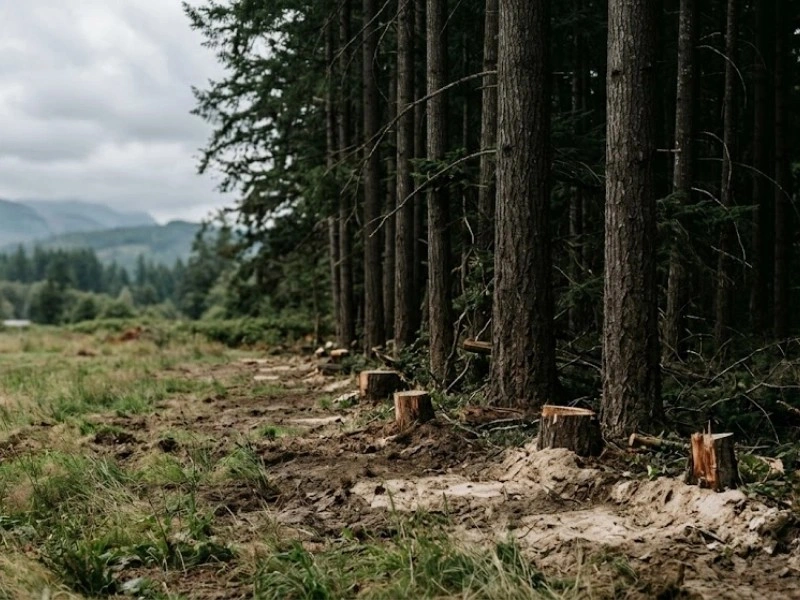
In common use, “logging” typically refers to large-scale commercial clearing operations. “Timber harvesting” is the broader regulatory term used in Washington’s Forest Practices Act, covering any commercial removal of merchantable timber from forestland regardless of scale.
For Monroe residential and rural property owners:
Logging (commercial scale): industrial operations on forested land, typically involving dozens to hundreds of acres; governed by Class III and Class IV forest practices
Small-acreage timber harvesting: removing timber from a 1-to-10-acre residential or rural parcel as part of property clearing or development preparation; still regulated under the Forest Practices Act but may qualify for simpler permitting pathways
Land clearing (development preparation): removing trees to prepare land for construction; if the land is classified as forestland with merchantable trees, this is typically a Class IV forest practice requiring FPA and SEPA
What Tree Ninjas provides falls in the small-acreage category: residential property clearing, selective timber removal, and land preparation work for Monroe properties — performed under required permits and in compliance with Washington Forest Practices Rules, including riparian buffer, slash management, and reforestation requirements.
Can I Log on My Own Property in Washington State?
Yes — within the structure of Washington’s Forest Practices Act (RCW 76.09). The scope of what you can do without a permit, and what requires one, depends on scale and purpose.
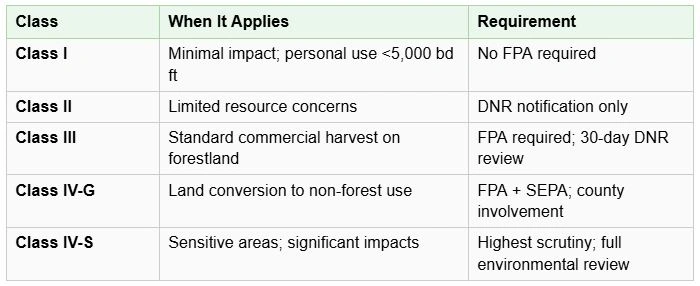
Class I — no FPA required: removing less than 5,000 board feet for personal use in any 12 months. For a Monroe homeowner who removes a small number of trees for firewood, materials, or personal use, Class I typically applies, and no FPA is required.
Class II, III, and IV — FPA required:
Class III FPA: required for most standard commercial harvests on forestland with no conversion planned; DNR reviews within 30 days
Class IV-General FPA: required when land is being converted from forestland to another use (including residential); requires SEPA environmental review and county involvement
Critical: the development moratorium. Harvesting timber from forestland under a Class II/III FPA without a conversion plan triggers a 6-year development moratorium on that land under Washington State law. Property owners who intended to build after clearing the timber can find their development plans frozen for six years. See the next section for the COHP pathway that avoids this.
Before any harvesting begins on a Monroe property, contact WA DNR’s Northwest Region: [email protected] or (360) 856-3500. For free guidance for small forest owners: Small Forest Landowner Office 1-800-523-TREE (8733).
How Does WA DNR Regulate Logging Operations?
Washington’s Forest Practices Act (RCW 76.09) governs all commercial timber harvesting on non-federal private lands. The Forest Practices Board sets regulations; the Washington State DNR administers and enforces them. The rules protect water quality, fish and wildlife habitat, slope stability, and public safety.
The four classes of forest practices:
Riparian Management Zones (RMZs) in Monroe: properties near the Skykomish River, its tributaries, or any typed waterways are subject to RMZ requirements that restrict or prohibit harvesting within specific distances of water. Monroe’s position in the Skykomish valley means many properties have significant RMZ buffers. These requirements cannot be waived and must be incorporated into any harvest plan.
For Snohomish County properties, the DNR Northwest Region handles Forest Practices permitting and compliance. Contact them at [email protected] or (360) 856-3500 before beginning any harvest planning.
The 6-Year Development Moratorium: What Monroe Property Owners Must Know
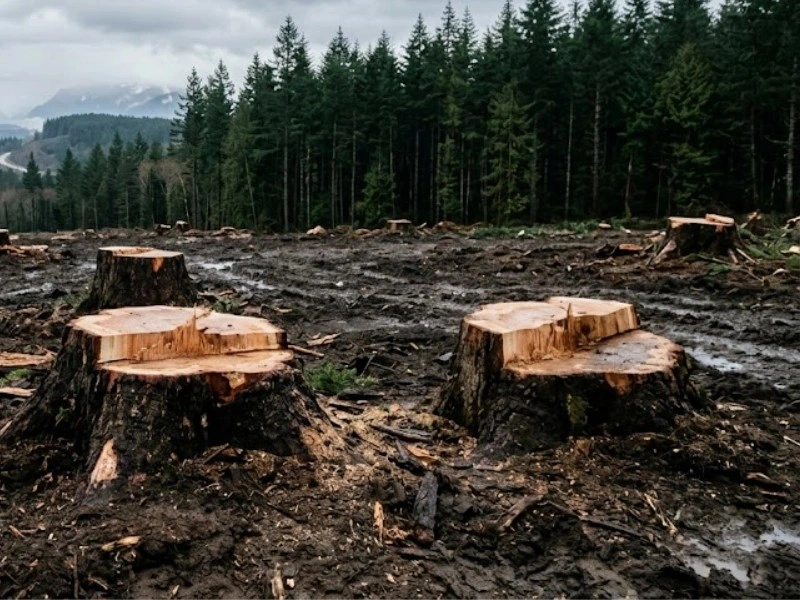
The most consequential — and most frequently misunderstood — aspect of Washington’s Forest Practices Act for Monroe property owners is the 6-year development moratorium. A Forest Practices Application approval triggers a six-year development moratorium on land where timber has been harvested, beginning from the date of forest practice approval by DNR.
What this means in practice: if you harvest timber from a Monroe property under a Class III FPA without a conversion plan, you cannot develop that land for residential or other non-forest purposes for six years. For a property owner who intended to build a home after clearing the timber, this is a significant and potentially very expensive surprise.
The Conversion Option Harvest Plan (COHP) — the path around the moratorium:
The COHP is a voluntary timber harvesting plan that, when submitted to DNR with a Class II or III FPA, waives the 6-year development moratorium. The plan is approved by Snohomish County and must comply with county critical areas code. It is less expensive and less onerous than the full Class IV-General permit and is specifically designed for property owners who intend to develop their land after harvesting timber.
For Monroe property owners considering both timber harvesting and future development:
Engage WA DNR’s Northwest Region office early: (360) 856-3500
Discuss the COHP option with Snohomish County Planning before any harvest begins
Do not harvest any timber before the appropriate FPA or COHP is approved
Tree Ninjas can coordinate with DNR-registered operators and work within an approved FPA or COHP framework
Unauthorized harvesting, failure to comply with FPA conditions, or harvesting in RMZ buffers can result in significant civil penalties and required restoration at the property owner’s expense.
Logging Services Near Monroe: Where We Work
Tree Ninjas provides small-acreage logging, land clearing, and timber removal throughout Monroe and the Sky Valley corridor. Our crews regularly serve Monroe and the Skykomish Valley communities, Snohomish, Duvall and the upper Snoqualmie Valley, and Sultan.
For the full service area, see our Washington locations page.
Get a Free Logging and Land Clearing Estimate in Monroe
Whether you’re clearing a property for development, selectively harvesting timber, or managing an overgrown parcel, Tree Ninjas provides free on-site assessments throughout Monroe and Snohomish County. We work within Washington Forest Practices requirements and can help coordinate the permit pathway for your specific property.
Call or text: (206) 601-9390
Or request a free estimate at treeninjaspnw.com/contact-us.
Note: WA DNR regulations are complex and site-specific. Always contact WA DNR’s Northwest Region at (360) 856-3500 or the Small Forest Landowner Office at 1-800-523-TREE (8733) to confirm requirements for your property before any harvesting begins.
Contact Tree Ninjas
Tree Ninjas
31524 NE Cherry Valley Rd
Duvall, WA 98019
Phone: (206) 601-9390
Hours: Available 24/7 for emergency service; office hours Monday through Friday, 8am to 5pm
Serving Monroe, Sultan, Snohomish, Duvall, and surrounding Snohomish County and King County communities.
