Can an Overgrown Tree Be Saved with Trimming in Duvall, WA?
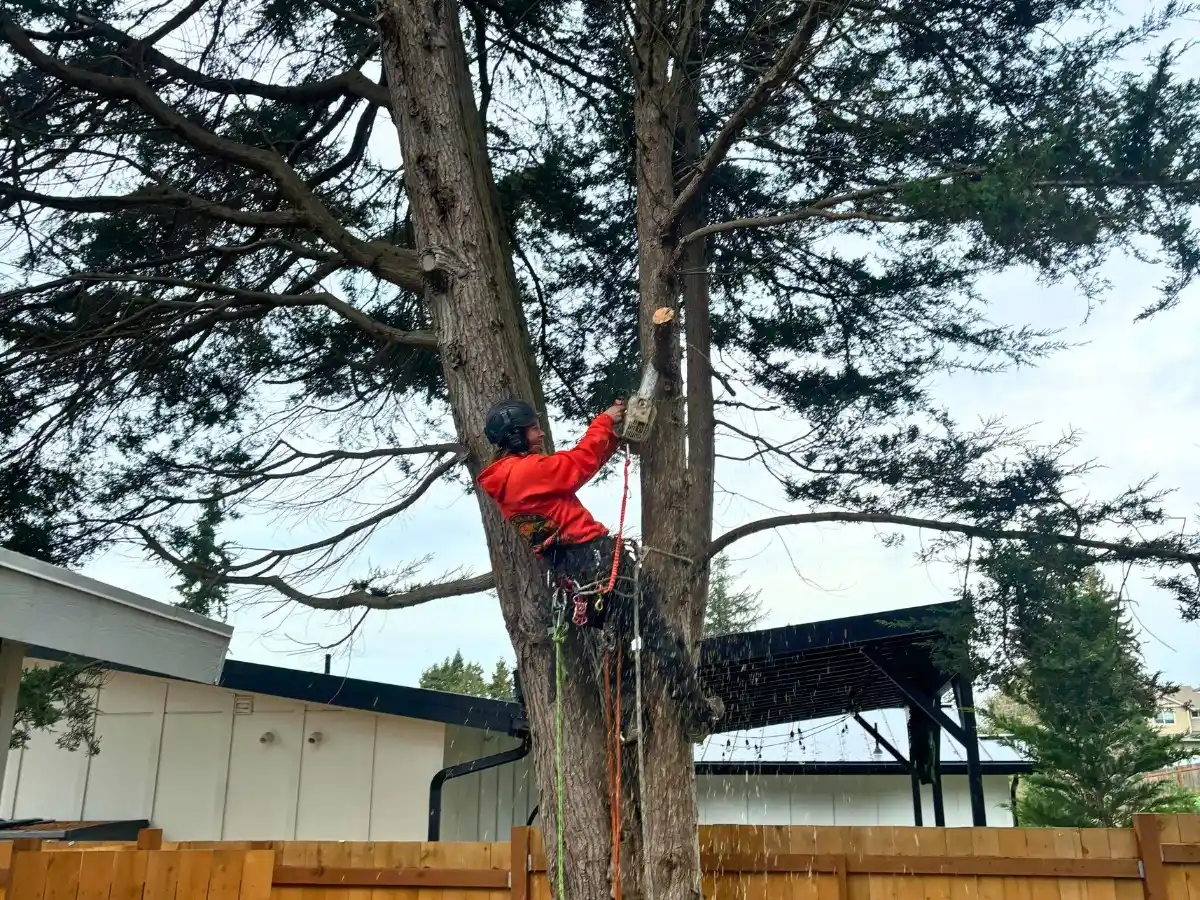
Yes — most overgrown trees in Duvall, WA can be restored with professional trimming, provided the trunk is structurally sound and the work is staged correctly. Tree Ninjas uses a phased approach, removing no more than 25 to 30 percent of the living canopy per visit to avoid shocking the tree, with follow-up work in subsequent seasons as needed.
By Daniel Montgomery, Co-Founder, Tree Ninjas · Last updated June 2026
Key Takeaways
Most overgrown Duvall trees can be saved with staged professional trimming over one to three seasons.
Removing more than 25 percent of living canopy in a single visit can seriously stress or kill the tree.
Overgrown tree trimming in Duvall typically costs $400 to $1,200, more for large specimens.
Big-leaf maple and red alder are the most commonly overgrown trees on Duvall properties.
The most common question we hear from Duvall homeowners looking at a tree that has been left alone for five or more years: can it be saved, or does it have to come down? The answer depends on the species, the degree of overgrowth, and whether the tree’s core structure is still sound. Here is how our certified arborists think through that question, and what the restoration process actually looks like in the Snoqualmie Valley.
How Much Does Overgrown Tree Trimming Cost in Duvall, WA?
Overgrown tree trimming in Duvall typically costs between $400 and $1,200 per tree, more than standard maintenance trimming because the volume of material, structural assessment complexity, and potential multi-visit approach all add to the scope. Very large overgrown specimens can run $1,500 to $2,500 for a full restoration trim.
What drives the cost above standard trimming rates:
Volume of material: a neglected tree has significantly more deadwood, crossing branches, and excess canopy. Chipping and cleanup takes proportionally longer.
Structural assessment time: before cutting begins, the arborist must determine which branches are structural priorities, how much can be safely removed in the first visit, and what is deferred to later.
Multi-visit programs: some overgrown trees cannot be fully restored in a single session without violating the 25 percent limit. A two-or-three-year correction program spreads the cost across seasons.
For free on-site estimates on overgrown trees, see our tree trimming service page. Overgrown tree scope cannot be quoted reliably by phone.
How Do You Trim a Very Overgrown Tree in Washington State?
Trimming a severely overgrown tree in Washington requires a phased approach. In the first season, work begins with crown cleaning — removing all deadwood, diseased branches, and crossing limbs. If that alone stays within the 25 to 30 percent removal limit, crown reduction and thinning can follow. If not, structural work continues in the next growing season.
The phased approach in practice:
Phase 1 — Crown cleaning: deadwood removal, broken branches, crossing and rubbing limbs. For a severely overgrown Duvall big-leaf maple, this step alone can transform the tree while staying within the 25 percent threshold. Restoration always begins here.
Phase 2 — Crown reduction: where the canopy has grown well beyond safe limits, reduce the overall size using directional cuts made back to lateral branches at least one-third the diameter of the stem being removed. This maintains the tree’s natural form.
Phase 3 — Crown thinning: once the scaffold structure is re-established, selective removal of interior live branches improves airflow, reduces wind resistance, and discourages excessive watersprout regrowth.
What not to do on an overgrown tree:
Topping: cutting back major scaffolds or the central leader to bare stubs. Topping creates weakly attached watersprout growth, accelerates decay, and leaves the tree structurally more dangerous than before. It is not permitted under ANSI A300 pruning standards.
Lion’s tailing: stripping all interior branches from a limb so foliage exists only at the tips. This creates a heavy sail effect in Duvall’s winter windstorms and significantly increases limb failure risk.
For more on proper crown work, see our tree pruning service page.
How Long Does Overgrown Tree Trimming Take in Duvall, WA?
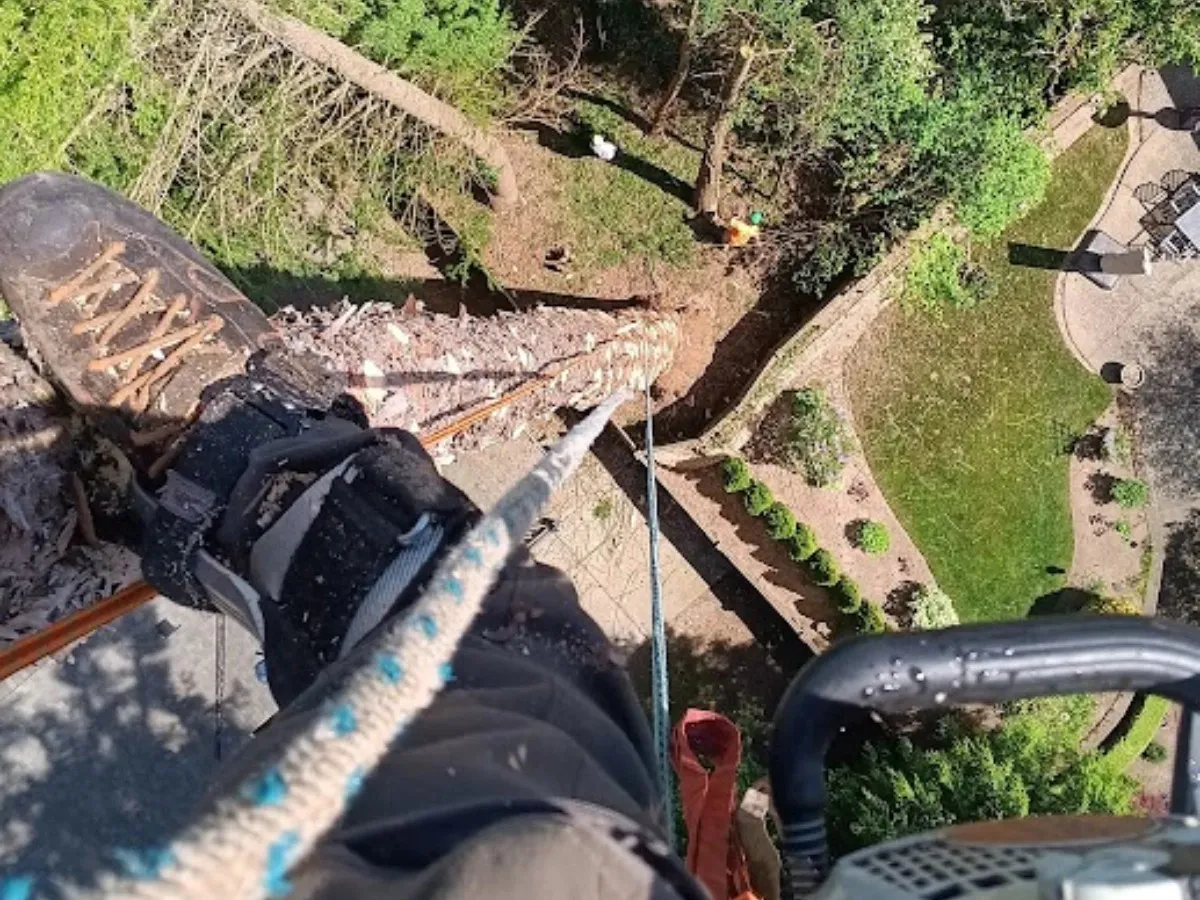
Overgrown tree trimming in Duvall typically takes four to eight hours per tree for medium 30-to-60-foot specimens. Large overgrown trees — a 70-foot big-leaf maple with heavy horizontal scaffolds, a multi-stemmed alder cluster, or a significantly loaded ornamental — can take a full day for the initial restoration visit, with shorter follow-up sessions in subsequent seasons.
Factors that add time compared to standard trimming:
Canopy volume: an overgrown tree generates two to three times more material than a maintained tree of the same height. Chipping runs longer.
Slower cuts: overgrown branch structures require more assessment per cut than maintained trees. Structural priorities must be identified before work begins.
Access changes: many overgrown Duvall trees have grown into spaces that were clear when last trimmed — branches now over fences, outbuildings, or rooflines require more controlled lowering.
Scheduling in late winter (February to March) is ideal: the canopy is open and structural priorities are clearly visible. See our Pacific Northwest trimming timing post for a full seasonal guide.
What Trees Most Commonly Get Overgrown in Duvall, WA?
Big-leaf maple and red alder are the most commonly overgrown trees on Duvall properties, followed by ornamental cherries and ornamental plums. All three grow rapidly in the Snoqualmie Valley and are often left without regular trimming for five or more years. Douglas firs and Western red cedars develop overgrowth problems more slowly but are harder to restore when they do.
Big-leaf maple is the primary overgrown tree call we handle in Duvall. These trees grow two to four feet per year and develop large-diameter horizontal scaffold branches that extend well beyond their original footprint when unmanaged. Add several years of PNW moss accumulation and those branches carry hundreds of pounds more than their drier-climate equivalents. Neglected big-leaf maples frequently develop codominant stems with included bark — a structural liability that becomes a removal question rather than a trimming question once the stems reach significant diameter.
Red alder grows fast, lives relatively short (40 to 70 years), and accumulates dead interior limbs quickly after middle age. A Duvall property with a row of untrimmed alders can have 30 to 40 percent interior deadwood while the outer canopy still looks healthy. Red alder responds well to heavy crown cleaning and is excluded from Duvall’s significant tree permit requirement, so scheduling is simpler.
Ornamental cherries, plums, and apples develop water sprout clusters and heavily crossing scaffold growth when neglected. They are generally good restoration candidates, but stone fruits must be trimmed in dry summer conditions only — a PNW-specific constraint driven by bacterial canker risk during the wet season.
Douglas fir and Western red cedar don’t get overgrown in the same way deciduous trees do. Their issues are lower branches extending over rooflines, accumulated interior deadwood as the canopy closes, and dead tops from fungal infection. These species do not respond well to aggressive crown reduction — their growth architecture does not regenerate the way deciduous trees do.
When Trimming Is Not Enough: Restoration vs. Removal in Duvall
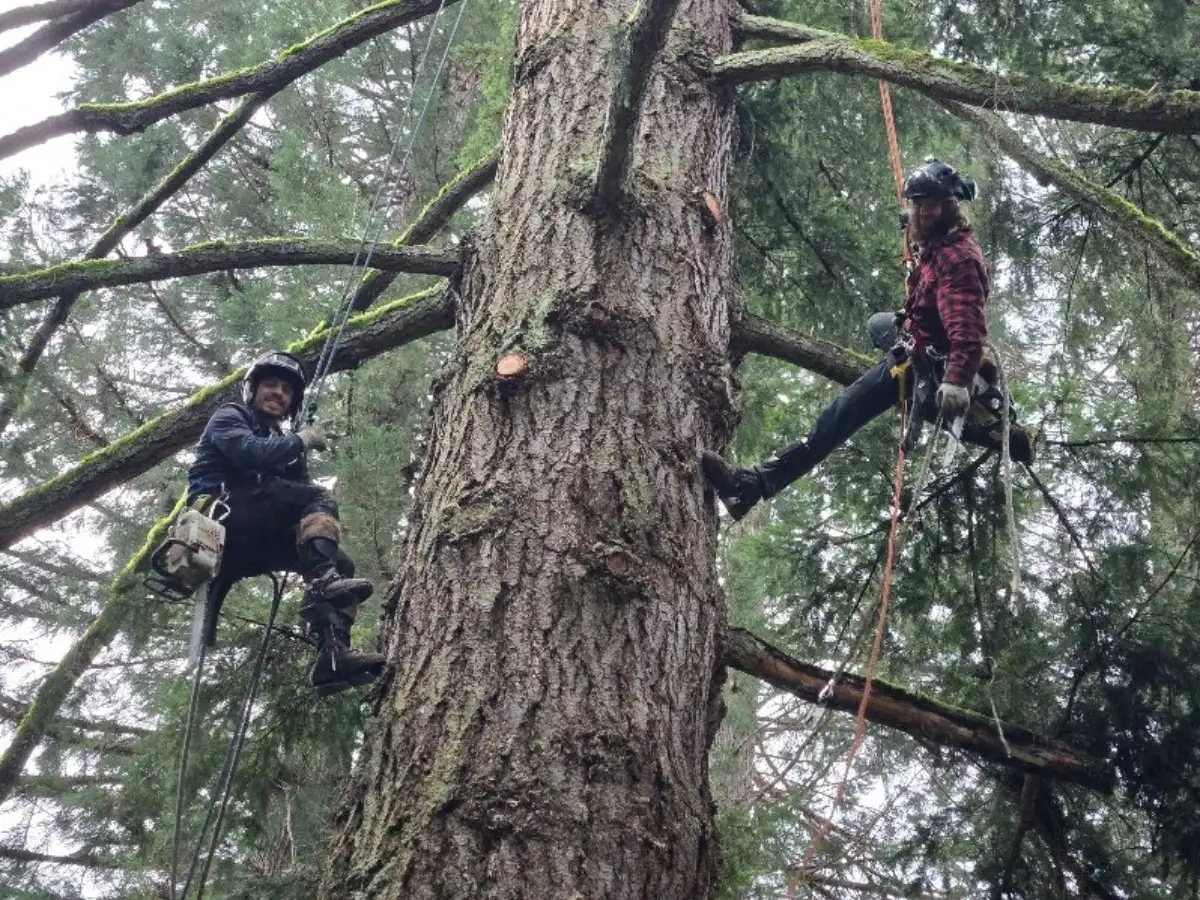
Not every overgrown tree is a restoration candidate. Knowing the difference before committing to a multi-year trimming program is what separates a good assessment from an expensive mistake.
Signs the overgrown tree is worth restoring:
Trunk is structurally sound with no large cavities, fungal fruiting bodies, or root plate heaving
More than half the canopy is still living and healthy
No history of topping, or enough viable lateral branch structure remaining to make proper reduction cuts
Species that tolerates hard pruning: big-leaf maple, red alder, most ornamental fruit and flowering trees
Signs the overgrown tree needs removal rather than trimming:
Significant decay visible at the base or on major scaffolds
Codominant stems with included bark that have already begun to separate
More than half the canopy dead, declining, or in stag-head die-back pattern
Previously topped with years of weakly attached watersprout growth as the main canopy — these stems have no structural connection to the parent branch and will fail in wind
Douglas fir or Western red cedar that would require removing more than 25 to 30 percent to address the structural issues
The trees that are hardest to have that conversation about are the big-leaf maples with beautiful, full outer canopies that are quietly developing codominant splits working their way down the trunk. Regular trimming cannot fix that structural problem. Catching it a few years earlier — with a properly staged crown-thinning and crown-reduction program — is exactly what closes that window before removal becomes the only option.
For a free assessment on whether your overgrown tree is a restoration candidate, see our tree removal guide or contact us directly.
Overgrown Tree Trimming Near Duvall: Where We Work
Tree Ninjas is based at 31524 NE Cherry Valley Rd and handles overgrown tree trimming and restoration throughout Duvall and surrounding King County communities. Our crews regularly work in Duvall and the Cherry Valley corridor, Carnation and the lower Snoqualmie Valley, Cottage Lake and the Woodinville area, and Redmond and the Novelty Hill neighborhoods.
For the full list of communities we serve, see our Washington locations page.
Get a Free Overgrown Tree Assessment in Duvall
Overgrown trees cannot be properly assessed by phone. The restoration plan depends entirely on what the trunk looks like, how much of the canopy is living, and whether the branch structure allows proper reduction cuts. Tree Ninjas provides free on-site assessments throughout Duvall and King County.
Call or text: (206) 601-9390
Or request a quote at treeninjaspnw.com/contact-us.
Contact Tree Ninjas
Tree Ninjas
31524 NE Cherry Valley Rd
Duvall, WA 98019
Phone: (206) 601-9390
Hours: Available 24/7 for emergency service; office hours Monday through Friday, 8 am to 5 pm
Serving Duvall, Carnation, Cottage Lake, Redmond, and surrounding King County communities.
