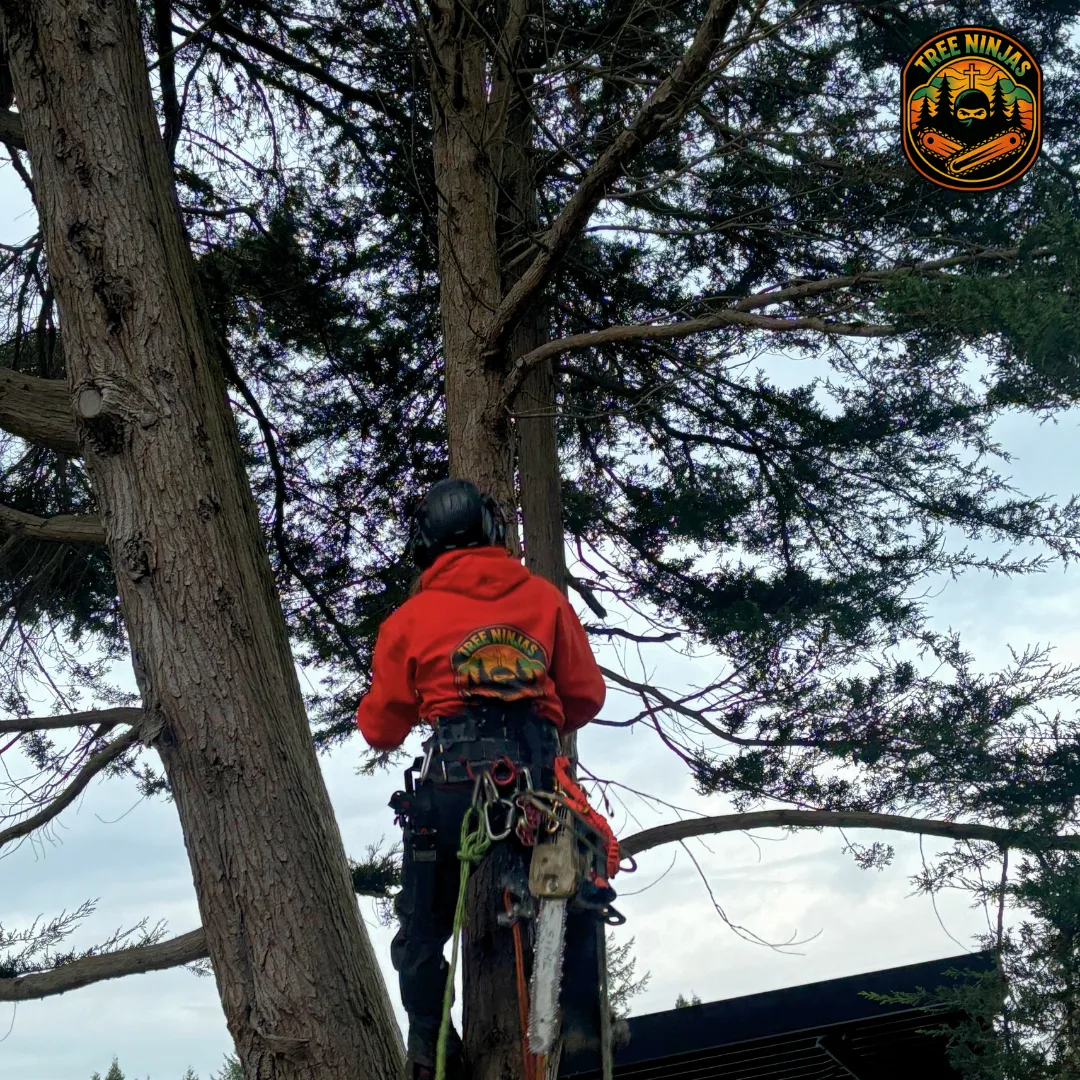
Is Premium Tree Service Worth the Investment for Seattle Homeowners
Premium tree service is worth the investment for many Seattle homeowners because it combines certified arborist expertise, proper insurance, regulatory compliance, and long-term tree protection.
In areas with mature trees and strict municipal tree codes, higher-quality service significantly reduces liability risk, fines, and irreversible damage. While premium tree care often costs more upfront, it frequently prevents far higher expenses later.
Homeowners often receive multiple estimates for the same tree job and are surprised by how wide the price range can be. Same tree, same scope yet very different numbers. In Seattle’s neighborhoods where mature trees define property character, choosing the wrong tree service can cost far more than the invoice.
Understanding what separates premium work from budget work helps protect both your landscape and your investment.
Key Takeaways
Premium tree service lowers risk and liability
Certified arborists and insurance matter
Seattle tree codes affect homeowners
Professional care protects property value
What Expertise Do You Get With Premium Tree Service
Premium tree service includes certified expertise, comprehensive insurance, and professional equipment that lower-cost providers often lack. At the core of this expertise are ISA Certified Arborists, who undergo extensive education and testing before earning certification.
Typical requirements include:
Multiple years of full-time field experience
A comprehensive arboriculture exam covering tree biology, pruning science, and safety
Ongoing continuing education to maintain certification
Advanced training in disease identification, structural pruning, and risk evaluation
Many premium providers also employ arborists with Tree Risk Assessment Qualification (TRAQ) credentials, which focus on identifying hazardous trees and assessing failure risk near homes, roads, and structures.
This level of training helps prevent costly mistakes that damage trees or property especially when a job involves a professional tree removal service in tight residential spaces.
How Do Premium Tree Services Protect You and Your Property
Premium tree service is not just about cleaner cuts or better cleanup; it includes built-in protection. Professional planning, trained crews, and specialized equipment reduce the chance that something goes wrong on your property.
When working around large trees, limited access, or high-value homes, these protections matter just as much as the quality of the pruning or removal itself.

Why Does Proper Insurance Matter for Seattle Homeowners
Proper insurance transfers risk away from the homeowner but only if the tree service company actually carries adequate coverage. Industry organizations such as the Tree Care Industry Association (TCIA) emphasize insurance and safety expectations for professional operators.
Budget providers often carry minimal coverage or allow policies to lapse. If an uninsured worker is injured on your property, homeowners may be held financially responsible. Many homeowner insurance policies exclude contractor-related claims, which can leave property owners exposed.
Why Does Professional Equipment Matter for Complex Seattle Properties
Seattle properties frequently involve tight spaces, slopes, and trees growing close to structures or neighboring homes. Premium companies invest in equipment designed for these challenges, including:
Cranes for controlled removals near structures
Aerial lifts and bucket trucks for safe access
Advanced rigging systems to lower large sections safely
Professional equipment allows tree work to be completed with less disruption and significantly lowers the risk of property damage.
What Are the Hidden Costs of Hiring a Budget Tree Service
The hidden costs of budget tree work often exceed any upfront savings and usually appear later after the job is “done.”
Common long-term consequences include:
Emergency removals caused by poor pruning
Damage to driveways, foundations, or irrigation systems
Accelerated tree decline from improper cuts or topping
Ongoing corrective pruning to fix unstable regrowth
In neighborhoods with mature trees, amateur work can permanently destroy assets that took decades to grow.
How Does an Uninsured Tree Work Expose Homeowners to Financial Risk
Uninsured or underinsured tree work places serious financial responsibility on the property owner. If something goes wrong, outcomes may include:
Medical claims from injured workers
Property damage exceeding contractor coverage
Disputes involving neighboring properties
Even when homeowner's insurance applies, claims may increase premiums or be denied due to contractor-related exclusions.
What Warning Signs Suggest a Tree Service Estimate Is Too Good to Be True
Red flags that often indicate corner-cutting include:
Refusal to provide proof of insurance
No ISA Certified Arborist available for consultation
Quotes that exclude cleanup, stump grinding, or permit fees
Cash-only discounts without a written contract
Use of outdated or improper pruning terminology
Professional companies provide documentation promptly and answer questions transparently.
How Do Seattle’s Tree Regulations Drive Cost
Seattle enforces strict tree protection rules, which directly affect the cost, timing, and complexity of tree work.
Depending on the tree, requirements may include:
A removal or pruning permit
A risk assessment by a qualified arborist
Use of a registered tree service provider
Premium companies price services to account for compliance, while budget crews often ignore these requirements leaving homeowners responsible for violations.
What Do the Numbers Say About Tree Risk and Seattle’s Urban Forest
Seattle’s urban forest is valuable but it’s also regulated and changing. The City of Seattle’s most recent canopy study found canopy cover dropped from 28.6% (2016) to 28.1% (2021), with a net loss of 255 acres of tree canopy over that period.
At the same time, tree work is considered one of the most hazardous job categories. One industry safety analysis cites a fatality rate estimate of 110 deaths per 100,000 tree trimmers and pruners, about 30× higher than the all-industry average.

Do You Need a Permit to Remove a Tree in Seattle
Tree removal and major pruning in Seattle are regulated under Seattle Municipal Code 25.11, which applies to many trees over six inches in diameter, including significant and exceptional trees.
Permit-related requirements often include:
Securing the correct removal or pruning permit
Obtaining a risk assessment from a qualified arborist
Hiring a registered tree service provider
Nearby cities such as Bellevue, Mercer Island, and Medina enforce their own tree codes, so requirements may vary by location.
What Penalties Do Property Owners Face for Unpermitted Tree Removal
When tree work is performed without proper permits, penalties typically fall on the property owner, even if a contractor caused the violation.
Potential consequences include:
Financial penalties for unauthorized removal
Contractor registry suspension that halts work mid-project
Street tree damage fines (including appraised tree value)
Mandatory restoration for heritage tree violations
These penalties can quickly exceed the cost of hiring a compliant provider from the start.
How Do TCIA-Accredited Companies Handle Seattle Permit Requirements
Tree service companies with TCIA accreditation maintain systems for navigating complex permitting across multiple jurisdictions.
They typically demonstrate:
Staff familiar with Seattle and Eastside permitting processes
Compliance with ANSI A300 pruning standards
Compliance with ANSI Z133 safety standards
Proper city and transportation registrations
Why Does TCIA Accreditation Strengthen the Value of Premium Tree Service
TCIA accreditation reflects a higher level of accountability than most providers meet. Accredited companies invest in:
Verified safety programs and employee training
Insurance exceeding minimum requirements
Ongoing compliance with national standards
Audited business and customer service practices
How Does Professional Tree Care Protect the Investment You’ve Already Made
Mature trees are among the most valuable features of many Seattle properties. Proper care preserves tree health, structural stability, and visual appeal.
Well-maintained trees provide:
Privacy and shade
Enhanced curb appeal
Long-term structural safety
Neglected or improperly pruned trees decline faster, become hazardous, and often require costly corrective work. Premium maintenance preserves the canopy you already have and helps ensure trees remain assets not liabilities.

Read also: Professional Tree Removal Service Washington Homeowners Trust
Frequently Asked Questions
1. What makes a premium tree service crew different on the day of the job?
Premium crews arrive with ISA Certified Arborists, trained staff, full insurance, and site-appropriate equipment. They follow ANSI safety and pruning standards and adapt plans when risks are identified.
2. Why does a premium tree work take longer to schedule?
Premium providers follow permitting requirements, conduct risk assessments, and avoid rushing hazardous work.
3. Is premium pruning worth it for younger or smaller trees?
Yes. Early professional pruning establishes strong structure and reduces the need for costly corrective work later.
Give Your Trees the Level of Care They Deserve
Premium tree care protects your property and your trees. Schedule a consultation with a Certified Arborist at Tree Ninjas to get a clear assessment and an honest plan before small issues become costly problems.
If you’re comparing a professional tree removal service or searching for tree removal near me, start with an expert evaluation so you can choose the safest option for your property.
