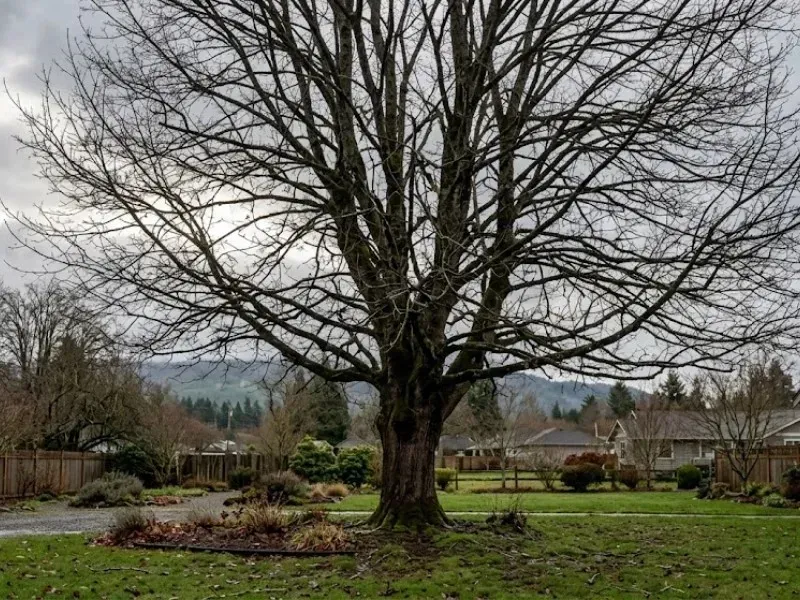
When Should Trees Be Pruned in Monroe, Washington?
Most trees in Monroe, WA are best pruned during the late dormant season — late January through early March — when structure is visible, wounds compartmentalize quickly with spring bud break, and pathogen activity is at its annual low. Stone fruits are the key exception: cherry, plum, and apple must be pruned in dry summer conditions (July to August) to prevent bacterial canker. Tree Ninjas provides certified arborist pruning throughout Monroe and Snohomish County year-round.
By Daniel Montgomery, Co-Founder, Tree Ninjas · Last updated July 2026
Key Takeaways
Late January through early March is the best pruning window for most Monroe trees.
Stone fruits must be pruned in dry summer only; wet-season pruning risks bacterial canker.
Maples and birch bleed sap heavily in late winter; late fall or midsummer reduces bleeding.
Fall pruning (October to November) should be avoided in Monroe’s wet climate for most species.
Timing is the part of tree pruning that homeowners most often get wrong — and the part that matters most in the Pacific Northwest. Monroe’s position at the mouth of the Skykomish Canyon gives it a wetter, more compressed seasonal calendar than flat Puget Sound communities: the dry window is shorter, the wet season is longer and more intense, and the same pruning cut made in February versus November can have dramatically different outcomes. Here is a complete seasonal guide for Monroe’s common trees.
What Is the Difference Between Dormant and Active Season Pruning?
Dormant pruning is done when the tree is not actively growing — roughly November through February for most deciduous Monroe trees. Active season pruning is done while the tree is growing and carrying a full canopy. Both have legitimate uses, but they achieve different things and carry different risks.
Dormant pruning advantages:
Full scaffold structure visible without foliage — structural and crossing-branch decisions are clearer
Less sap flow at cut surfaces — less attractive to insects and disease vectors
Wounds compartmentalize rapidly as spring growth begins; new vascular tissue at bud break closes wounds faster than in any other season
Pathogen activity (fungal, bacterial) is lowest during cold dormant periods
Active season pruning advantages and appropriate uses:
Live canopy density can be directly assessed with foliage present — crown thinning decisions are more accurate in summer
Removal of water sprouts and suckers is cleaner with active growth visible
Vigor reduction: summer pruning removes photosynthetic capacity and slows growth, useful for managing aggressive species
•Required for stone fruits: cherry, plum, apple, and pear must be pruned in dry summer conditions in the Pacific Northwest to prevent disease
The Pacific Northwest nuance: in Monroe, “dormant” is relative. Douglas firs and Western red cedars are never fully dormant. Big-leaf maples in mild winters have limited dormancy. The most reliably dormant window in Monroe is late January through mid-February when overnight temperatures consistently drop toward freezing.
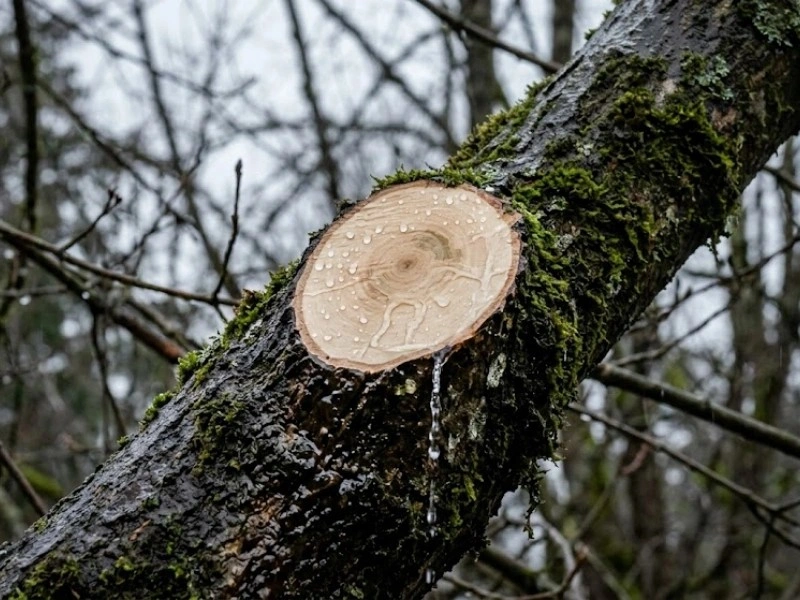
Can I Prune Trees During the Rainy PNW Winters in Monroe?
For most species, yes — winter pruning is preferred in Monroe, and the rain itself does not harm the biology of pruning cuts. The concern is not whether it is raining, but which species you are pruning and whether the cut can compartmentalize correctly given the temperature and pathogen conditions.
Species where winter pruning is fine despite rain:
Douglas fir, Western red cedar, hemlock: year-round pruning works; wounds respond well to any winter pruning
Big-leaf maple, red alder, vine maple, ornamental maples: winter pruning is appropriate, though maples will bleed sap in late February and March; rain does not worsen this
Most ornamental shade trees: dormant winter pruning is preferred; rain is not a meaningful concern for these species
Species where wet winter pruning should be avoided:
Cherry, plum, ornamental cherry, apple, pear: bacterial canker (Pseudomonas syringae) and fire blight (Erwinia amylovora) enter through fresh cuts in wet, mild conditions. The pathogen infects through open wounds within hours in Monroe’s winter air. Pruning these species October through May in Monroe creates genuine disease risk. Dry summer (July to mid-August) is non-negotiable for stone fruits.
Practical guidance: schedule winter pruning for dry days within the January-to-March window rather than avoiding the season entirely. For any species other than stone fruits, winter rain is not a reason to delay.
What Trees Bleed Sap When Pruned at the Wrong Time?
Some species produce significant visible sap flow from pruning cuts during late winter — not because the cuts are wrong, but because sap is actively moving at that time of year. Understanding which species bleed and when minimizes concern without avoiding necessary pruning.
Species that bleed sap when pruned in late winter (February to April) in Monroe:
Big-leaf maple: the most significant sap-bleeder in Monroe landscapes. Pruned in late February or March, a mature big-leaf maple produces visible sap flow from cuts that can continue for days. This is physiologically normal — the tree is not harmed — but it can be aesthetically unpleasant and attract insects. To minimize bleeding: prune in late fall (November, just after leaf drop) or midsummer (July to August).
Vine maple: bleeds similarly but produces less volume due to smaller stem diameters
Paper birch and water birch: both present along Skykomish River corridors in Monroe; bleed heavily in early spring when sap is actively rising. Late fall pruning minimizes birch bleeding.
Species that should NOT be pruned in late winter/spring for disease reasons (not sap):
Cherry, plum, apple, pear: not primarily a sap issue but a bacterial infection risk — see the rainy winter section above
Oak (Quercus species): Oak Wilt disease risk during spring (bark beetle activity April to July); prune in late fall or winter. Not a major Monroe species but present in some established landscapes
The bottom line for Monroe homeowners: big-leaf maple and birch sap bleeding is harmless and normal. If it bothers you aesthetically, shift maple and birch pruning to late November or midsummer. For all other Monroe species, timing decisions are driven by wound biology and disease prevention — not sap.
How Often Should Tree Pruning Be Done?
Pruning frequency depends on what goal you are trying to achieve, not a single universal schedule:
Safety-driven crown cleaning: every one to three years for fast-growing Monroe species (big-leaf maple, red alder); every three to five years for Douglas fir and cedar. The real trigger is observing dead or broken material — don’t wait for a schedule.
Health pruning / crown cleaning: every two to three years for maple, alder, and ornamental trees common in Monroe; every three to five years for established conifers
Crown thinning: every two to three years for fast-growing deciduous species; every three to five years for most Monroe trees
Structural pruning: every two to three years in the formative window (years one to ten); every three to ten years for established trees
Fruit tree pruning: annually for productive apple, pear, cherry, and plum trees; biannually for low-production ornamentals
Monroe’s fast Skykomish Valley growth rates mean these intervals are at the shorter end of the range compared to national averages. A tree that might need thinning every four years in a drier climate may need it every two to three years in Monroe.
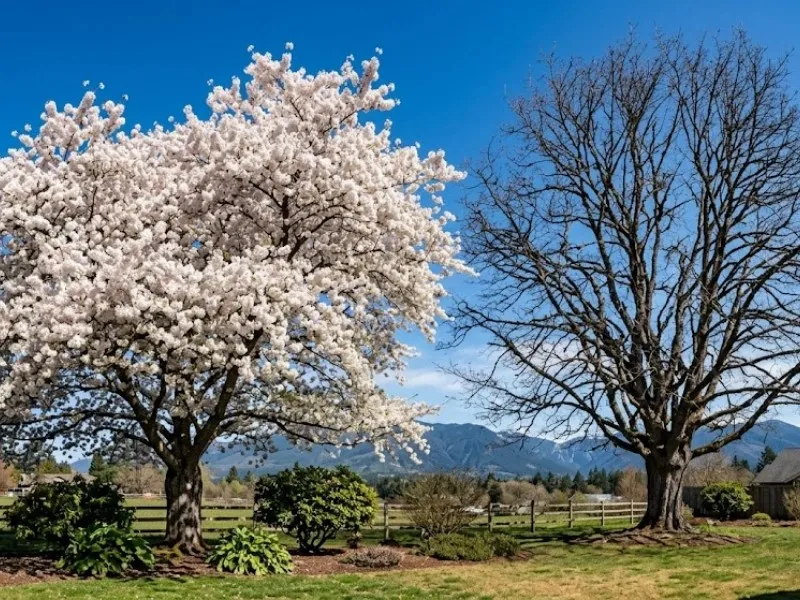
Monroe’s Seasonal Pruning Calendar
The Skykomish Valley’s compressed dry season and intense wet season make Monroe’s timing calendar more specific than the general Pacific Northwest guidance. Here is a month-by-month breakdown for Monroe’s most common trees.
January to mid-March — the primary window:
Best for Douglas fir, cedar, hemlock, big-leaf maple, red alder, ornamental shade trees, structural pruning, and young tree training. The optimal late-dormant period: scaffold structure is visible, wounds compartmentalize with the spring flush, and pathogen pressure is at its annual minimum. Monroe’s best within this window: late January to mid-February, when conditions are most reliably cold and dry.
Mid-March to May — generally avoid major work:
Fungal and bacterial pathogen activity rises sharply as temperatures warm. Sap is flowing heavily in maples and birch. Acceptable for: removing obvious dead branches and water sprouts. Not appropriate for: crown thinning, structural work, or any significant live-branch removal.
Mid-July to mid-August — stone fruit and dry-summer window:
Monroe’s dry summer window is shorter than the broader Pacific Northwest average — roughly July 15 to August 15 for most years. This is the mandatory window for cherry, plum, apple, and pear. Also the best secondary window for maple and birch where late-winter bleeding is a concern. Stone fruit timing in Monroe should be mid-July to late August specifically.
September to mid-October — pre-storm crown cleaning:
Not ideal for most pruning, but appropriate for targeted removal of widow-makers and dead branches before Monroe’s storm season begins in November. Crown cleaning done in this window removes the worst hazardous material before the highest-risk months.
October to November — avoid:
The worst window for tree pruning in Monroe. Wound compartmentalization slows as trees enter dormancy. October and November are among Monroe’s wettest months, creating sustained high-moisture conditions that maximize pathogen activity through open cuts. Do not schedule routine pruning during this window.
Seasonal Tree Pruning Near Monroe: Where We Work
Tree Ninjas provides certified arborist seasonal pruning throughout Monroe and the Sky Valley corridor. Our crews regularly serve Monroe and the Skykomish Valley communities, Snohomish, Duvall and the upper Snoqualmie Valley, and Sultan.
For the full service area, see our Washington locations page.
Schedule a Seasonal Pruning Visit in Monroe
Ready to schedule pruning for your Monroe trees? Tree Ninjas provides free on-site estimates for pruning work throughout Snohomish County.
Call or text: (206) 601-9390
Or request a free estimate at treeninjaspnw.com/contact-us.
Contact Tree Ninjas
Tree Ninjas
31524 NE Cherry Valley Rd
Duvall, WA 98019
Phone: (206) 601-9390
Hours: Available 24/7 for emergency service; office hours Monday through Friday, 8am to 5pm
Serving Monroe, Sultan, Snohomish, Duvall, and surrounding Snohomish County and King County communities.
