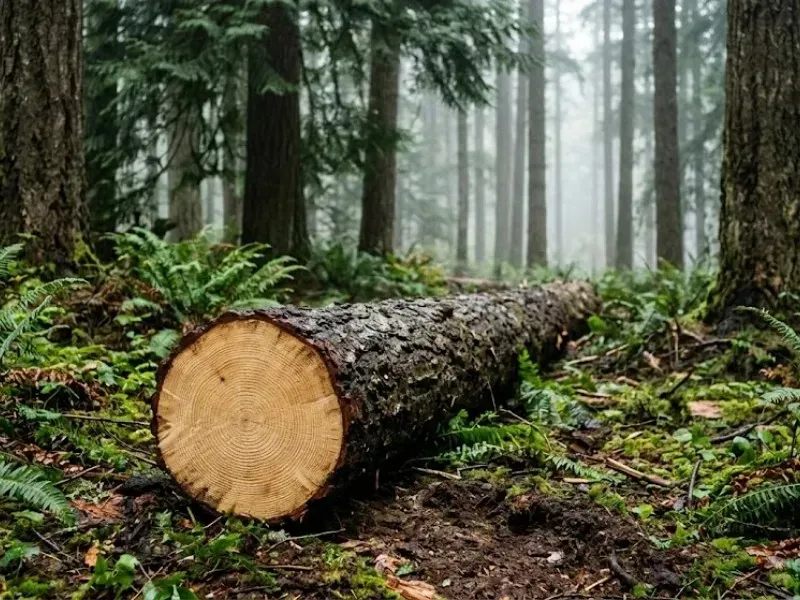
What Is Selective Logging and Is It Right for Your Monroe, WA Property?
Selective logging removes specific individual trees from a forest stand — by size, species, quality, or health — while leaving the rest standing. In Monroe, WA, it is the right approach when a landowner wants to harvest timber value or improve stand health without clearing the site entirely. Tree Ninjas provides selective logging throughout Monroe and Snohomish County.
By Daniel Montgomery, Co-Founder, Tree Ninjas · Last updated July 2026
Key Takeaways
Selective logging removes specific trees by individual assessment; clear-cutting removes all merchantable timber at once.
Monroe selective logging runs $1,500 to $4,000 per acre; selecting fewer trees increases per-unit cost.
Selective logging does not reduce Washington State FPA permit requirements; the same class system applies.
Maintaining canopy cover through selective logging directly protects Skykomish watershed stream temperatures and salmon habitat.
Monroe’s Skykomish River valley second-growth forests are among the most productive in western Washington — Douglas fir, Western red cedar, and big-leaf maple growing in conditions that compress the typical timber rotation cycle. For rural property owners along the Highway 2 corridor who want to harvest some timber value, improve stand structure, or create defensible space without removing the tree cover that defines their property, selective logging is both an ecological and an economic tool.
What Is the Difference Between Selective Logging and Clear-Cutting?
The core difference is what stays standing after the crew leaves.
Clear-cutting removes all or nearly all merchantable timber from a defined area in a single operation. It is the most economically efficient method for large timber operations: equipment works in open areas, log volume per acre is maximized, and logistics are straightforward. Washington State regulates clear-cutting under the Forest Practices Act’s Class III and Class IV categories.
Selective logging removes individual trees or small groups based on specific criteria — leaving the remaining stand structurally intact with continuous or near-continuous canopy cover. Equipment must maneuver around standing trees. Each selected tree requires individual assessment, marking, and careful felling to avoid damaging residual trees. Volume per acre is lower, per-unit cost is higher, but stand character and ecological function are preserved.
For Monroe property owners, the practical choice usually comes down to intended end use:
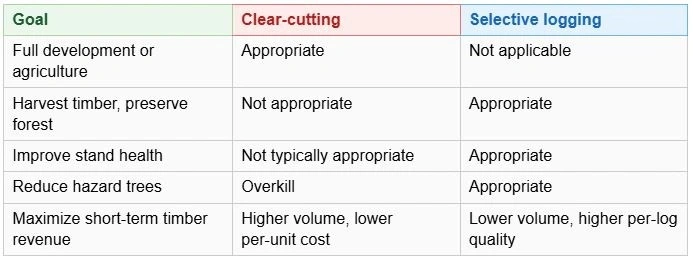
Cost comparison in Monroe: clear-cutting typically costs $1,000 to $2,500 per acre in net extraction cost (after offsetting timber value) for heavy second-growth stands. Selective logging runs $1,500 to $4,000 per acre because lower volume per acre means less efficiency. The per-log quality, however, is often higher in selective operations where the best-form trees are targeted.
Does Selective Logging Require Fewer Permits in Washington?
No — and this is one of the most common misconceptions. Washington’s Forest Practices Act permit requirements are based on the scale and land classification of the harvest operation, not on whether it is selective or clear-cut. A selective harvest removing 8,000 board feet of Douglas fir from a Monroe forestland parcel requires the same Class II notification or Class III FPA as a clear-cut removing the same volume.
What does change with selective logging from a regulatory perspective:
Class I exemption still applies: removing less than 5,000 board feet for personal use remains Class I regardless of harvest method — selective or clear-cut
Riparian zone retention: Washington’s RMZ rules require retention of specific percentages of trees adjacent to typed waters; selective logging near Skykomish River tributaries must account for these, but the FPA class is the same
SEPA threshold: selective harvest that does not convert land to non-forest use may avoid the Class IV-General category, which is one scenario where a selective approach can mean a somewhat simpler permit pathway compared to a development-clearing operation
Don’t assume selective logging is a permit shortcut. Contact WA DNR’s Northwest Region at (360) 856-3500 or the Small Forest Landowner Office at 1-800-523-TREE (8733) to confirm the FPA class for your specific Monroe parcel. For a full overview of the FPA permit system, see our logging services guide.
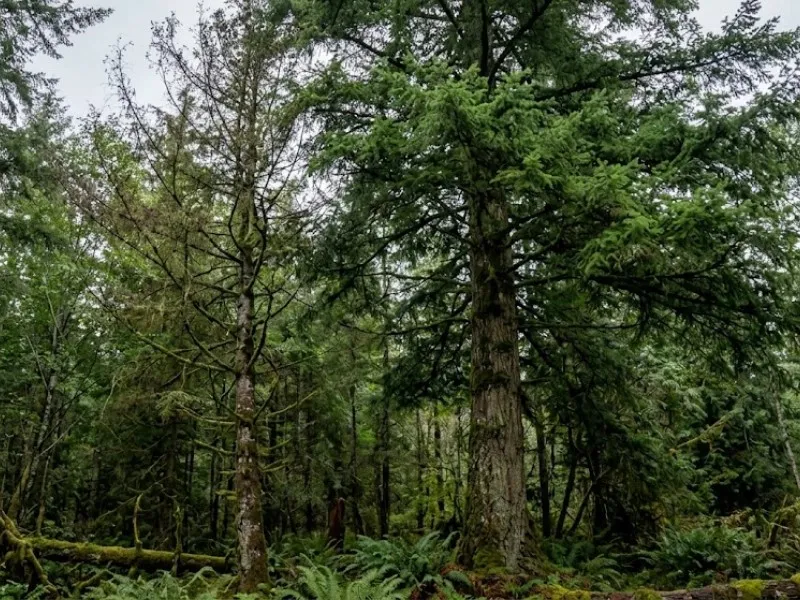
How Does Selective Logging Benefit Forest Health?
When done correctly — with removal criteria focused on stand improvement rather than simply extracting the largest trees — selective logging is one of the most beneficial active management tools available to Monroe forest landowners. The key is the selection methodology.
Stand improvement through selective logging:
Releasing suppressed trees: dense second-growth Douglas fir stands in Monroe often have dozens of trees per acre competing for resources. Removing the most suppressed and poorest-formed trees concentrates growth on the best-quality individuals; released trees respond with accelerated diameter growth within two to five years.
Removing diseased and damaged trees: trees with root disease (Armillaria, Phytophthora), stem cankers, top damage, or beetle infestation are removal priorities. Removing these reduces disease pressure on neighboring healthy trees.
Reducing alder competition: red alder establishes aggressively in Monroe’s moist climate. Selective removal of alder releases young Douglas firs and hemlocks from competition, accelerating their growth toward the main canopy.
Managing species composition: selective thinning toward higher-value conifers improves the long-term timber value of the stand.

What Trees Are Selected During Selective Logging?
The selection criteria depend on the harvest goal. Monroe property owners typically pursue one of two approaches, often in combination.
Commercial selective harvest (timber value-focused): the trees removed are those with the highest commercial value — the largest diameter, most structurally sound trees with fewest defects. This produces high-grade logs and maximum short-term revenue but can harm long-term stand quality by removing the genetic and structural elite of the forest. Silviculturists call this “high-grading” and it is the most criticized form of selective logging.
Improvement cutting (stand health-focused) removes trees least likely to contribute to stand quality:
Dead and dying trees: trees with brown crowns, significant die-back, or confirmed death; no photosynthetic value and create hazard as they deteriorate
Diseased trees: visible fungal conks, active bark beetle infestations, root disease, or stem cankers; removing these reduces disease pressure on neighboring healthy trees
Suppressed trees: trees below the main canopy showing little growth response; these will likely die regardless; removing them now contributes material value and opens resources for better-performing trees
Wolf trees: unusually large-crowned, wide-spreading trees that monopolize a disproportionate area of canopy space relative to their timber quality; common in older Monroe second-growth stands
Non-target species in conifer plantings: red alder and big-leaf maple that have established in sections planted to Douglas fir or cedar are prime candidates for removal to release the planted conifers
The marking process: for commercial selective logging under an approved FPA, trees selected for harvest are marked by a forester or certified timber cruiser before harvest begins. The marking walk establishes selection criteria consistently across the stand and provides the basis for volume estimates and FPA documentation.
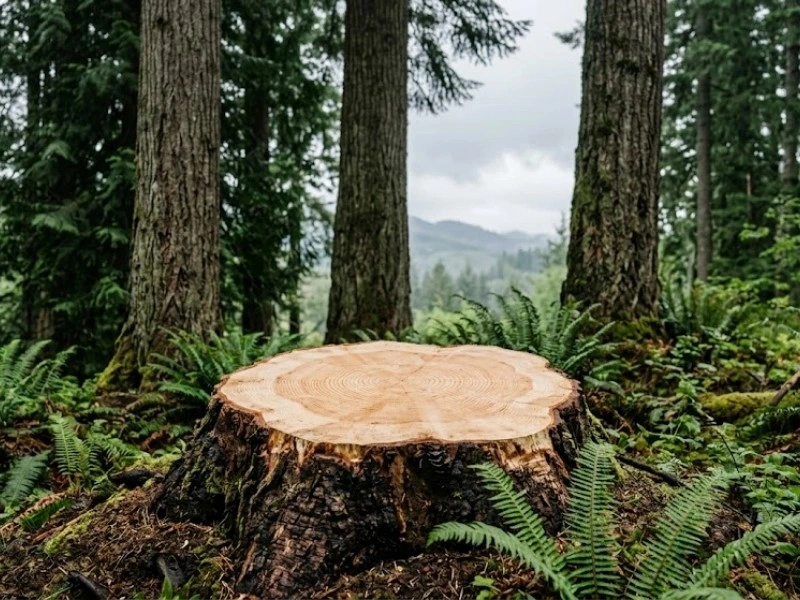
Can Selective Logging Be Done on Small Acreage in Monroe?
Yes — and small acreage is in many ways where selective logging is most appropriate. Clear-cutting a two-acre Monroe property makes little economic sense: the volume is too small to justify the overhead, mill logistics, and full Forest Practices permit cycle. Selective harvest on a two-to-five-acre parcel, removing the best logs while leaving stand structure intact, is an entirely different calculation.
Why small-acreage selective logging works in Monroe:
The volume math: a mature 3-acre Douglas fir stand in Monroe might hold 60,000 to 90,000 board feet total; removing 30% selectively yields 18,000 to 27,000 board feet — well worth a professional harvest at current log prices
Class I exemption space: for personal-use removal under 5,000 board feet, no FPA is required regardless of whether the harvest is selective or clear-cut; most realistic on parcels under one acre with light timber density
Equipment approach: selective logging on small acreage benefits from excavator-forward equipment with minimal soil disturbance, preserving the stand character that makes the property valuable
The alternative: many Monroe property owners who inquire about “logging their property” benefit more from targeted selective removal than any significant harvest — removing hazardous dead trees, releasing best Douglas firs from alder competition, and cleaning diseased material can be done in a day or two on a two-to-five-acre parcel
For Monroe properties where selective logging intersects with critical areas — properties near Skykomish River tributaries, wetlands, or steep slopes — the critical area requirements from our land clearing guide apply equally. Tree selection near typed waterways must account for RMZ retention requirements regardless of harvest scale.
Selective Logging Near Monroe: Where We Work
Tree Ninjas provides selective logging and certified arborist-led stand improvement throughout Monroe and the Sky Valley corridor. Our crews regularly serve Monroe and the Skykomish Valley communities, Snohomish, Duvall and the upper Snoqualmie Valley, and Sultan.
For the full service area, see our Washington locations page.
Get a Free Selective Logging Assessment in Monroe
Selective logging scope is property-specific. The right selection criteria, equipment approach, and FPA pathway depend on stand composition, density, age, proximity to critical areas, and your goals for the property. Tree Ninjas provides free on-site assessments throughout Monroe and Snohomish County.
Call or text: (206) 601-9390
Or request a free assessment at treeninjaspnw.com/contact-us.
Always confirm FPA requirements with WA DNR’s Northwest Region at (360) 856-3500 before beginning any timber harvest on Washington forestland.
Contact Tree Ninjas
Tree Ninjas
31524 NE Cherry Valley Rd
Duvall, WA 98019
Phone: (206) 601-9390
Hours: Available 24/7 for emergency service; office hours Monday through Friday, 8am to 5pm
Serving Monroe, Sultan, Snohomish, Duvall, and surrounding Snohomish County and King County communities.
