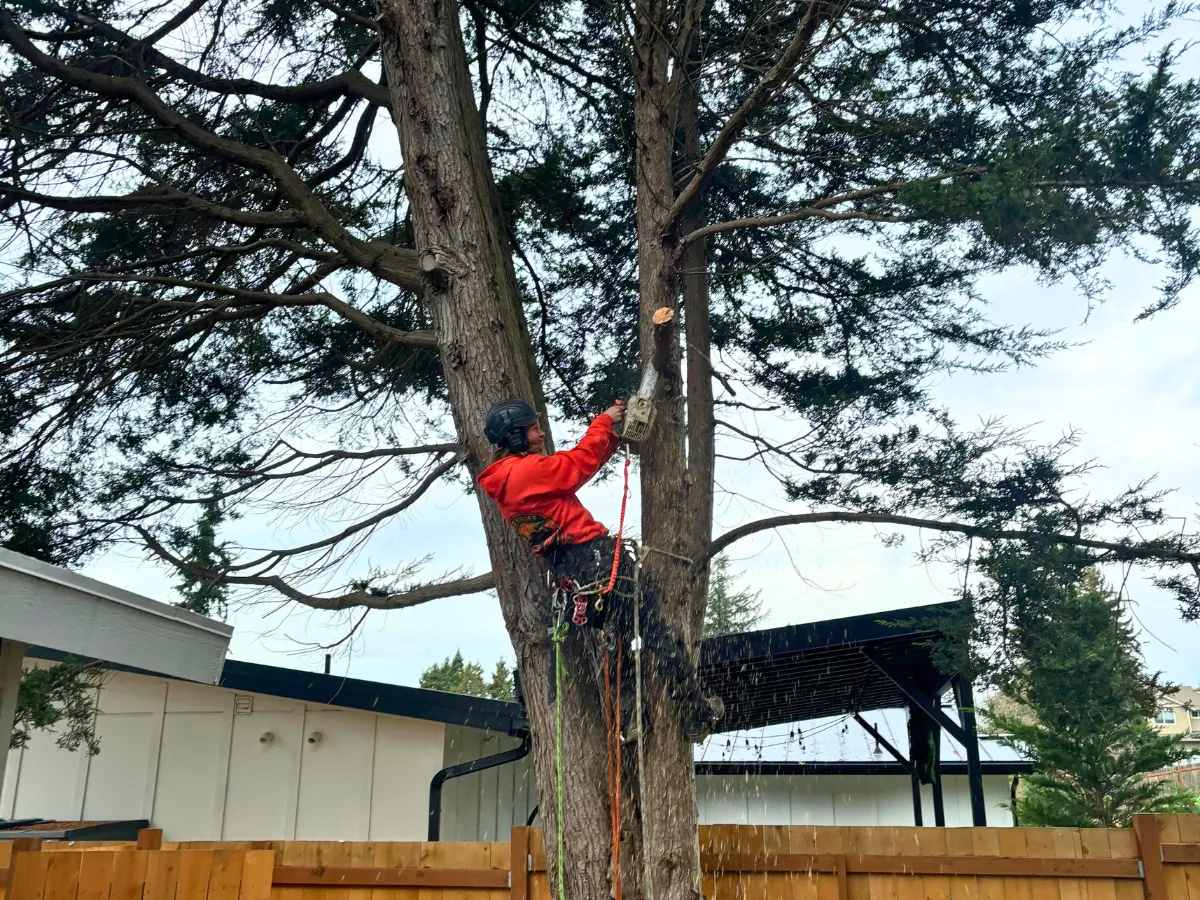
5 Signs You Need a Tree Trimming Service Immediately
A tree trimming service is needed immediately when trees develop safety risks such as overhanging branches, dead or cracked limbs, storm damage, or growth near power lines.
These conditions increase the likelihood of falling branches, property damage, and injury. Prompt trimming helps reduce hazards, protect structures, and maintain overall tree stability.
Key Takeaways:
Overhanging branches can cause sudden property damage.
Dead or cracked limbs are a serious safety risk.
Trees near power lines require immediate trimming.
Storm damage weakens branches even if they don’t fall right away.
Early professional trimming prevents emergencies and costly repairs.
Signs You May Need a Tree Trimming Service Right Away
Overhanging or low-hanging branches near structures
Dead, cracked, or hanging limbs
Branches growing into power lines
Dense or overcrowded tree canopies
Leaning trees or uneven branch weight
Storm-damaged or weakened limbs
1. Large or Overhanging Branches Near Structures
One of the clearest signs you need a tree trimming service is when heavy branches extend over roofs, garages, fences, or parked vehicles. Even healthy branches can snap under their own weight, especially during storms or high winds.
Branches that hang too close to structures increase the risk of:
Roof damage and broken shingles
Cracked siding or windows
Structural stress during storms
In practice, many property owners underestimate how much weight mature branches carry. Trimming reduces leverage stress on the tree while protecting nearby structures from impact damage.
According to guidance from the U.S. Forest Service on tree hazards and risk management, unmanaged tree growth can significantly increase the likelihood of property damage during severe weather.

2. Branches Touching or Approaching Power Lines
Branches growing toward power lines represent an immediate safety concern. Contact between tree limbs and electrical lines can lead to outages, fires, or serious injury.
Common warning signs include:
Branches brushing against lines during the wind
Trees growing directly beneath utility lines
Sparks or unusual sounds near overhead cables
Professional tree trimming services use specialized techniques to manage growth near utilities safely. Attempting to cut branches near power lines without proper training and equipment can be extremely dangerous.
Electrical safety organizations warn that vegetation contacting power lines is a leading cause of outages and fire hazards.
3. Dead, Cracked, or Hanging Limbs
Dead or damaged limbs rarely fall without warning — they often show visible deterioration first. Cracks, splits, or partially broken branches signal structural failure within the wood.
You may notice:
Limbs with no leaves during the growing season
Bark peeling or wood splitting
Branches hanging at unnatural angles
From a safety perspective, dead limbs are unpredictable. Many tree services in my area report that most emergency calls stem from previously visible damage that was left untreated. Immediate trimming reduces the chance of sudden branch failure, which can otherwise lead to injuries, property damage, or unexpected liability.
4. Trees Leaning or Showing Uneven Growth
While some trees naturally lean, sudden or worsening tilts indicate root or structural instability. Uneven branch weight can accelerate this problem, especially after storms or soil erosion.
Warning signs include:
A noticeable change in tree angle
Soil lifting near the base
One-sided canopy growth
In these situations, trimming redistributes weight and reduces strain on compromised roots. A professional tree trimming service can assess whether trimming alone is sufficient or if further intervention is required.
5. Storm Damage or Recent Severe Weather Exposure
After strong winds, heavy rain, or snow, trees may sustain hidden damage that worsens over time. Branches weakened by storms may not fall immediately but can fail days or weeks later.
Post-storm indicators include:
Newly cracked limbs
Branches tangled with others
Increased leaf drop or canopy thinning
Many homeowners search for affordable tree service options after storms to address risks before they escalate. Proactive trimming following severe weather is one of the most effective ways to prevent emergency situations.
Additional Warning Signs Often Overlooked
Not all tree hazards are immediately obvious. Some issues develop gradually and are commonly missed until damage occurs.
Dense Canopy or Overcrowded Branches
When branches grow too closely together, airflow and sunlight are restricted. This creates stress within the tree and increases the likelihood of disease, weak limb development, and breakage during storms.
Signs of canopy overcrowding include:
Branches rubbing against each other
Excessive interior shading
Reduced leaf health or uneven growth
Professional tree trimming services often thin dense canopies to restore balance and reduce wind resistance.
Visible Disease or Wood Decay
Trees affected by disease or decay often lose structural strength internally before external failure occurs. Indicators may include fungal growth, soft or hollow wood, discoloration, or peeling bark.
In many cases, targeted trimming removes affected limbs early, preventing further spread and reducing the risk of sudden collapse.

Why Immediate Tree Trimming Matters
Delaying necessary trimming increases the chance of:
Personal injury
Property damage
Costly emergency removals
Insurance claims and liability issues
From an operational standpoint, professional trimming improves both safety and long-term tree health. Removing hazardous growth allows trees to heal, grow evenly, and withstand environmental stress more effectively.
Read also: How to Choose Local Tree Trimming Companies
How Professionals Assess Tree Trimming Urgency
Qualified tree specialists evaluate several factors before trimming, including:
Branch size and weight distribution
Tree species and growth patterns
Proximity to structures and utilities
Signs of decay or disease
This assessment helps determine whether immediate trimming is required or if scheduled maintenance is sufficient. Relying on professional judgment reduces guesswork and ensures safety standards are met.
Can Tree Trimming Be Both Safe and Affordable?
Many property owners delay trimming due to cost concerns. However, affordable tree service options are often available when issues are addressed early rather than during emergencies.
Routine trimming:
Costs less than emergency removal
Reduces long-term maintenance expenses
Prevents insurance-related complications
Searching for reputable tree services in my area allows homeowners to compare solutions and schedule preventative care before problems escalate.
When Professional Help Is Necessary
Tree trimming should be handled by professionals when:
Branches are large or elevated
Power lines are nearby
Structural damage is visible
Safety equipment is required
A qualified tree trimming service ensures work is completed safely, efficiently, and in compliance with local safety standards. Professional intervention minimizes risk while protecting both people and property.
These are common questions homeowners ask when determining whether tree trimming is necessary.
Related Guide: Expert Guide to Tree Trimming and Tree Removal
Frequently Asked Questions
1. How do I know if tree trimming is urgent?
Tree trimming is considered urgent when branches are dead, cracked, leaning toward structures, touching power lines, or damaged by storms. These conditions significantly increase the risk of falling limbs and property damage.
2. Can overgrown trees become dangerous even if they look healthy?
Yes. Even healthy trees can become hazardous when branches grow too large, too dense, or unevenly distributed. Excess weight and poor airflow increase the likelihood of breakage during wind or rain.
3. Is tree trimming different from tree removal?
Tree trimming focuses on removing specific branches to improve safety and tree health, while tree removal involves taking down the entire tree. Trimming is often used to prevent the need for full removal.
4. How often should trees be professionally trimmed?
Most trees benefit from professional trimming every one to three years, depending on species, growth rate, and location. Trees near buildings or power lines may require more frequent attention.
5. Does delaying tree trimming increase costs?
Yes. Delaying trimming can lead to emergency situations, which are typically more expensive than routine maintenance. Early trimming reduces safety risks and long-term service costs.
Final Thoughts
Recognizing the early signs of hazardous tree growth allows homeowners to act before serious damage occurs. Overhanging branches, dead limbs, storm damage, and proximity to utilities all indicate the need for immediate attention.
Timely trimming protects property, improves safety, and supports long-term tree health. Addressing these issues early is the most effective way to avoid emergencies and maintain a safe outdoor environment.
Need Professional Tree Trimming Support?
If your trees are showing signs of risk or overgrowth, Tree Ninjas provides professional tree trimming services focused on safety, tree health, and long-term property protection. A timely assessment can help prevent damage before it becomes an emergency.
Contact Tree Ninjas to schedule a professional tree evaluation and ensure your trees are properly maintained.
