What Is Structural Pruning and Does My Monroe, WA Tree Need It?
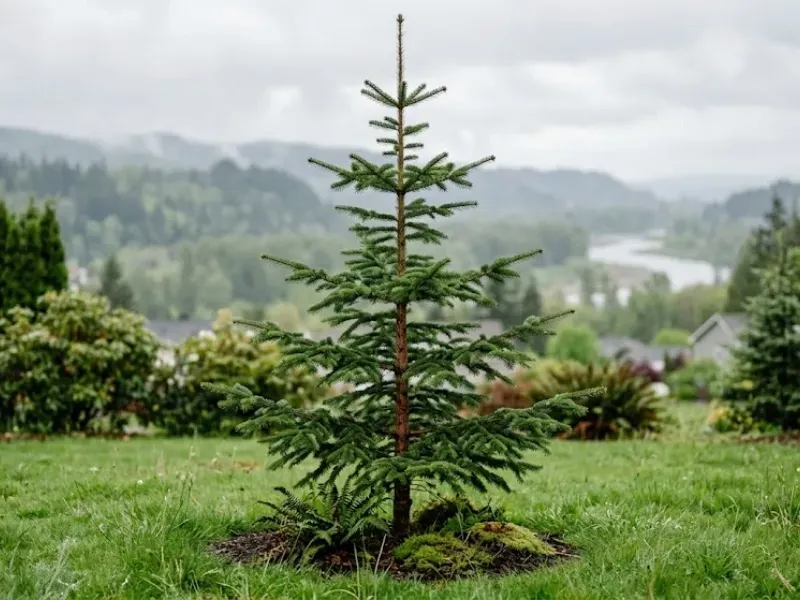
Structural pruning shapes a tree’s branch architecture to prevent codominant stems, bark inclusions, and scaffold failures that can become expensive or dangerous in mature trees. In Monroe, WA, where fast growth in the Skykomish River valley means structural issues develop quickly, certified arborist pruning in a tree’s first ten to twenty years is the single highest-return investment available. Tree Ninjas serve Monroe and the Sky Valley corridor throughout Snohomish County.
By Daniel Montgomery, Co-Founder, Tree Ninjas · Last updated July 2026
Key Takeaways
Structural pruning prevents codominant stems and included bark from becoming structural liabilities in mature trees.
Structural pruning in Monroe costs $150 to $700, much less than corrective work or removal years later.
Monroe’s Skykomish Valley fast growth rates compress the window for effective structural intervention.
Structural pruning can save storm-damaged or improperly maintained trees if intervention begins early enough.
Monroe sits at the mouth of the Skykomish River canyon, where orographic lift from the Cascades delivers more annual precipitation than much of the Puget Sound region and where gap winds from the canyon create wind load events that more sheltered communities rarely experience. These conditions — fast-growing trees on saturated soils exposed to periodic high winds — make structural pruning not just a best practice but a specific risk management measure.
How Much Does Structural Pruning Cost in Monroe, WA?
Structural pruning in Monroe typically costs $150 to $700 per tree for work done during the formative or mid-maturity window. Because early structural work involves targeted cuts on relatively small trees with minimal material removed, it is significantly less expensive than the corrective pruning, cable bracing, or removal that becomes necessary if structural defects go unaddressed for another decade.
Cost by tree size and stage:
Young trees (under 20 feet): $150 to $350 per structural visit — typically one to three precise cuts that redirect years of future growth
Mid-maturity (20 to 40 feet): $300 to $700 — more assessment time, more significant cuts, but still within the window where structural decisions produce lasting results
Corrective structural work on established trees (40 feet and over): $500 to $1,200 or more, approaching full health pruning in complexity
The value argument is consistent: a structural assessment on a 15-foot Douglas fir at year eight costs a fraction of the crane-required corrective work or removal that follows a codominant stem failure at year thirty. For more on what structural work includes at each stage, see our tree pruning service page.
What Is the Difference Between Structural Pruning and Crown Thinning?
Structural pruning and crown thinning are the two most frequently confused pruning types — and they address different problems at different life stages of the tree.
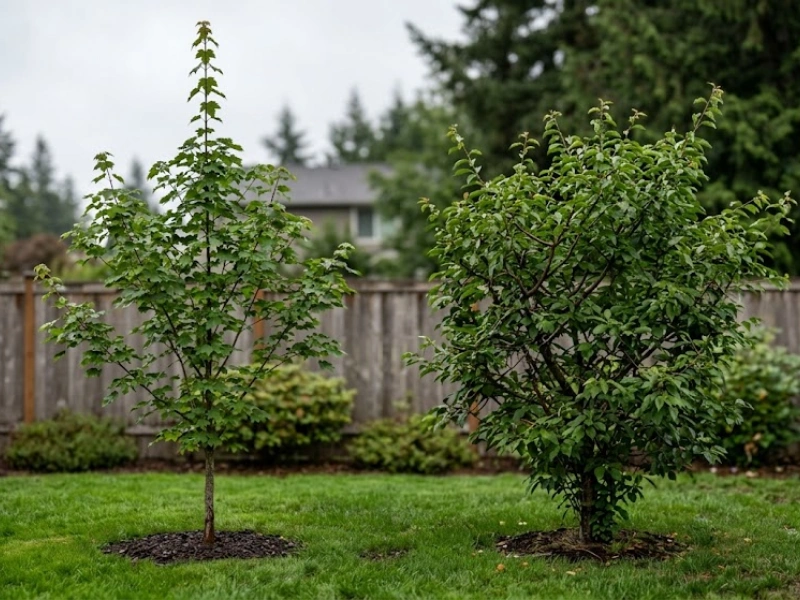
Structural pruning targets the tree’s branch architecture: which stems become the dominant framework, where scaffold branches attach, and whether competing leaders develop included bark. It is most impactful on young to mid-maturity trees, and its results are measured over decades. Every structural cut has a specific architectural objective.
Crown thinning targets the tree’s density: selectively removing interior live branches to improve airflow, reduce wind load, and allow more light into the canopy. It is appropriate at any life stage but does not change the underlying scaffold structure. Crown thinning can be repeated on a maintenance cycle; structural pruning addresses issues that cannot be corrected once a tree reaches a certain size.
The practical distinction for Monroe homeowners:
A young Douglas fir with two competing leaders of similar diameter needs structural pruning — the competing leader should be reduced or removed before included bark forms
A mature big-leaf maple with a sound scaffold but overly dense interior canopy needs crown thinning
A mid-maturity tree with both a structural defect and excessive density may benefit from both in the same session — structural first, then thinning
For a detailed comparison of crown thinning versus crown reduction, see our crown thinning guide.
Can Structural Pruning Save a Damaged Tree in Monroe, WA?
Yes — and this is one of the most under-utilized applications of structural pruning in Monroe’s mature tree landscape. Trees that have been damaged by storms, improperly maintained, or subjected to topping can often be significantly improved through targeted structural intervention, even after the formative window has closed.
Cases where structural pruning can help an already-damaged Monroe tree:
Storm-split codominant trees: if one of two competing leaders has failed in a storm, structural pruning can direct energy to the remaining leader and establish it as the dominant stem going forward. The window for this intervention is wide — it is effective as long as the remaining structure is sound.
Previously topped trees: a tree topped five to fifteen years ago now has watersprout growth from the original stub zones. Structural pruning selects the best-positioned and most securely attached watersprout to develop into a replacement leader — called restoration pruning. This recovers a structurally viable tree from what looks like an unredeemable situation.
Monroe’s legacy fruit trees: former agricultural properties throughout the Sky Valley left mature apple, pear, and ornamental plum trees that were neglected through their most productive maintenance years. Structural pruning can redistribute energy to the most productive and safely attached scaffold branches, reducing failure risk and extending the tree’s productive life.
Early-stage included bark is still manageable: if caught before competing stems have grown to equal or near-equal diameter, one leader can be reduced or removed and the included bark problem is resolved rather than managed. This window closes fast in Monroe’s growth climate.
Where structural pruning cannot help:
Included bark splits that have already begun to physically separate — the union has failed; cabling and monitoring or removal are the remaining options
Trees where more than 50 percent of the structural crown was lost to storm or disease
Trees with advanced internal decay at major scaffold unions that undermines the integrity of any structural cuts
An on-site assessment by a certified arborist is the only reliable way to distinguish a salvageable tree from one that has passed the point of structural intervention.
How Often Should Mature Trees Be Structurally Pruned in Monroe?
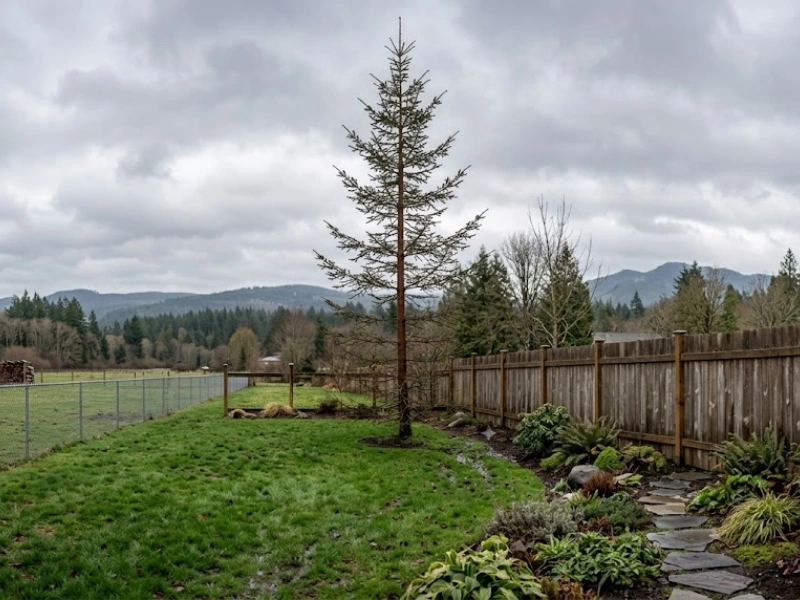
For trees in their formative phase (under 20 feet): every two to three years. For mid-maturity trees being managed through corrective structural work: every three to five years. For older established trees that received good early structural care: a structural assessment every five to ten years is sufficient.
In Monroe’s Skykomish Valley climate, these timelines are compressed relative to drier regions. Fast growth means competing leaders develop codominant status more quickly, including bark forms faster, and the window for low-cost intervention closes sooner. A tree that might benefit from structural pruning at year ten in eastern Washington may need that same intervention at year six in Monroe.
Best time of year: late winter, January through early March. The dormant season makes the full scaffold structure visible, and the spring growth flush that follows compartmentalizes pruning wounds quickly. For Monroe-specific wind event exposure — the gap winds that channel through the Skykomish Canyon — having structural work completed before November provides maximum stability through the highest-risk storm months. For a full seasonal pruning guide, see our Pacific Northwest timing post.
Do I Need a Permit to Prune Large Trees in Monroe, WA?
For pruning on your own private property in Monroe, no permit is required. Pruning — including structural pruning by a professional arborist — is maintenance work, and Washington cities generally do not require permits for pruning on private property.
For tree removal in Monroe, the picture is different:
City of Monroe: Monroe is a designated Tree City USA and maintains a community tree ordinance primarily covering public and street trees. The Heritage Tree Program recognizes significant trees on private property, but that designation carries no additional preservation or removal requirements. For most standard residential tree removal on private property in Monroe, a permit is not required. Contact Monroe’s Planning Department at 360-863-4609 to confirm requirements for your specific site before any removal work begins.
Critical areas near Monroe waterways: properties adjacent to Skykomish River tributaries, wetlands, or steep slopes may fall under Snohomish County’s Critical Areas Ordinance. Trees in these areas require additional review before removal. The critical area rules do not typically restrict pruning but should be verified if your property is near the river corridor.
Right-of-way trees: planting or removing trees within Monroe’s public right-of-way requires a permit. If a large tree on your property extends significantly into the street right-of-way, confirm scope with the city before work begins.
For the full permit framework including hazardous tree exemptions under Snohomish County Code, see our hazardous tree removal guide for Snohomish.
Structural Pruning Near Monroe: Where We Work
Tree Ninjas provides certified arborist structural pruning throughout Monroe and the Sky Valley corridor. Our crews regularly serve Monroe and the Skykomish Valley communities, Snohomish, Duvall and the upper Snoqualmie Valley, and Sultan and the Highway 2 corridor.
For the full service area, see our Washington locations page.
Get a Free Structural Pruning Assessment in Monroe
Structural pruning decisions are made on-site. The right course of action depends on the tree’s current scaffold, the degree of any existing defects, and whether the formative window is still open. Tree Ninjas provides free on-site assessments throughout Monroe and Snohomish County.
Call or text: (206) 601-9390
Or request a free assessment at treeninjaspnw.com/contact-us.
Contact Tree Ninjas
Tree Ninjas
31524 NE Cherry Valley Rd
Duvall, WA 98019
Phone: (206) 601-9390
Hours: Available 24/7 for emergency service; office hours Monday through Friday, 8am to 5pm
Serving Monroe, Sultan, Snohomish, Duvall, and surrounding Snohomish County and King County communities.
