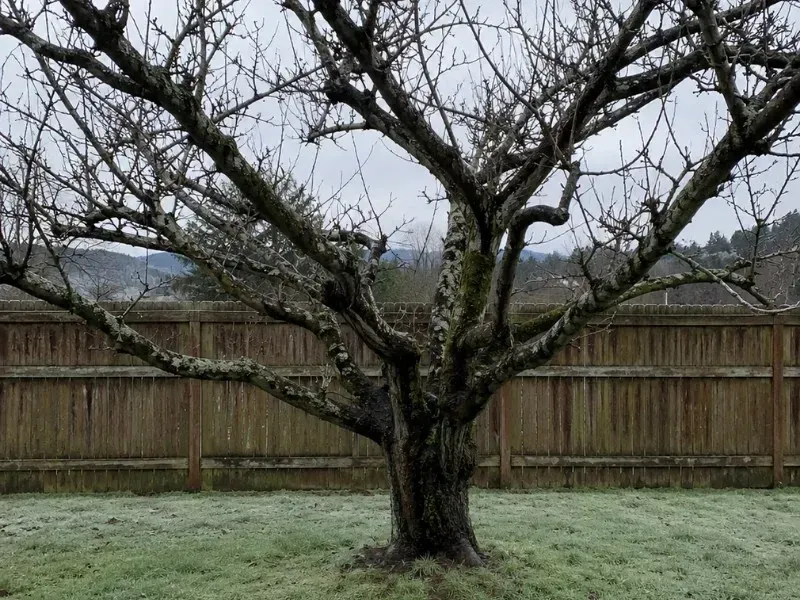
Why Is Tree Pruning Important for Monroe, WA Trees?
Tree pruning removes structural defects before they fail, improves health by clearing dead and diseased wood, manages size around structures, and extends a tree’s productive lifespan. In Monroe, WA, the Skykomish Valley’s fast growth rates and wet climate make regular pruning more consequential than in drier regions. Tree Ninjas provides certified arborist pruning throughout Monroe.
By Daniel Montgomery, Co-Founder, Tree Ninjas · Last updated August 2026
Key Takeaways
Tree pruning in Monroe costs $150 to $800 per tree depending on type and size.
Late winter (January to March) is the best pruning window for most Monroe trees.
Monroe’s many orchard and ornamental fruit trees require species-specific timing and technique.
Improper pruning — topping, flush cuts, stub cuts — can cause permanent structural and health damage.
Trees in Monroe’s Skykomish River valley grow faster and hold more moisture in their canopies than trees in most Pacific Northwest communities. The combination of orographic precipitation from the Cascades and deep alluvial soils produces canopy growth that rewards consistent pruning and punishes neglect more quickly than in drier regions.
Five reasons tree pruning matters in Monroe:
Structural safety: removing codominant stems, included bark, and crossing scaffold branches before they fail in Skykomish Canyon gap winds
Tree health: clearing dead, diseased, and pest-damaged wood prevents decay advancing and disease spreading in Monroe’s wet climate
Airflow and disease resistance: thinning dense canopies reduces the wet-foliage conditions that favor powdery mildew, fire blight, and bacterial canker
Property protection: managing crown size, roof clearance, and utility line proximity on a schedule prevents the need for more drastic corrective work later
Fruit productivity: for Monroe’s substantial apple, pear, cherry, and plum tree population, annual pruning directly affects fruit size, yield, and structural capacity
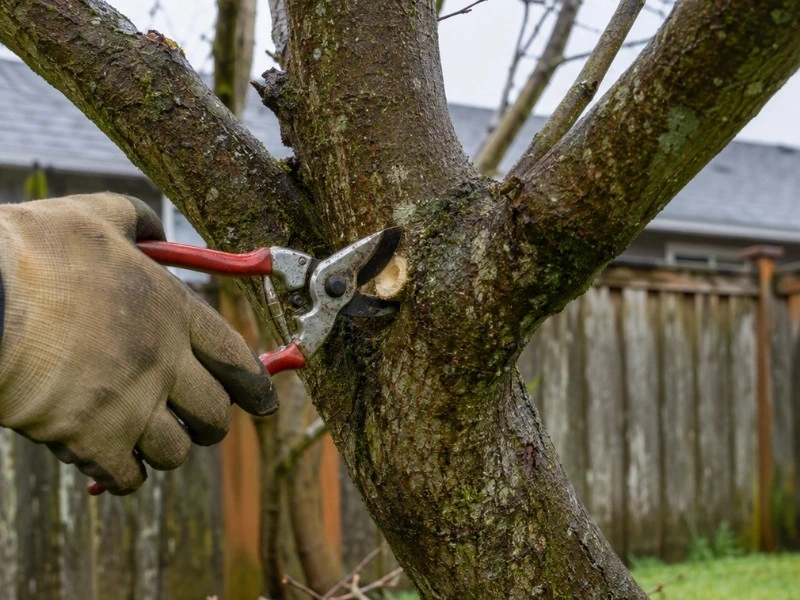
How Much Does Tree Pruning Cost in Monroe?
Tree pruning in Monroe typically costs between $150 and $800 per tree depending on the specific service, tree size, and access. Fruit tree pruning generally runs at the lower end of the range because most residential orchard and ornamental fruit trees are smaller than the shade and conifer trees that dominate other pruning categories.
Cost by pruning type:
Crown cleaning (dead, diseased, and crossing branch removal): $150 to $700 per tree — the foundational service every responsible pruning visit begins with
Crown thinning (selective interior branch removal for airflow and wind load): $250 to $800; every two to three years for Monroe’s fast-growing deciduous trees
Structural pruning (codominant stem correction, scaffold selection): $150 to $700; see our structural pruning guide for Monroe
Crown reduction (making the tree smaller through proper lateral cuts, never topping): $400 to $1,200
Fruit tree pruning (apple, pear, cherry, plum, ornamental varieties): $100 to $400 per tree
Tree Ninjas provides free on-site estimates throughout Monroe and Snohomish County.
When Should Trees Be Pruned in the Pacific Northwest?
Late winter — January through early March — is the optimal pruning window for most Monroe trees. Dormant structure is fully visible, wounds compartmentalize quickly with spring bud break, and pathogen activity is lowest in the cooler, drier period between December and February.
Monroe’s high annual precipitation from Cascade orographic lift makes timing more consequential than in most Puget Sound communities:
Douglas fir and Western red cedar: year-round acceptable; late winter preferred for larger structural work
Big-leaf maple and ornamental maples: late winter; sap bleeding from late-February cuts is normal and not harmful
Red alder: late winter; alders accumulate interior deadwood aggressively and respond well to dormant-season crown cleaning
Apple and pear trees: late winter (January to March) for annual maintenance; dry summer acceptable as a secondary window
Cherry, plum, and ornamental stone fruits: dry summer only — July to August; bacterial canker (Pseudomonas syringae) enters fresh wounds during Monroe’s wet seasons; a firm requirement in the Skykomish Valley’s climate
Fall (October to November): avoid for most species; wound compartmentalization slows and Monroe’s wet fall maximizes pathogen exposure
For the complete month-by-month seasonal guide with species-specific callout boxes, see our seasonal tree pruning guide for Monroe.
Do You Prune Fruit Trees and Ornamentals?
Yes — fruit tree and ornamental pruning is a significant part of Tree Ninjas’ work in Monroe, where the city’s agricultural heritage means more mature orchard trees survive on residential and rural properties than in most Snohomish County communities.
Productive apple and pear trees: annual late-winter pruning maintains the open-center or central-leader form that maximizes both yield and structural health. Each annual session removes inward and crossing branches, water sprouts, dead and damaged wood, and heading cuts to maintain manageable height.
Monroe’s orchard tree restoration opportunity: the city has a significant population of 30-to-70-year-old apple and pear trees on rural residential lots that have not been regularly pruned. Most can be brought back to a productive and structurally sound form through phased restoration pruning, removing no more than 25 to 30 percent of the live crown per season over two to three years.
Cherry and plum trees: the same annual maintenance goals apply, but timing shifts entirely to dry summer (July to August) for Monroe’s Skykomish Valley properties. Bacterial canker through wet-season cuts on stone fruits is a genuine and common cause of significant branch loss in this climate.
Ornamental fruit trees: ornamental cherry, flowering plum, and crabapple are managed for aesthetic form and flower production rather than fruit yield. Less aggressive annual pruning than productive orchard trees, but the same species-specific timing rules apply.
Can Improper Pruning Damage My Tree?
Yes — and most of that damage is permanent. Improper pruning causes harm that ranges from cosmetic to fatal, and it is one of the most important reasons to verify that the crew pruning your trees follows ISA and ANSI A300 standards.
Five specific ways improper pruning harms trees:
Topping. Cutting branches mid-shaft instead of at their attachment point leaves stubs the tree cannot close. The exposed wood decays inward while the tree responds with dozens of weakly-attached watersprout shoots. Within three to five years, a topped tree is typically the same size but structurally more hazardous. Certified arborists never top trees.
Flush cuts. Removing the branch collar — the raised ring at the base of the branch — eliminates the specialized cells responsible for wound closure. The tree loses its primary defense against the wound opening. Decay enters and advances into the main stem.
Stub cuts. Leaving too much branch material beyond the collar results in die-back from the stub tip toward the stem. The dying stub becomes an entry point for decay before the tree’s wound closure can catch up.
Lion’s-tailing. Removing too much interior foliage while leaving long, end-heavy branches creates a tufted, sail-like canopy that is more susceptible to wind failure than a properly balanced crown. Lion’s-tailed trees fail at wind speeds that leave properly pruned trees standing.
Wound dressings. Applying tar, paint, or sealant to pruning cuts is counterproductive. These products slow the tree’s natural callusing process by preventing the clean wood surface contact that callus tissue needs. ANSI A300 standards do not recommend their use.
The safest approach: confirm that any crew pruning your trees employs ISA-certified arborists who follow ANSI A300 pruning standards.
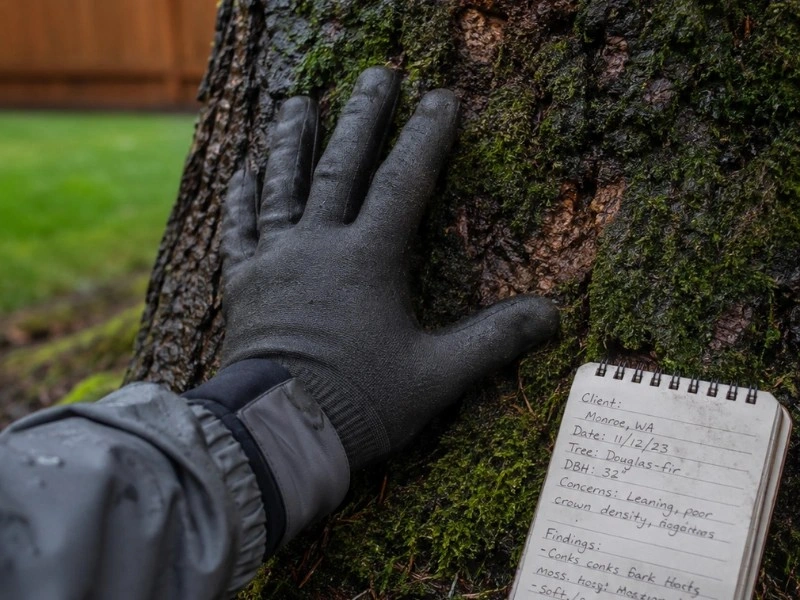
Is Pruning Part of an Arborist Health Service?
Pruning and arborist health services overlap significantly, and understanding how they relate helps Monroe property owners plan tree care more effectively.
Pruning is arborist work. Structural, health-focused, and formative pruning decisions — which branches to remove, how to reduce a codominant stem, how much live crown to take — require the biological understanding that an ISA Certified Arborist brings. Routine size trimming can be done by experienced crews without ISA credentials; anything involving structural decisions or hazard assessment should involve a certified arborist.
Arborist health assessments lead to pruning recommendations. When Tree Ninjas performs a diagnostic assessment of a declining or concerning tree, the outcome is often a recommended pruning scope — crown cleaning to remove dead material accelerating decay, structural pruning to address a codominant stem, or a phased restoration plan for a neglected orchard tree.
Does insurance cover pruning? Standard homeowners insurance does not cover elective tree pruning as a maintenance service. Pruning required to remove specific hazardous material after a qualifying storm event may be partially covered under the debris removal provisions of a homeowners policy. Routine and preventive pruning is the property owner’s maintenance responsibility.
For formal hazard tree documentation — written arborist letters for insurance claims, permit applications, or property sales — Tree Ninjas provides certified arborist reports.
Tree Pruning Near Monroe: Where We Work
Tree Ninjas provides tree pruning throughout Monroe and the Skykomish Valley corridor. Our crews regularly serve Monroe and surrounding communities, Snohomish, Duvall and the upper Snoqualmie Valley, and Sultan.
For the full service area, see our Washington locations page.
Tree Ninjas provides free on-site assessments for tree pruning throughout Monroe and Snohomish County.
Phone: (206) 601-9390 | treeninjaspnw.com/contact-us
Contact Tree Ninjas
Tree Ninjas
31524 NE Cherry Valley Rd
Duvall, WA 98019
Phone: (206) 601-9390
Hours: Available 24/7 for emergency service; office hours Monday through Friday, 8am to 5pm
Serving Monroe, Sultan, Snohomish, Duvall, and surrounding Snohomish County and King County communities.
