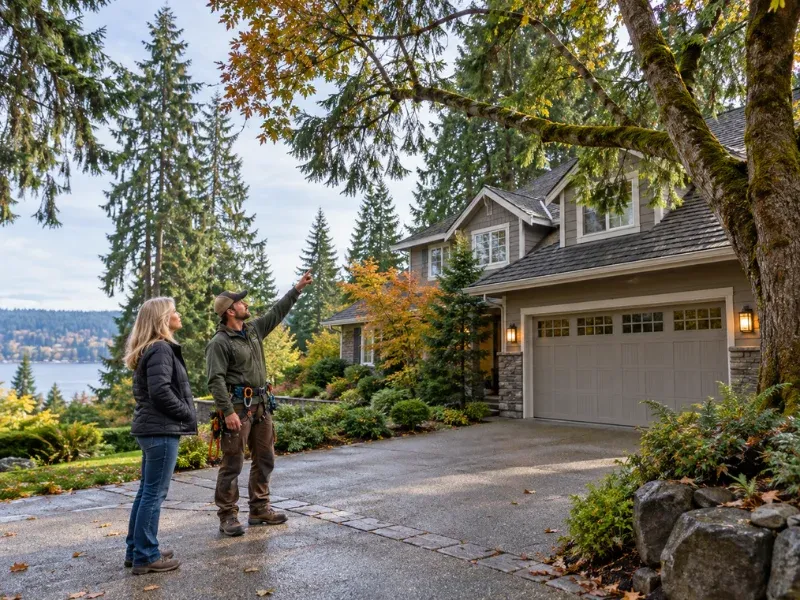
When Should I Book Tree Pruning Near Me In Sammamish?
I'd like you to book a time to prune my tree near me in Sammamish, preferably late winter (roughly January to early March) for most types of trees. It's a good time of year to do this when the tree is dormant, making it simple to see the branching patterns and make cuts close to where the tree will send out new leaves and shoots right after the pruning is done. Flowering trees, some types of maples and storm cleanup all have their own timing, though.
By Daniel Montgomery, Co-Founder, Tree Ninjas · Last updated October 22, 2026
What does a seasonal pruning calendar look like on the Plateau?
A seasonal pruning calendar on the Plateau typically calls for big jobs in late winter and comparatively light pruning the rest of the year. When it comes to trees, most people will tell you that February is the best month to do aggressive pruning on most shade trees, but it's not a slam dunk.
If you're figuring out when to prune trees near Sammamish and Klahanie Washington, this is how the year usually breaks down:
Months | Best for | Why |
Jan to early Mar | Structural pruning on most shade trees and fruit trees | Trees are dormant and branches are easy to read |
Late Mar to May | Light cleanup, flowering trees right after bloom | New growth is pushing, so heavy cuts stress the tree |
Jun to Aug | Dead wood, clearance, light thinning, some maples | Dry weather, but nesting birds need checking first |
Sep to Oct | Storm prep, deadwood, weak limbs over roofs | Clears hazards before winter wind and rain |
Nov to Dec | Hazard work and planning the winter schedule | Trees are slowing down for dormancy |
Dead, broken, or dangerous branches are the exception. Those can come off any time of year, and they shouldn't wait.
Why is dormant pruning the default for most trees?
Dormant pruning is done by default as a leafless tree is simpler to read, less stressed, and better at sealing cuts before spring. It's simply the lowest-risk time to take off live wood.
Here's what makes late winter work so well:
Clear view. Without leaves, crossing limbs, weak unions, and rubbing branches are obvious.
Less stress. The tree isn't spending energy on leaves when it loses branches.
Fewer pests. Many insects and disease spores are less active in the cold.
Fast closure. Cuts made just before spring growth start closing as soon as the tree wakes up.
Our winters help here too. They're wet, but usually mild enough that crews can work most weeks. Rain doesn't hurt a correctly pruned tree. Freezing temperatures and high winds are the real reasons to reschedule.
How do you know when to prune trees that break the rules?
Prune spring-flowering trees right after they flower and fruit trees in late winter, using light pruning to encourage more blossoms. Not all trees in your Sammamish yard will follow the dormant-season rule.
The common exceptions:
Flowering cherries, dogwoods, and magnolias. Prune in winter and you cut off this spring's blooms. Wait until just after flowering.
Fruit trees. Apples, pears, and plums do best with late-winter pruning, but heavy cuts trigger lots of upright shoots.
Birches. They bleed sap in late winter. It's harmless, but many homeowners prefer summer pruning.
Hedges and screens. Laurels and arborvitae are usually shaped once or twice during the growing season.
When in doubt, an arborist can look at the species and the goal before picking the date.
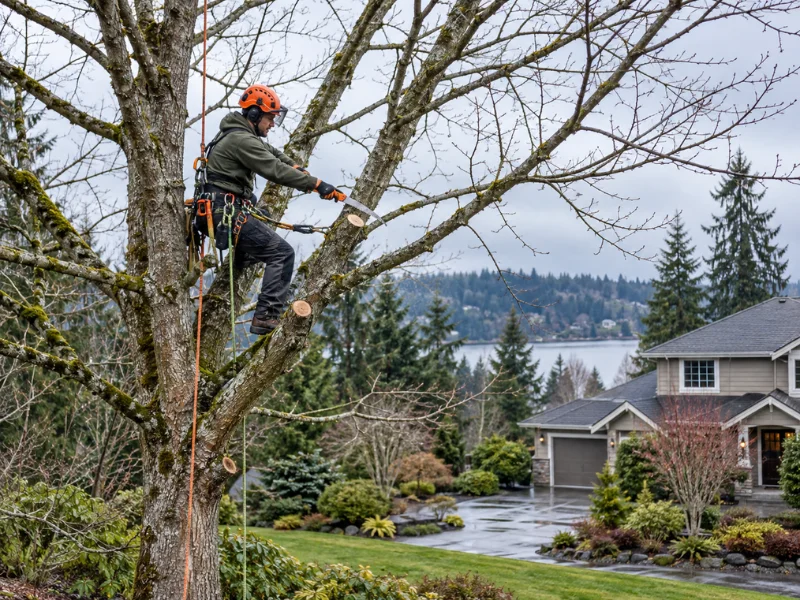
Why should spring pruning watch out for nesting birds?
Spring pruning has to watch for nesting birds because active nests are protected by federal law. The U.S. Fish and Wildlife Service explains that under the Migratory Bird Treaty Act, it's illegal to destroy a nest that has eggs or chicks in it, or young birds still depending on it.
On the Plateau, many birds are fond of nesting in dense evergreens during early spring. As such, before cutting any branch that could house a nest site, a crew conducting vegetation management during the period from early spring to summer completes a cursory inspection. If an active nest is found, the branch is left alone.
It's one more reason winter is the easier season. Fewer nests, fewer delays, and no surprises halfway up the tree.
What should you watch for between pruning visits?
Between pruning visits, check for broken limbs, dead tops, and new growth at the base of the trunk. A walk around the yard after every major windstorm tends to find them all.
Here's what's worth a closer look:
Hangers. Broken branches stuck up in the canopy can drop without warning.
Dead tops. Bare, brown tops on cedars or firs often point to stress or root trouble.
Mushrooms at the base. Fungus near the roots can signal decay you can't see.
New cracks or lean. Especially after heavy rain, when soil is soft.
Thirsty young trees. Our dry summers are hard on anything planted in the last few years, so water deeply.
None of these need panic. They just mean it's time to have someone look before the next storm.
How do you choose tree pruning near me without regrets?
Choose a company that prunes to a plan, follows the city's rules, and won't suggest topping. Sammamish's tree permitting guide says pruning doesn't need a permit when less than 30% of the branches are removed over the tree's life and the tree isn't topped. Topping isn't allowed at all.
When you compare companies for seasonal tree pruning Sammamish WA homeowners recommend, ask:
Is an ISA Certified Arborist planning the cuts?
What percentage of the crown are you removing, and why?
Will you check for nesting birds before starting?
Are you licensed and insured in Washington?
People also ask how much does tree pruning cost. It depends on the tree's size, how many trees you have, access for equipment, and whether a climber is needed. A small ornamental might take an hour. A tall Douglas fir over the house is a different job. We give a free written estimate after seeing the trees, and our tree pruning services page covers what's included.
Frequently asked questions
1. When is the best time to prune trees in western Washington?
The best time to prune most trees in western Washington is late winter, and that means getting out there from about January to early March, before new growth appears. It's winter, so the trees are dormant, their branching structure is simple to see, and the wounds heal quickly when the weather warms up; the only exception are spring-flowering trees, which you should prune right after they finish blooming.
2. Can pruning be done during the rainy season?
Yes, you can; in fact you should. Rain won't hurt a properly pruned tree, and most of the dormant-season pruning we do here occurs during the rainy season. We do stop when the wind is really up, or there's a risk of ice, or it's too cold to safely climb the tree.
3. Do firs and cedars need different timing from maples?
A little, yes. Firs and cedars can handle a little in the way of pruning throughout the year, but best to avoid heavy pruning until late winter or early spring. The problem with maples is that they "bleed" if you prune them in the late winter; while it won't kill the tree, a lot of people don't like the mess, so maple trees should be pruned in the summer.
4. How often do mature trees need pruning?
Most mature trees need some kind of pruning every two to three years. Large trees that are near your roof, or along a driveway or power line should be inspected more frequently; otherwise a healthy tree growing in an open space might be able to go several years between prunings.
5. Is it too late to prune before the winter storms arrive?
No, it's usually not too late. Removing dead, split, or overgrown branches in the fall is a good way to prepare for winter storms, especially around roofs and over drives. Large structural pruning should be saved for later in the winter, but dangerous branches shouldn't wait.
6. How much of a tree can be pruned at once?
As a rule of thumb, no more than a quarter of a mature tree's canopy should be removed in any given year. The reason for this has to do with stress and poor growth; removing more than that promotes random, weak growth. If you're removing more than 30% of a tree's leaves over its lifespan, that becomes a problem in Sammamish; it also requires a permit.
7. What's the difference between pruning and topping?
Pruning is the removal of certain branches back to a desired location on the tree in order to maintain the health and integrity of the plant and its natural growth pattern. Topping is the cutting back of the main stem of the tree across the top, and causes unsightly and weak growth to occur. Topping is actually prohibited by the city of Samamish and causes lasting damage to the tree.
8. Can you prune branches near power lines?
Branches near power lines should be pruned by the utility or by a qualified line-clearance arborist; working near live power lines is incredibly dangerous. Contact your local utility and let them know, then we can come out and prune the rest of the tree.
Where can you book tree pruning in Sammamish?
You can book tree pruning in Sammamish by calling Tree Ninjas at (206) 736-3757 for a free estimate. We'll look at your trees, explain what each one needs, and set a date that fits the season. Learn more about our Sammamish tree service, browse all our tree services, or reach us through our contact page.
Visit or Call Us
Tree Ninjas 31524 NE Cherry Valley Rd Phone: (206) 736-3757 WA Contractor License: TREENNL752Q1 Office hours: Monday to Friday, 8:00 AM to 5:00 PM, with 24/7 emergency response Service area: Sammamish, Klahanie, Redmond, Issaquah, Bellevue, Duvall, Carnation, and communities across King and Snohomish counties
