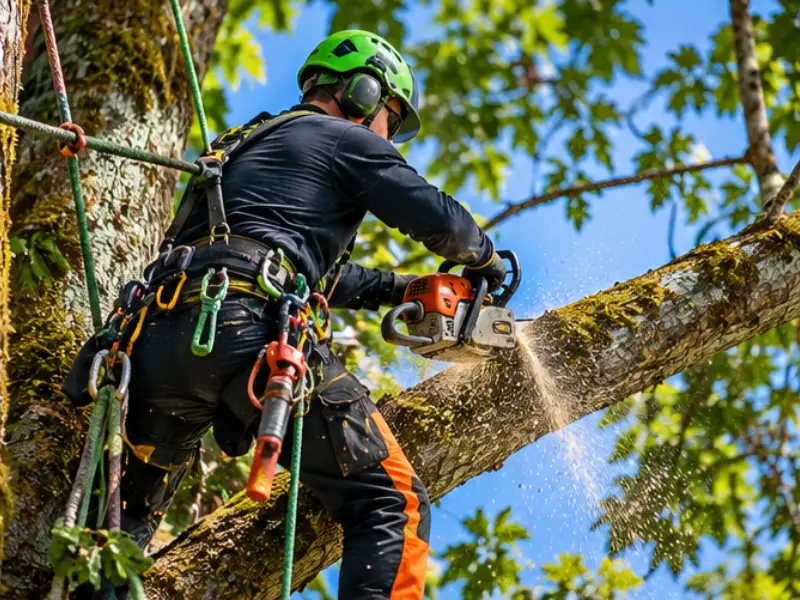
Who Does Tree Pruning in Redmond Without Topping?
Tree pruning in Redmond is done right by a certified arborist who makes small cuts in the right places and never tops the tree. Tree Ninjas does exactly that for Redmond homes, so you get a free estimate and a plan before the first saw starts. Topping is out, because for protected trees in Redmond it's against city code too.
By Daniel Montgomery, Co-Founder & Lead Arborist · Last updated October 14, 2026
Who Prunes Trees Properly in Redmond?
A certified arborist who follows industry standards and city code, and who can tell you why each cut is being made. If you're after certified arborist tree pruning Redmond wide, hold every company to that bar. It's how we work. Proper pruning looks like this:
A reason for every cut. Dead wood, weak attachments, rubbing limbs or clearance, not just "shaping."
Cuts at the branch collar. The cut goes just outside the collar, with no flush cuts and no stubs.
No wound paint. Research shows dressings don't speed closure or stop decay, so most experts skip them.
A plan for the whole tree, not only the parts that are easy to reach.
Redmond adds a legal layer. The city's zoning code bans topping protected trees, and it also requires their pruning to follow best management practices in arboriculture. Street trees are different again, because only the City's Parks Department can supervise their pruning.
Why does the credential matter? Because a cut on a living tree can't be undone, and a bad one can shape the tree for decades. So you're paying for judgment as much as for muscle.
We're also licensed, bonded and insured in Washington, so a mistake on a ladder isn't your problem. You can look up any tree company's registration on the state L&I website before you book. Also, be wary of anyone who offers to "top it for a good price." That's usually a company selling speed, not tree care.
Which Certified Arborist Near Me Does Crown Reduction?
One who reduces a tree by cutting back to a lateral branch, not to a stub. Which certified arborist near me does crown reduction? Ask first how they pick the cut point. The right answer is a lateral at least one-third the diameter of the stem being removed, which is the International Society of Arboriculture (ISA) standard.
Most trees need a mix. The usual order is cleaning first, thinning next and reduction last, since each step may solve the problem before you need the next one. Here's how the main pruning types compare:
Type | What it does | When it fits |
Cleaning (deadwood) | Removes dead, dying, diseased or weakly attached branches | Almost any tree, almost any time |
Thinning | Selectively removes branches to open the crown | Dense crowns that catch wind or block light |
Raising | Removes lower branches for clearance | Roofs, vehicles and walkways |
Reduction | Shortens leaders and branches back to laterals | Oversized broadleaf trees |
Topping | Cuts main stems to stubs | Never |
Looking into crown reduction and thinning Redmond? Think wind load and light first, then looks. Booking deadwood and structural pruning Redmond? Start with the cleaning row, because removing weak or dead wood is usually the cheapest way to make a tree safer.
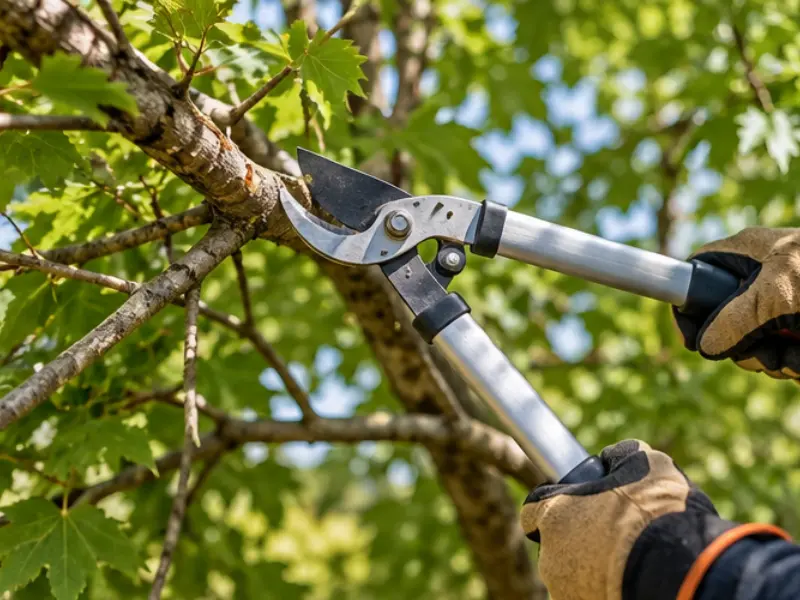
Who Can Make a Large Tree Smaller Without Topping It?
A certified arborist who knows how to reduce the tree gradually, cutting it down to the proper laterals and spreading the procedure out over several seasons. Who can make a large tree small but not topped? Not everyone is willing to say when not all at once is the right time. A tree subjected to hard cuts on one visit will pay for it in weak, fast sprouts and a lot of stress. Patience will help you preserve the life of the tree. A staged approach will accomplish a fraction of what it needs to have done this year, and you can always come back a year later and see what else should be done.
Besides this, species will often dictate whether the tree can be reduced. Trees with broad leaves, such as big-leaf maples, are often amenable to reduction, but conifers are another matter entirely. The leader of a Douglas fir or cedar simply cannot be replaced, which means the only options open to you if reduction is not possible are thinning, deadwood removal, hazard limb removal, or tree removal.
We'll say this right away; a reduction that cannot happen is just topping with a different name, and since Redmond does not allow topping of protected trees, that makes it illegal in Redmond..
How Much Does Tree Pruning Cost in Redmond?
It depends on the tree's size and height, how hard it is to reach, how much work it needs and what cleanup involves. So an honest price comes after someone looks at the tree. We give free estimates with clear pricing and no hidden fees. Big trees near a house or a power line cost more than a small ornamental in an open yard, because rigging and safety setup take time. We also bring cranes and rigging when a job calls for them. Bundling can help, too. If you have a stump or a hedge that needs work, ask for one visit, because a single trip can be cheaper than two.
Two questions help you compare quotes. First, does the price include hauling away the branches? Second, does the quote list which cuts will be made? A vague "trim the tree" line leaves too much room for a bad day.
How Often Should You Prune a Tree?
Most mature trees need pruning every few years, but not every year. Our pruning page says every two to three years for most trees, while fast growers and fruit trees may need annual attention. ISA points the same direction. Routine thinning doesn't necessarily improve a tree's health, and heavy pruning is a stress, so more isn't better.
Instead of a calendar, try a check-up. Walk your yard after the first big windstorm each year. Look for dead or hanging branches, limbs rubbing the roof, and new cracks where branches meet the trunk. Then call us if something looks off.
What Is the Difference Between Tree Pruning and Tree Trimming?
Trimming shapes a tree and controls its growth, such as evening out an overgrown ornamental.
Pruning removes weak, diseased, or hazardous branches for the tree’s health, such as taking off a cracked limb.
Our tree pruning service covers fine pruning for ornamental trees and fruit tree pruning as well as the structural work above.
Where Does Tree Ninjas Prune Trees Around Redmond?
Across Redmond, including Education Hill, Union Hill, Rose Hill, Novelty Hill, Ames Lake and Avondale, plus Sammamish, Woodinville, Duvall, Bellevue and Kirkland. These neighborhoods are full of cedar, fir, alder, maple, hemlock and birch, so each one needs different handling. Our Redmond page lists what we do in the area. Then, when you're ready, request a free estimate or call (206) 736-3757.
Frequently Asked Questions
1. Is topping a tree bad for it, and what should be done instead?
Yes. Topping cuts main stems to stubs, which leaves large wounds that can decay and triggers weakly attached, fast-growing sprouts. Reduction is the healthy alternative, because it shortens the tree by cutting back to laterals large enough to take over. For a tall conifer, the better answer is often thinning or removing hazard limbs. Also, Redmond's city code bans topping protected trees.
2. How much can safely be taken off a tree at once?
As a general rule, no more than 25 percent of the crown at once, and less for a mature tree. That comes from ISA guidance. Redmond's code also treats pruning more than four years of branch growth as excessive. The exception is work needed to restore the tree's vigor or protect life and property. So spread big jobs over several seasons.
3. When is the best time of year to prune?
For most trees, late winter or early spring, just before new growth begins. ISA says growth and wound closure are best when pruning happens before the spring flush. Dead wood can come out any time. Our arborists avoid heavy pruning of live growth right after the spring flush, so they schedule by species.
4. Can a large tree be made smaller and safer without ruining it?
Yes, if it's a broadleaf tree and you stage the work. Safer usually means removing deadwood, weak attachments and over-extended limbs that act like sails in a storm, so wind load drops. A reduction done to the right laterals keeps the tree's form. However, for firs and other conifers, we'll tell you straight when reduction won't work and what to do instead.
5. Are your crews certified arborists?
Our team includes certified arborists, and Daniel Montgomery leads as our Lead Arborist. Ask for the ISA certification number of whoever will be on your tree, and check it on ISA's lookup. We're also WA licensed (TREENNL752Q1), bonded and insured, so you can verify that too.
Contact Us
Tree Ninjas 31524 NE Cherry Valley Rd Duvall, WA 98019
Phone: (206) 736-3757
Hours: Monday to Friday, 8:00 AM to 5:00 PM, with 24/7 emergency service
WA Licensed · TREENNL752Q1
Serving Redmond, Duvall, Carnation, Sammamish, Bellevue, Kirkland and the Greater Seattle area.
