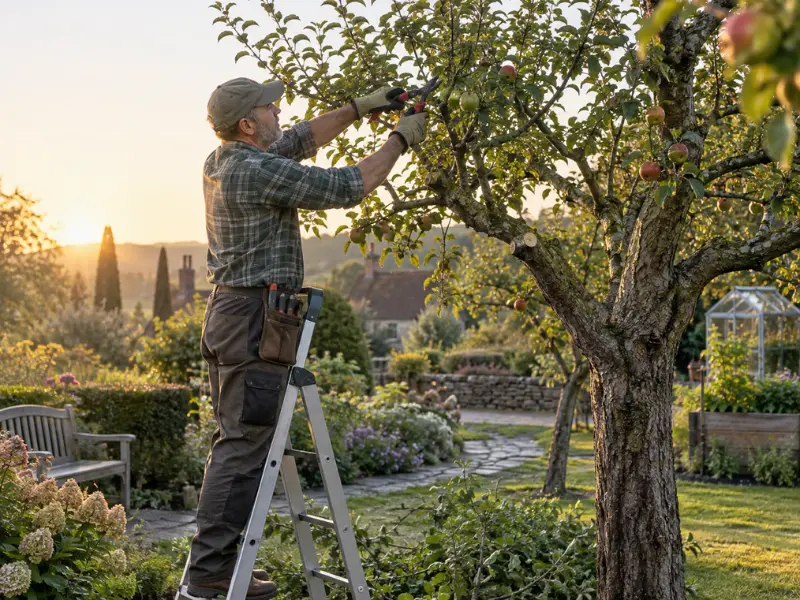
What Does Tree Pruning Near Me Actually Achieve?
Searching Tree Pruning near me usually turns up less than the marketing claims, and more than people expect in one specific situation. Every cut you make is a wound, and a healthy tree does not need pruning to stay healthy. Understanding that changes what you should be buying, and when.
By Daniel Montgomery, Co-Founder, Tree Ninjas · Last updated September 21, 2026
Why Is Every Cut a Wound?
Because trees do not repair damage. They contain it.
When a tree is wounded, it cannot heal in the way an animal does. It cannot rebuild the wood you removed or replace the tissue you cut. What it does instead is wall the damage off and grow around it, a process known as compartmentalization of decay in trees, described by USDA Forest Service pathologist Alex Shigo in the 1970s and still the framework the whole profession works to.
Extension guidance explains that the tree builds four walls around the wound, and the important detail for pruning is that Wall 1, which slows vertical spread, is the weakest of them.
Three practical consequences follow, and they are the difference between a cut that closes and one that lets decay in.
Leave the branch collar intact. Cut just outside it and closure happens, with decay compartmentalized into the branch wood only. Flush cuts remove that boundary and cause rapid internal decay in the trunk.
No wound sealants. Tar and paint do not prevent decay, and oil-based products actively inhibit closure by damaging the callus tissue that forms wound wood.
This is why topping is so destructive. Heading cuts leave stubs that close poorly, and because Wall 1 is weak, decay spreads readily through the sapwood. Our pruning standards guide covers why topping is prohibited under professional standards. This is the biology underneath that rule.
What Does Pruning Genuinely Deliver?
Honestly, not in the way it is usually sold, and it is worth being straight about that.
Does pruning improve tree health and stability? A healthy, well-formed tree is not made healthier by cutting bits off it. Trees divide limited energy between root growth, foliage, branch development and defence, so wounding one repeatedly is a cost rather than a tonic.
What pruning genuinely delivers is four things, and none of them is a health boost.
Deadwood removal, which is about safety rather than the tree. Dead branches fall.
Risk reduction, by shortening overextended limbs and reducing end weight so they are less likely to fail. That is stability, and it is real.
Clearance, over a roof, drive or path.
Structural correction, which is the one with genuine long-term value and which has a time limit on it.
So when you are considering structural and health pruning Sammamish crews offer, the structural half is where the value sits. Treat claims about health benefits on a mature, healthy tree with some scepticism.
Why Is Structural Pruning a Young-Tree Job?
Because you can still influence the architecture, and because the wounds are small.
Extension guidance puts it plainly: prune trees to train for good form while young. Doing so lets you remove branches while they are still small, so wounds close quickly, and it establishes a form that avoids large-diameter cuts later. A codominant stem corrected at three inches is a small wound. The same correction at fifteen inches is a major one the tree may never fully close.
That gives you a genuine investment case that almost nobody markets, because it is unglamorous. A few short visits during a tree's early years prevents the expensive structural problems that turn up decades later, and it is the cheapest tree work you will ever buy.
On a mature tree the window has largely closed. You can still reduce end weight, remove deadwood and manage risk, and all of that is worthwhile. What you cannot do is rebuild the structure. Anyone asking which certified arborist near me does structural pruning on a sixty-year-old fir is asking for risk management, which is a different and more limited product.
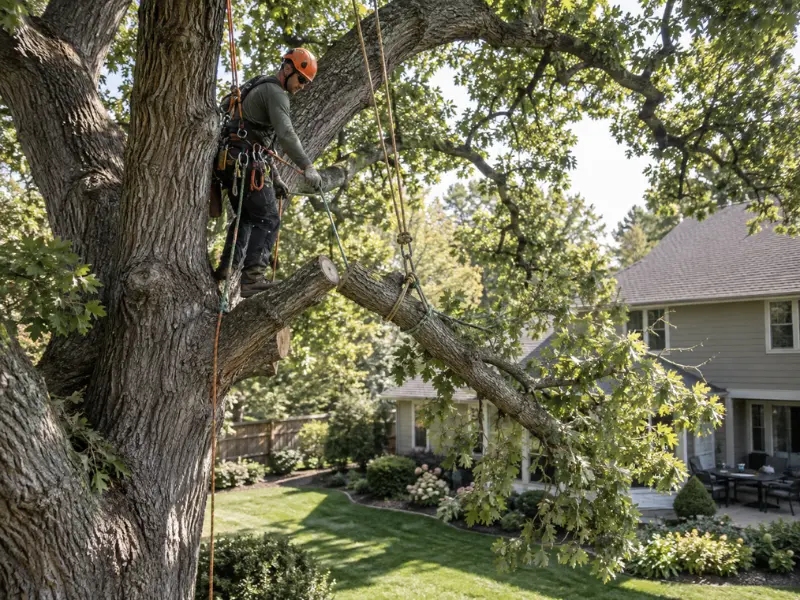
What Is Different About Fruit and Ornamental Trees?
A different discipline with a different objective, which is why it is priced and scheduled separately.
On shade trees the objective is structure and safety. On fruit trees it is production: opening the canopy to light and air, managing the balance between vegetative growth and fruiting wood, and renewing the wood that actually bears. That means more frequent, lighter intervention than a shade tree ever needs, usually on an annual cycle.
Ornamentals sit somewhere between, where form and flowering matter and the timing depends on whether the plant flowers on old or new wood.
Timing is where fruit and ornamental tree pruning Sammamish gardens need diverges most from the general rule. Most deciduous trees suit dormant pruning, but stone fruit is the exception, since cherries and plums are vulnerable to bacterial canker and silver leaf which spread in wet conditions, making dry summer weather the better window here. Our pruning guide covers Pacific Northwest timing by species.
When Is the Best Time to Prune Trees?
The best time to prune trees, in short: the dormant season for most things, with exceptions that matter.
Deciduous shade trees are best pruned late autumn through early spring, when the structure is visible without leaves and the tree is not spending energy on growth.
Stone fruit goes the other way, as above, favouring dry conditions over dormancy.
Deadwood can come out at any time of year.
Conifers need far less than people assume, and most of what gets done to them is unnecessary.
Two universals. Storm damage does not wait for a season. And avoid pruning in extreme heat or hard frost, when the tree is already under stress and has less capacity for the defence response every cut requires.
What Factors Affect the Cost of Tree Pruning?
Tree pruning cost depends on tree size and height, whether the work is done from the ground, by climbing or from an aerial lift, how much material comes out and where it goes, and the objective, since removing deadwood from a mid-size maple is a fraction of a structural reduction on a mature conifer beside a roof.
Two Sammamish-specific notes. Professional standards cap how much live crown can be removed in a single year, so a significant change is often staged across seasons rather than done at once. And where pruning shades into removal, the City's permit and replacement planting requirements apply, which our Sammamish removal guide covers.
Free estimates, and on anything substantial that means standing under the tree rather than pricing from a photograph.
We serve Sammamish, Redmond, Issaquah, Duvall, Carnation and Bellevue. See our services, locations, the portfolio and about us. For clearance work and the power line rules that govern it, see our Sammamish trimming guide.
Comparing tree pruning Sammamish options, looking for the best tree pruning service near Sammamish, or asking who prunes mature trees in Sammamish? Ask what each cut is for. A pruning plan names branches and reasons. Anything vaguer is a haircut.
Frequently Asked Questions
1. How much does tree pruning cost in Sammamish?
Tree size and height first, then access, meaning whether the work is done from the ground, by climbing, or from an aerial lift. Then how much material comes out and whether it is chipped, hauled or left, and finally the objective, since deadwood removal on a mid-size maple costs a fraction of a structural reduction on a mature conifer beside a roof. One thing worth knowing before comparing quotes: professional standards limit how much live crown can be removed in a year, so a large structural change may be staged across seasons and priced per visit.
2. When should trees be pruned in this climate?
Dormant season for most deciduous trees, meaning late autumn through early spring, when structure is visible and the tree is not pushing growth. Stone fruit is the notable exception: cherries and plums are vulnerable to bacterial canker and silver leaf, both of which spread in wet conditions, so dry summer weather suits them better here. Deadwood can come out any time. Conifers need far less pruning than people assume. Avoid extreme heat and hard frost, when the tree has less capacity for the defence response every cut demands.
3. Do you offer free pruning estimates?
Yes, and on anything beyond a small ornamental it means looking at the tree rather than pricing from a description. Four things get assessed on site: the live crown ratio, which governs how much can safely be removed this year; branch structure, including weak unions and overextended limbs carrying end weight; access, since climbing and aerial work price differently; and what sits beneath the canopy. You should get back a plan naming which branches are going and why, not a figure attached to a vague description.
4. Can pruning improve the health and stability of a mature tree?
Stability yes, health rarely, and the distinction matters. Reducing end weight on an overextended limb genuinely lowers the chance of failure, and removing deadwood removes something that will fall. But a healthy mature tree is not made healthier by cutting parts off it, because every cut is a wound the tree must wall off using energy it would otherwise spend on roots, foliage and defence. Structural correction has real long-term value, but it is most effective on young trees where the form can still be shaped and the wounds are small.
5. Are you ISA Certified Arborists, bonded and insured?
Two separate checks. Contractor registration with Labor and Industries covers the bond, liability insurance and the workers' compensation account, all verifiable free through the state lookup, and the workers' compensation check is the one that protects you directly, since tree work is high-hazard. Arborist certification is a professional credential rather than a licence to trade, and the ISA maintains a public registry searchable by name. Worth knowing that Sammamish specifically requires a TRAQ qualified arborist for hazard tree assessment, which is a further credential again.
Contact Tree Ninjas
Tree Ninjas 31524 NE Cherry Valley Rd, Duvall, WA Phone: (206) 601-9390 Email: [email protected] Serving Sammamish, Redmond, Issaquah, Duvall, Carnation, Bellevue and the Greater Seattle area. Locally owned, licensed, bonded and insured.
Got young trees? Get a free estimate or call (206) 601-9390. Structural pruning while they are small is the cheapest tree work you will ever buy.
