What Does a Tree Pruning Service Actually Do?
Removes specific branches for a specific reason — and leaves far more on the tree than most homeowners expect. There's a published standard governing this work, it caps how much living crown can come off in a year, and it names one common practice as flatly unacceptable.
By Daniel Montgomery, Co-Founder, Tree Ninjas · Last updated September 11, 2026
What Is the Difference Between Trimming and Pruning?
In everyday use the words are interchangeable. In practice they describe different intentions.
Trimming usually means cutting for appearance or size — shaping a hedge, shortening whatever overhangs the drive, tidying an outline. The objective is how it looks.
Pruning means selective removal of particular branches for a structural or biological reason: removing deadwood, correcting a weak union, reducing end weight on an overextended limb, or opening a canopy to light and wind. The objective is how the tree performs over the next twenty years.
A tree pruning service Redmond WA homeowners hire should be able to say which branches are coming off and why, before starting. "We'll take it back a few feet all round" isn't a pruning plan — it's a description of a shape.
What Does the ANSI A300 Standard Require?
This is the professional baseline, and knowing it lets you judge a quote.
ANSI A300 Part 1 covers pruning and trimming operations. It defines acceptable cut placement, sets out pruning objectives, and limits how much live crown may be removed. The four types you'll see on a competent proposal:
Crown cleaning — removing dead, dying, diseased, broken and weakly attached branches. The least invasive, and often all a healthy tree needs.
Crown thinning — selective removal to reduce density, letting wind through and light down. Easy to overdo.
Crown raising — removing lower branches for clearance over a drive, path or roof.
Crown reduction — genuinely reducing size by cutting back to lateral branches large enough to take over the terminal role. Skilled work.
Then the number that matters: no more than about 25 percent of live crown in a single year. Foliage is how a tree feeds itself, and removing too much at once forces a stress response rather than improving anything.
One more practice to know by name. Lion-tailing — stripping interior foliage so tufts remain at the branch tips — looks tidy and is structurally dangerous, concentrating weight at the ends of limbs. Whoever you hire for tree trimming and pruning King County WA properties need should reject it unprompted.
Why Is Topping Never Acceptable?
Because the standard says so explicitly, and because it doesn't even achieve what people want.
A300 defines topping as reducing a tree's size using heading cuts that shorten limbs back to a predetermined crown limit, and states plainly that topping is not an acceptable pruning practice. That's not an opinion in a blog post — it's in the standard.
Three things follow a topping cut. The tree responds with vigorous vertical regrowth from epicormic buds, so within a few years it's as tall as before. That regrowth is weakly attached, because it grows from the surface rather than from a proper branch union — so the tree is now more dangerous than it was. And every stub is a decay entry point, because a heading cut leaves no branch collar to seal the wound.
So a topped tree is taller, weaker and rotting. The correct way to make a tree smaller is crown reduction: cutting back to a lateral branch big enough to assume the lead.
If you want a tree substantially shorter and reduction can't get you there, the honest answer is that the tree is in the wrong place — and that's a removal conversation, covered in our tree removal guide.
When Can Pruning Become a Permit Problem?
Here's the part that connects pruning to the permit rules, and it surprises people.
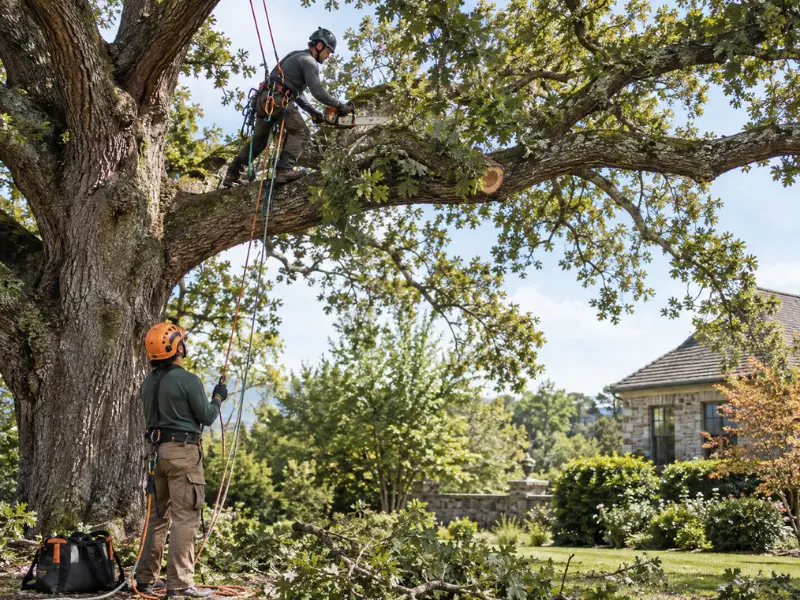
On the Eastside, over-pruning can be reclassified as removal. Kirkland's code puts it in writing — KZC 95.20 states that tree topping is not allowed and that pruning which removes more than 25 percent of the live crown is not an acceptable practice. Where a city takes that view, an aggressive "reduction" on a regulated tree can be treated as an unpermitted removal rather than a pruning job.
That matters in Redmond because of what we covered previously: removal of a significant tree requires a permit, and a Landmark tree over 30 inches in diameter can't be removed at all without a granted Exception. A heavy reduction on a mature fir is exactly the scenario where a pruning invoice and a code enforcement problem meet.
I'm not going to state Redmond's own numeric pruning limit from memory, because the two cities administer different codes. Confirm it with Redmond's tree information or the Development Services Center on 425-556-2494 before commissioning a large reduction — and be wary of anyone willing to take a quarter of the crown off a big tree without raising the question.
When Should Trees Be Pruned in the Pacific Northwest?
When is the best time to prune trees in the Pacific Northwest depends on what you're pruning, but the general rule is the dormant season.
Most deciduous trees — maple, alder, birch — are best pruned late autumn through early spring, when the structure is visible without leaves and the tree isn't spending energy on growth. Birch and maple can bleed sap if cut in late winter; it's cosmetic rather than harmful, but it's a reason to go earlier.
Stone fruit — cherries, plums and other Prunus — are the exception that catches people. They're vulnerable to bacterial canker and silver leaf, both of which spread in wet conditions, so they're better pruned in dry summer weather than in a Northwest winter. That's the single most useful thing to know about fruit tree and ornamental pruning Seattle Eastside WA gardens need.
Deadwood can come out at any time of year.
Conifers need far less pruning than people assume, and most of what's done to them isn't necessary.
Two universals. Prune after a storm as needed, since broken limbs don't wait for a season. And don't prune in extreme heat or hard frost.
How Much Does It Cost and Can You Book Recurring Work?
How much does tree pruning cost depends on tree size and height, how much climbing or aerial access is involved, how much material comes out and where it goes, and the objective — crown cleaning on a mid-size maple is a fraction of a structural reduction on a mature conifer near a roof.
On recurring work: yes, and for most trees it's the right model. Because the standard caps live-crown removal per year, achieving a significant structural change often means staged pruning across two or three seasons rather than one aggressive visit. That's not upselling — it's the only way to get there without damaging the tree. Fruit trees and ornamentals particularly reward an annual cycle.
Estimates are free, and for anything substantial that means someone looking at the tree rather than quoting from a description.
Serving Redmond, Duvall, Sammamish, Bellevue, Kirkland and Carnation — see our services, locations including Redmond, work in the portfolio, and more about us.
If you're comparing the best tree pruning service near Redmond WA, asking who prunes large trees on the Seattle Eastside, or wondering which arborist near me does structural and crown pruning, ask one question: how much live crown are you removing, and why that much? Anyone searching who prunes trees near me deserves a number and a reason.
Frequently Asked Questions
1. How much does tree pruning cost in the Redmond area?
Tree size and height, how much climbing or aerial access is needed, how much material comes out and whether it's chipped, hauled or left, and what the objective is. Crown cleaning on a mid-size maple costs a fraction of a structural reduction on a mature conifer beside a roof. Worth knowing before comparing quotes: because the standard limits live-crown removal to roughly a quarter in a year, a large structural change may be staged across seasons, so compare the plan rather than a single visit price.
2. Do you offer free pruning estimates?
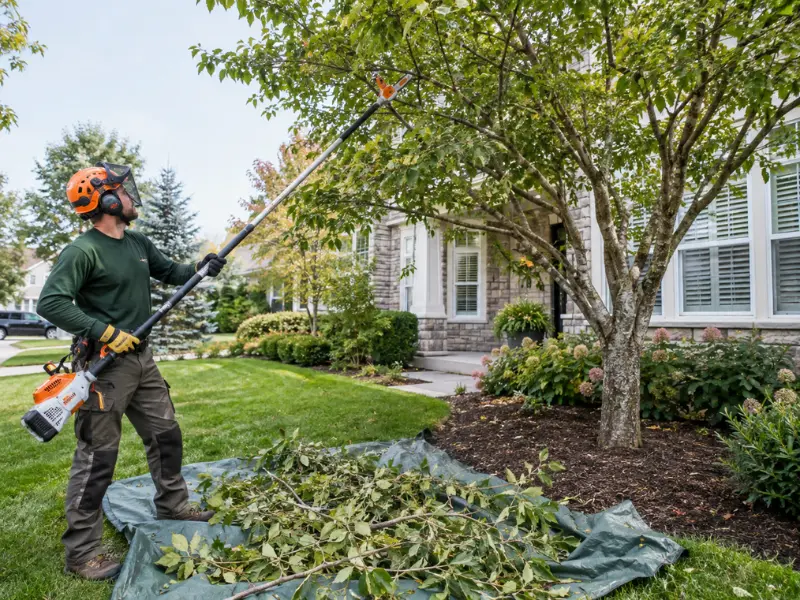
Yes, and for anything beyond a small ornamental that means looking at the tree rather than quoting from a description. What has to be assessed on site: the live-crown ratio, which governs how much can safely come off; the branch structure and any weak unions or overextended limbs; access, since climbing and aerial work price differently; and what's beneath the canopy. A written plan naming which branches come off and why is what you should expect back.
3. What's the difference between tree trimming and tree pruning?
In everyday speech they're interchangeable; in practice they describe different intentions. Trimming generally means cutting for appearance or size — shaping, shortening, tidying an outline — with the objective being how it looks. Pruning means selectively removing particular branches for a structural or biological reason: deadwood, a weak union, end weight on an overextended limb, or opening a canopy to light and wind. A pruning proposal should name which branches are going and why, before work starts.
4. When should trees be pruned in the Pacific Northwest?
Mostly the dormant season. Deciduous trees such as maple, alder and birch are best pruned late autumn through early spring, when structure is visible and the tree isn't pushing growth — birch and maple may bleed sap if cut in late winter, which is cosmetic rather than harmful. The exception is stone fruit: cherries and plums are vulnerable to bacterial canker and silver leaf, which spread in wet conditions, so they're better pruned in dry summer weather. Deadwood can be removed any time.
5. Do you offer recurring seasonal pruning and maintenance?
Yes, and for most trees it's the correct approach rather than an upsell. Because professional standards cap live-crown removal at roughly 25 percent in a single year, achieving a significant structural change often requires staging the work across two or three seasons. Trying to do it in one visit either breaches that limit or produces a stress response in the tree. Fruit trees and ornamentals particularly benefit from an annual cycle, and mature trees near structures are worth reassessing every few years.
Contact Tree Ninjas
Tree Ninjas 31524 NE Cherry Valley Rd Phone: (206) 601-9390 Email: [email protected] Serving Redmond, Duvall, Sammamish, Bellevue, Kirkland, Carnation and the Greater Seattle area. Locally owned, licensed, bonded and insured.
Want a tree smaller without wrecking it? Get a free estimate or call (206) 601-9390 — we'll tell you how much crown can come off this year, and what waits until next.
