Arborist Pruning vs. Tree Topping in Snohomish, WA
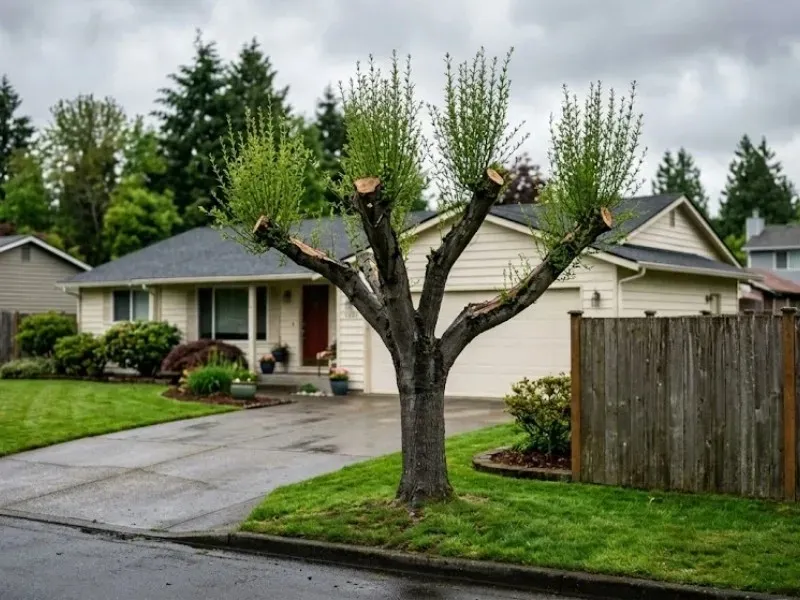
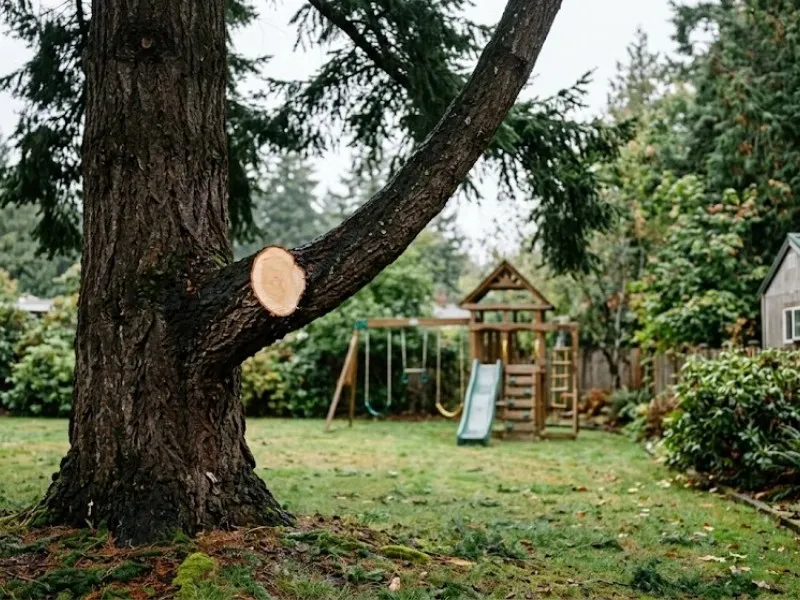
Arborist pruning removes branches at their attachment points, allowing the tree to naturally seal wounds and maintain its structural integrity. Topping cuts branches mid-shaft, creating wounds the tree cannot close, triggering structurally weak watersprout regrowth, and typically making the tree more hazardous within three to five years. Tree Ninjas’ certified arborists never top trees in Snohomish or anywhere.
By Daniel Montgomery, Co-Founder, Tree Ninjas · Last updated August 2026
Key Takeaways
Topping creates large open wounds, triggers weak watersprout regrowth, and makes trees more hazardous over time.
Pruning in Snohomish costs $150 to $800 per tree depending on service type and size.
Stone fruits must be pruned in dry summer in Snohomish; wet-season cuts risk bacterial canker.
ISA Certified Arborists have passed a comprehensive exam and complete continuing education to maintain certification.
The Pacific Northwest has a topping problem. Drive through any Snohomish neighborhood in spring and you will see maples and cherries festooned with watersprout growth erupting from flat stubs — the aftermath of a crew that charged good money to make a tree look managed while actually making it worse. Understanding the difference between what a certified arborist does and what topping does is the most useful piece of tree knowledge a Snohomish homeowner can have.
Why topping harms trees — four specific mechanisms:
Wound closure failure: a proper cut made at the branch collar allows the tree to grow a callus ring that closes the wound over several seasons. A topping cut made mid-branch leaves a stub end the tree has no mechanism to close — the exposed wood decays inward.
Watersprout regrowth: a topped tree responds by producing dozens of fast-growing epicormic shoots from the stubs. Within two to three seasons, the tree is the same size but carrying watersprouts with weak, bark-included attachments.
Structural weakening: the combination of internal stub decay and bark-included watersprout attachments makes a topped tree more likely to drop major limbs than the original un-topped tree.
ISA designation: the International Society of Arboriculture considers topping one of the most harmful tree care practices. No ISA-certified arborist should top a tree; if a crew proposes topping as a solution, find a different crew.
What Does Tree Pruning Cost in Snohomish?
Tree pruning in Snohomish typically costs between $150 and $800 per tree depending on the specific service. Fruit tree pruning typically runs lower ($100 to $400 per tree) because residential fruit trees are usually smaller. Tree Ninjas provides free on-site estimates throughout Snohomish County.
Cost by pruning type:
Crown cleaning (dead, diseased, and crossing branch removal): $150 to $700 per tree depending on size and deadwood volume
Crown thinning (selective interior branch removal for airflow and wind load): $250 to $800 per tree; every two to three years for fast-growing Snohomish deciduous trees
Structural pruning (codominant stem correction, scaffold selection): $150 to $700 per tree; most impactful on trees under 30 feet
Crown reduction (making the tree smaller through lateral cuts, never topping): $400 to $1,200 per tree
Fruit tree pruning (apple, pear, cherry, plum): $100 to $400 per tree for most residential fruit trees
When Should Trees Be Pruned in the PNW?
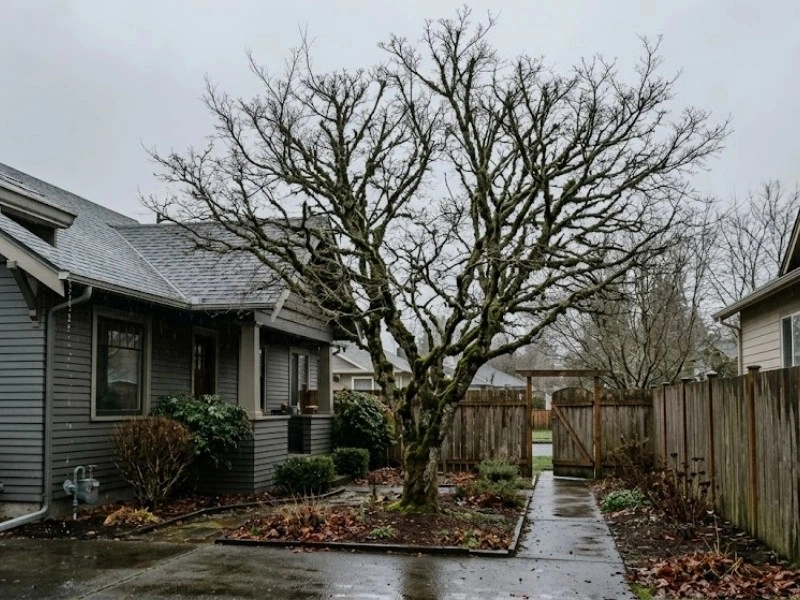
Late winter — January through early March — is the best pruning window for most Snohomish trees. Dormant structure is fully visible, wounds compartmentalize quickly with spring bud break, and pathogen activity is lowest.
Snohomish’s wet Puget Sound climate makes timing more consequential than in drier Washington regions. Open wounds in sustained wet conditions face prolonged pathogen exposure — which is why stone fruits in Snohomish have a specific and non-negotiable timing requirement.
Timing guide for common Snohomish trees:
Douglas fir, Western red cedar, hemlock: any time of year; late winter preferred for larger structural work
Big-leaf maple, red alder, ornamental maples: late winter preferred; expect sap bleeding from late-February and March cuts — biologically normal, not harmful
Ornamental cherry, fruiting cherry, plum: dry summer only, July to August — bacterial canker (Pseudomonas syringae) enters through fresh wounds during wet conditions; non-negotiable for these species in Snohomish’s climate
Apple and pear: late winter is the primary window; dry summer is an acceptable secondary window
Japanese maple: late winter; avoid pruning after April when new growth has fully extended
Fall (October to November): avoid for almost all species; wound compartmentalization slows and Snohomish’s wet fall maximizes pathogen pressure
Do You Do Structural and Fruit-Tree Pruning?
Yes to both — and each requires a different approach and timing.
Structural pruning addresses the scaffold architecture that will define a tree’s structure for decades. The most valuable window is when a tree is young — in its first ten to twenty years — when removing a competing leader or spacing scaffold branches costs one arborist visit and takes a few cuts. Key structural goals:
Establishing a dominant leader in species that should have one
Removing or reducing codominant stems before included bark forms
Selecting and spacing permanent scaffold branches for long-term structural integrity
For detail on structural pruning see our structural pruning guide for Monroe.
Fruit tree pruning serves different goals depending on the tree:
Productive apple and pear trees: annual late-winter pruning to maintain desired form, remove inward and crossing branches, and keep the canopy accessible and productive
Productive cherry and plum trees: the same annual goals, but timing shifts entirely to dry summer (July to August) for Snohomish properties — bacterial canker risk through wet-season cuts is high enough to cause significant branch dieback or tree loss; this is not a guideline, it is a requirement for stone fruits in the wet Puget Sound climate
Ornamental fruit trees: primarily managed for aesthetic form and size; same timing rules apply by species
Old, neglected fruit trees: restoration pruning spread over two to three seasons, removing no more than 25 to 30 percent of live crown per visit, can bring an overgrown fruit tree back to a manageable and productive form
Are Your Pruners ISA-Certified Arborists?
Yes. Tree Ninjas has certified arborists on staff for all pruning work, and specifically for any job involving structural decisions, hazard assessment, or work that affects a tree’s long-term architecture.
What ISA certification means:
The ISA Certified Arborist exam covers:
Tree biology and identification
Soil science and water relations
Pruning standards (ANSI A300)
Tree risk assessment and diagnosis
Urban forestry management
Certified Arborists must complete continuing education annually to maintain certification.
Why it matters for Snohomish pruning: in Washington State, the term “arborist” is not legally protected. Anyone can call themselves an arborist regardless of training. ISA certification is the only nationally recognized credential that verifies a minimum standard of tree knowledge.
Structural pruning decisions — which branches to keep, which codominant stem to remove, how much live crown can be safely taken — require a biological understanding of how individual species respond to specific cuts. Wrong decisions at year two show up as structural hazards at year twenty.
ISA Tree Risk Assessment Qualification (TRAQ): Tree Ninjas holds this specialized credential for formal hazard tree documentation required by Snohomish County and City of Snohomish permit processes.
When you ask a crew “are your arborists ISA-certified?” and they hesitate, that tells you something important.
Common Pruning Services in Snohomish
Tree Ninjas provides the full range of arborist pruning services throughout Snohomish and Snohomish County:
Crown cleaning: dead, diseased, and crossing branch removal — the first step in any proper pruning visit; see our crown cleaning guide
Crown thinning: selective interior branch removal for airflow, light, and wind load reduction; see our crown thinning guide
Crown reduction: proper lateral-branch reduction cuts that reduce the tree’s size without topping; distinguished from topping by where the cut is made and how the tree can respond
Structural pruning: scaffold selection, codominant stem correction, and young tree training; see our structural pruning guide for Monroe
Fruit tree pruning: productive and ornamental fruit trees timed precisely for each species
Certified arborist hazard assessment: written documentation for permit processes, insurance claims, and property sale disclosures
Tree Pruning Near Snohomish: Where We Work
Tree Ninjas provides certified arborist tree pruning throughout Snohomish and Snohomish County. Our crews regularly serve Snohomish and surrounding neighborhoods, Lake Stevens, Monroe and the Highway 2 corridor, and Everett.
For the full service area, see our Washington locations page.
Get a Free Tree Pruning Estimate in Snohomish
Pruning scope depends on the specific tree — species, size, structural condition, and what you want to achieve. Tree Ninjas provides free on-site assessments and estimates for tree pruning throughout Snohomish County.
Call or text: (206) 601-9390
Or request a quote at treeninjaspnw.com/contact-us.
Contact Tree Ninjas
Tree Ninjas
31524 NE Cherry Valley Rd
Duvall, WA 98019
Phone: (206) 601-9390
Hours: Available 24/7 for emergency service; office hours Monday through Friday, 8am to 5pm
Serving Snohomish, Lake Stevens, Monroe, Everett, Mukilteo, and surrounding Snohomish County and King County communities.
