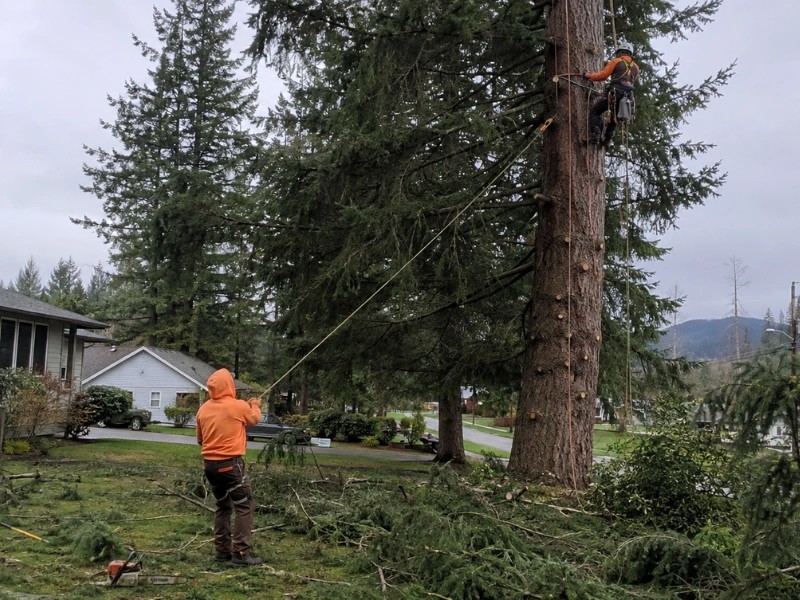
How Much Does Tree Trimming Cost in Monroe, WA?
Tree trimming in Monroe, WA typically costs $150 to $900 per tree for most residential work, with large Douglas firs and cedars running significantly higher. Cost depends on tree size, species, canopy condition, and access. Tree Ninjas handles tree trimming throughout Monroe and the Skykomish Valley.
By Daniel Montgomery, Co-Founder, Tree Ninjas · Last updated August 2026
Key Takeaways
Tree trimming in Monroe costs $150 to $900 per tree depending on size and species.
Monroe’s fast-growing Skykomish Valley trees typically need trimming more often than PNW averages.
Trimming addresses size and clearance; pruning targets health, structure, and specific branch decisions.
SnoPUD utility line clearance in Monroe requires coordination with the utility before work begins.
Monroe’s Skykomish River valley produces trees that grow faster and hold more moisture in their canopies than most Pacific Northwest communities. The practical result: trimming intervals that work on drier east-side properties often fall short here. A tree that looks fine in spring may be overhanging the roofline, touching the fence line, or encroaching on utility lines by fall.
Tree trimming cost breakdown for Monroe, WA:
Small ornamental or shade tree (under 30 feet): $150 to $450
Medium shade tree (30 to 60 feet): $350 to $900 — big-leaf maple, red alder, mid-size conifers
Large conifer (60 feet and over): $600 to $1,500 — Douglas fir and Western red cedar common throughout the Skykomish Valley
Overgrown trees or first-time trimming: $400 to $1,500 depending on size and corrective work needed
Fruit tree maintenance trimming: $100 to $400 for most productive apple, pear, cherry, and plum trees
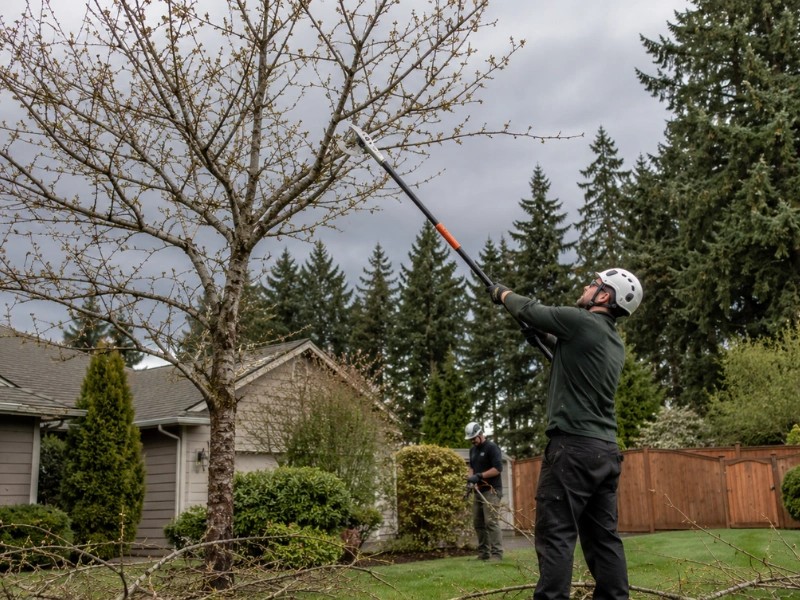
How Often Should I Trim My Trees?
The right trimming interval depends on species, growth rate, and what you are trying to achieve. In Monroe, the Skykomish Valley’s combination of Cascade orographic precipitation and rich alluvial soils produces canopy growth rates that push most trees to the shorter end of their typical trimming range.
Practical frequency guide for Monroe trees:
Crown cleaning (dead branch removal): every one to three years for fast-growing species (big-leaf maple, red alder); every three to five years for Douglas fir and cedar
General maintenance trimming: every two to three years for most established shade trees; a properly maintained tree at year two needs less work at year five than one left unmanaged
Crown thinning: every two to three years for fast-growing deciduous trees; less frequent for established conifers
Fruit trees: annually for productive trees during the appropriate seasonal window
Young trees in the formative window: structural work every two to three years; see our structural pruning guide for Monroe
The Monroe growth-rate reality: a tree trimmed every three years in Yakima or the South Sound may need trimming every two years in the Skykomish Valley. Higher annual precipitation and better soil nutrition accelerate canopy development.
What’s the Difference Between Trimming and Pruning?
Tree trimming focuses on size, shape, and clearance — removing overextended growth, maintaining a tree’s footprint within its allocated space, clearing limbs from rooflines, fences, and utility corridors.
Tree pruning removes specific branches for health, structure, or safety using cuts guided by ISA standards and ANSI A300. Every pruning cut has a biological purpose — removing a dead branch before it fails, addressing a codominant stem developing included bark, thinning interior canopy to improve airflow. Structural decisions benefit from a certified arborist’s assessment.
In practice, most Monroe residential tree visits involve both. A certified arborist trims for size and clearance while also addressing structural issues and removing dead material as part of the same scope.
For the full picture on pruning types, improper pruning risks, and fruit tree timing, see our tree pruning guide for Monroe.
Do You Trim Trees Near Power Lines?
Yes — utility line clearance is a regular part of tree trimming work in Monroe, particularly along the Highway 2 corridor and on rural residential properties where trees have grown into or near SnoPUD distribution lines.
Monroe is served by Snohomish County PUD (SnoPUD), which manages approximately 500 miles of line trimming annually because trees cause nearly half of all power outages in their service area. For trees already in SnoPUD’s clearance zone, the utility may already have your property on a trimming schedule.
The non-negotiable rule: never cut branches touching or within reach of energized power lines. This applies regardless of branch size. Contact SnoPUD for any tree in contact with distribution lines.
SnoPUD 24/7 emergency (downed or dangerous lines): 425-783-1001
Non-emergency vegetation management: pud.snohomishcountywa.gov
Monroe’s Cascade gap wind factor: properties along the Highway 2 corridor are more exposed to Cascade gap winds than most Puget Sound communities. Trees near utility lines on Highway 2-facing properties carry elevated risk of line contact during wind events. Pre-storm clearance trimming in September and October is particularly valuable along this corridor.
Tree Ninjas provides arborist-quality utility clearance trimming for service drops and trees adjacent to the SnoPUD distribution corridor throughout Monroe.
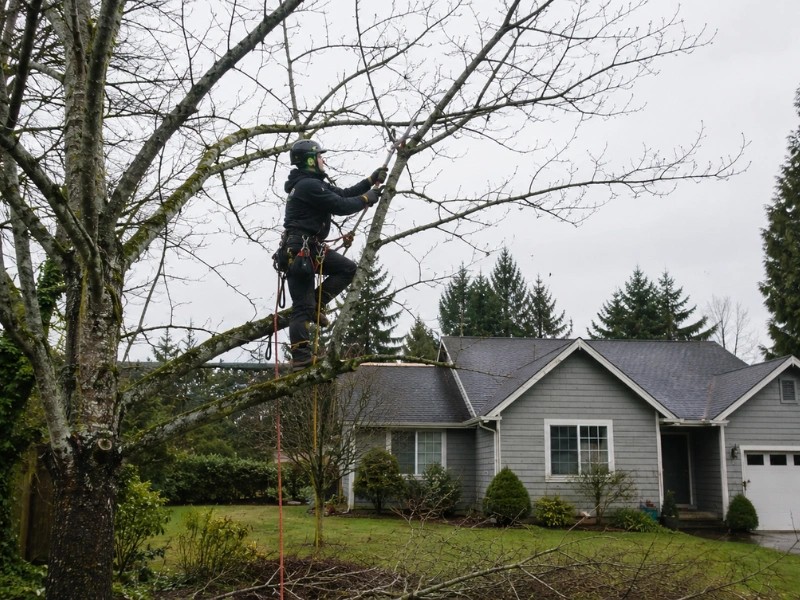
When Is the Best Season to Trim Trees in Washington?
Late winter — January through early March — is the best trimming window for most Monroe trees. Dormant structure is fully visible, wounds compartmentalize quickly with spring bud break, and pathogen activity is lowest in the drier period before spring rains return.
Quick timing reference for Monroe’s most common trees:
Douglas fir and Western red cedar: year-round acceptable; late winter preferred for larger structural work
Big-leaf maple and ornamental maples: late winter; sap bleeding from late-February cuts is normal and not harmful
Red alder: late winter; responds well to dormant-season crown cleaning
Apple and pear trees: late winter primary window; dry summer acceptable as secondary Cherry, plum, and ornamental stone fruits: dry summer only (July to August) — bacterial canker risk through wet-season cuts is a firm requirement in Monroe’s Skykomish Valley climate
Fall (October to November): avoid for most species; wound compartmentalization slows and Monroe’s wet fall maximizes pathogen exposure
For the complete month-by-month guide with species-specific callout boxes, see our seasonal tree pruning guide for Monroe.
What Makes Tree Trimming in Monroe Specific
The Skykomish Valley growth rate. Monroe’s alluvial soils and Cascade precipitation produce canopy development faster than most King County or south Puget Sound equivalents. Tree Ninjas crews working in Monroe regularly encounter trees the owner “just had trimmed a couple of years ago” that have put on growth comparable to three or four years in a drier community.
Agricultural fruit trees. Monroe’s farming heritage means more mature productive orchards survive on rural residential properties than in most Snohomish County communities. Annual trimming of productive apple, pear, and plum trees pays dividends in yield and structural health. Cherry and plum trees trimmed on the correct dry-summer schedule also avoid the bacterial canker losses that are the most preventable cause of stone fruit tree decline in this climate.
The Highway 2 corridor. Monroe’s position along Highway 2 creates a specific combination of utility line proximity and Cascade gap wind exposure. Pre-storm trimming on Highway 2-facing properties, particularly trees adjacent to the SnoPUD distribution corridor, pays dividends during the November-through-March wind season.
Tree Trimming Near Monroe: Where We Work
Tree Ninjas provides tree trimming throughout Monroe and the Skykomish Valley corridor. Our crews regularly serve Monroe and surrounding communities, Snohomish, Duvall and the upper Snoqualmie Valley, and Sultan.
For the full service area, see our Washington locations page.
Tree Ninjas provides free on-site estimates for tree trimming throughout Monroe and Snohomish County.
Phone: (206) 601-9390 | treeninjaspnw.com/contact-us
Contact Tree Ninjas
Tree Ninjas
31524 NE Cherry Valley Rd
Duvall, WA 98019
Phone: (206) 601-9390
Hours: Available 24/7 for emergency service; office hours Monday through Friday, 8am to 5pm
Serving Monroe, Sultan, Snohomish, Duvall, and surrounding Snohomish County and King County communities.
