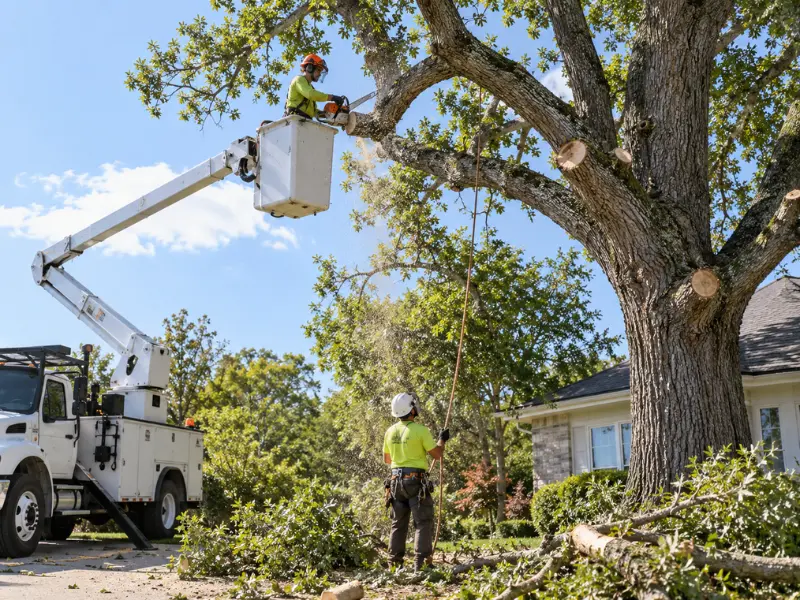
Who Does Tree Trimming near Me in Sammamish?
Searching Tree Trimming near me from a Sammamish address? The answer depends on where the branches are. Most trimming is a straightforward booking. But if any part of the tree sits within ten feet of an energized power line, the work is legally a different job requiring a different qualification, and that distinction matters more on the Sammamish plateau than almost anywhere else nearby.
By Daniel Montgomery, Co-Founder, Tree Ninjas · Last updated September 18, 2026
Why Does Ten Feet Change Everything?
Because that distance is where ordinary tree work stops and a regulated activity begins.
OSHA defines line-clearance tree trimming as pruning, trimming, repairing, maintaining, removing or clearing trees within ten feet of energized power lines. It recognises three qualification levels, and the rule for anyone electrically unqualified is blunt: maintain a minimum approach distance of at least ten feet from overhead lines. Only a qualified line-clearance arborist may work inside it. Above 50 kV the distance grows further.
Three things follow that a homeowner should know.
Ten feet includes your tools and the branch, not just your body. A pole saw closes that gap instantly, and so does a limb swinging as it is cut.
Trees conduct. A limb touching a line makes the tree part of the circuit, and contact is not the only hazard, since current reaching the ground creates a step potential risk around the trunk.
Where the distance cannot be maintained, the utility gets called to de-energize or to handle the work. That is the process, not a last resort.
So if the branches you want gone are near a line, the honest answer to which arborist near me does crown thinning and canopy work is that the first call is to the utility, not to a tree service. We will tell you that rather than quote for it.
What Is the Difference Between Trimming and Pruning?
What is the difference between tree trimming and tree pruning? In everyday use nothing. In practice, intention.
Trimming usually means cutting for appearance or size: shaping, shortening, tidying an outline. Pruning means removing particular branches for a structural or biological reason, such as deadwood, a weak union, end weight on an overextended limb, or opening a canopy to light and wind.
The practical consequence is what you should expect from a quote. A pruning proposal names which branches are going and why, before work starts. "Take it back a few feet all round" is a description of a shape rather than a plan.
Our pruning guide covers the standard properly, including why the amount of live crown removable in a year is capped and why topping is never an acceptable answer to a tree being too big.
What Does Crown Thinning Actually Do?
Two different jobs get bundled under one heading, and they are worth separating.
Crown thinning selectively removes branches to reduce density, letting wind through and light down without changing the tree's outline. On a dense plateau conifer that can genuinely reduce sail area. It is also easy to overdo, and stripping interior foliage so only tufts remain at branch tips concentrates weight at the ends of limbs and makes the tree less safe rather than more.
Canopy or crown reduction actually reduces size, by cutting back to lateral branches large enough to take over as the new terminal. Skilled work, and the only legitimate way to make a tree smaller.
For crown thinning and canopy reduction Sammamish properties need, the useful question to ask is how much live crown is coming off and why that amount. A number and a reason is a plan. "We will take a good amount out" is not.
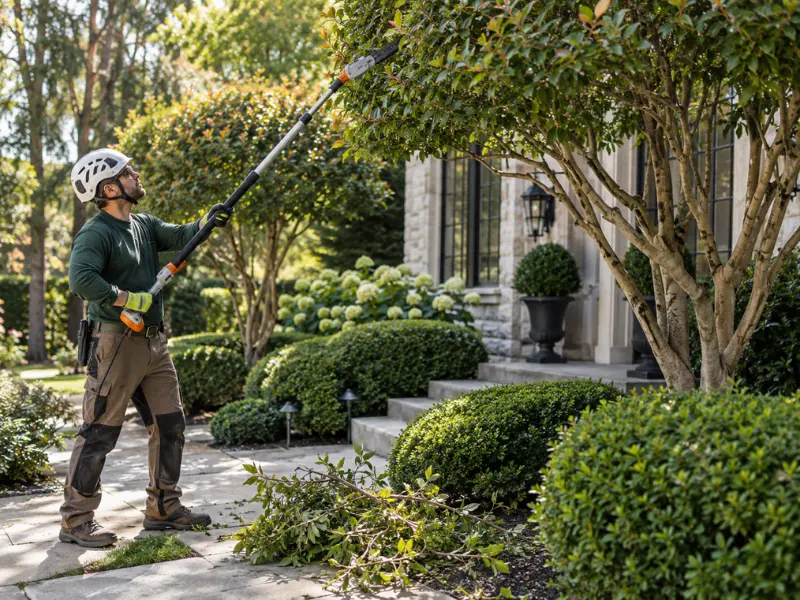
What Changes When the Tree Is Beside a House?
Can you trim large trees safely near a house? Yes, and the method changes entirely once there is no drop zone.
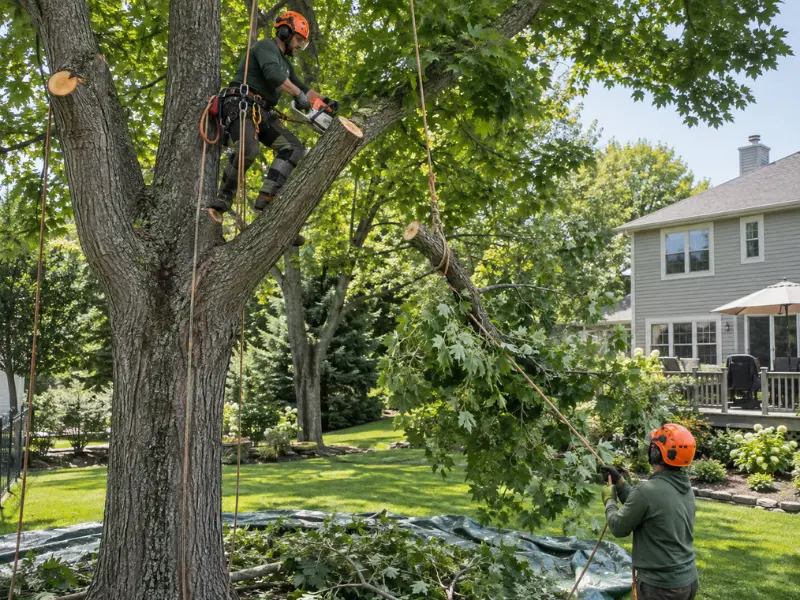
On open ground a limb can simply be cut and allowed to fall. Beside a house, over a roof, or above a driveway, each piece is rigged: roped, cut, and lowered under control rather than dropped. Slower, more skilled, and priced accordingly, which is most of why quotes for apparently similar trees differ so much.
Anyone asking who trims large conifers in Sammamish is really asking whether a crew rigs or drops. It is a fair question to put directly.
Two other things worth confirming before work starts. What is underneath, including glasshouses, fencing, septic components and irrigation, since the landing area matters as much as the cutting. And access, because equipment that cannot reach the tree changes both the method and the cost.
Our Sammamish removal guide covers the permit side, including the City's replacement planting requirement and what applies when a tree is unhealthy rather than simply overgrown.
How Often Should Large Trees Be Trimmed?
How often should large trees be trimmed is less frequently than most people assume, and the honest answer is that a healthy mature conifer may need very little.
Three things set the interval. Deadwood accumulates and can be removed at any time of year. Clearance over a roof, drive or path grows back predictably, and that is usually what triggers a visit. And structural issues such as a weak union or an overextended limb need attention when they appear rather than on a schedule.
Recurring seasonal maintenance suits some properties and not others. It makes sense on a lot with several mature trees near structures, on fruit trees and ornamentals, and where clearance keeps returning. It makes less sense on a single healthy conifer with nothing beneath it, and we would rather say so than sell a schedule.
Where a larger structural change is wanted, it is often staged across two or three visits rather than done at once, because professional standards cap how much live crown comes off in a year. That is not upselling, it is the only way to get there without stressing the tree.
How Much Does Tree Trimming Cost?
How much does tree trimming cost turns on size and height, access for equipment, what sits beneath the canopy, whether the crew rigs or drops, and how much cleanup you want, since chipping, hauling and leaving rounds are priced separately.
Two Sammamish additions. Work near a power line may need the utility involved before anyone starts, which affects timing more than price. And where the work crosses from trimming into removal, the City's permit and replacement planting requirements apply.
Estimates are free, and on anything substantial that means someone standing under the tree rather than pricing from a description.
We serve Sammamish, Redmond, Issaquah, Duvall, Carnation and Bellevue. See our services, locations, the portfolio and about us.
Searching tree trimming Sammamish, comparing the best tree trimming service near Sammamish, or looking at tree trimming and pruning Sammamish crews generally? Ask two questions: how much live crown is coming off, and how close is the nearest power line.
Frequently Asked Questions
1. How much does tree trimming cost in Sammamish?
Size and height first, then access for equipment, what sits beneath the canopy, whether limbs can be dropped or have to be rigged and lowered, and how much cleanup you want, since chipping, hauling and leaving rounds are separate decisions. Rigging is the biggest single multiplier, because a tree over a roof takes far longer than the same tree over open lawn. Two local additions: work near a power line may need the utility involved first, and work that crosses into removal brings the City's permit and replacement planting requirements.
2. What is the difference between tree trimming and tree pruning?
In everyday speech they are interchangeable, but they describe different intentions. Trimming generally means cutting for appearance or size, so shaping, shortening or tidying an outline, with the objective being how it looks. Pruning means selectively removing particular branches for a structural or biological reason: deadwood, a weak union, end weight on an overextended limb, or opening the canopy to light and wind. The test of a good proposal is whether it names which branches are going and why before any work starts.
3. Do you offer free trimming estimates?
Yes, and on anything beyond a small ornamental it means visiting rather than quoting from a photograph. Four things have to be assessed in person: the live crown ratio, which governs how much can safely come off; whether there is a drop zone or whether every piece needs rigging; what sits beneath the canopy, from glasshouses to septic components; and the distance to any overhead power line, because that determines whether the job is ours to do at all or whether the utility needs contacting first.
4. Can you trim large trees safely near a house or power lines?
Near a house, yes, using rigging rather than dropping, so each piece is roped, cut and lowered under control. Power lines are a different matter with a hard rule behind it. OSHA treats work within ten feet of energized lines as line-clearance tree trimming, which only qualified line-clearance arborists may perform, and that ten feet covers tools and branches rather than just the worker. Where the distance cannot be maintained, the utility must be contacted to de-energize or handle it. Never attempt this yourself.
5. Do you offer recurring seasonal tree maintenance?
Yes, and it suits some properties more than others. It makes sense where several mature trees sit near structures, on fruit trees and ornamentals, and where clearance over a roof or drive keeps returning. It makes less sense on a single healthy conifer with nothing beneath it, and we would rather say so. Where a significant structural change is wanted, expect it staged across two or three visits, since professional standards cap how much live crown can be removed in a single year.
Contact Tree Ninjas
Tree Ninjas 31524 NE Cherry Valley Rd, Duvall, WA Phone: (206) 601-9390 Email: [email protected] Serving Sammamish, Redmond, Issaquah, Duvall, Carnation, Bellevue and the Greater Seattle area. Locally owned, licensed, bonded and insured.
Branches getting close to something? Get a free estimate or call (206) 601-9390, and tell us roughly how far the tree sits from the nearest overhead line.
