How Much Does Tree Trimming Cost in Snohomish, WA?
Tree trimming in Snohomish, WA typically costs $250 to $900 per tree for most residential work, with large conifers and complex canopy work running higher. Cost depends on tree size, canopy density, proximity to structures, and whether the work involves roof clearance or SnoPUD utility coordination. Tree Ninjas handles tree trimming throughout Snohomish and Snohomish County.
By Daniel Montgomery, Co-Founder, Tree Ninjas · Last updated August 2026
Key Takeaways
Tree trimming in Snohomish costs $250 to $900 per tree depending on size and access.
Late winter (January to March) is the best trimming window for most Snohomish trees.
Crown thinning reduces windstorm risk by lowering the sail effect of dense conifer canopies.
Never trim branches touching SnoPUD power lines yourself; contact SnoPUD or a line-clearance arborist.
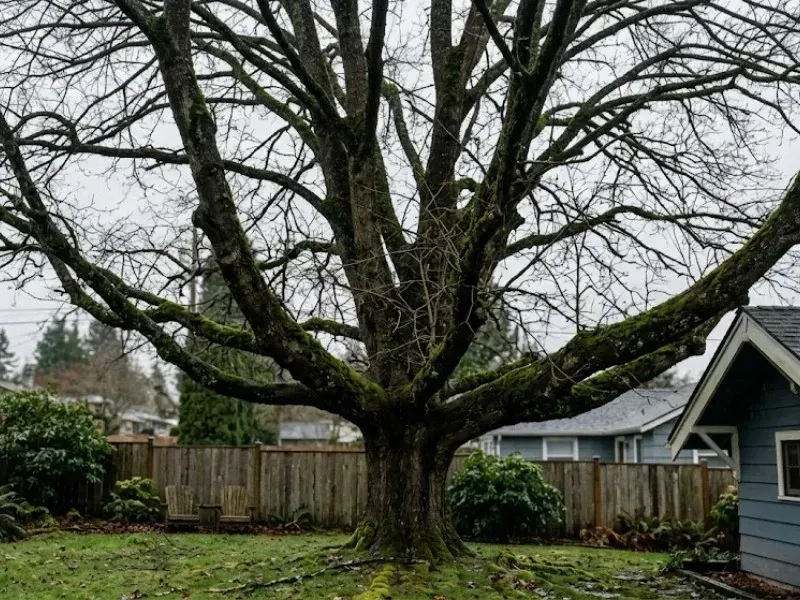
Tree trimming in Snohomish has a specific character shaped by the city’s dense established canopy — large-crown deciduous trees in the historic district, second-growth Douglas fir and cedar throughout the residential areas, and a SnoPUD distribution network that weaves through it all. Getting the trimming scope right, the timing right, and the clearance questions answered is where this guide starts.
Tree trimming cost breakdown for Snohomish, WA:
Small ornamental or shade tree (under 30 feet): $150 to $450
Medium shade tree (30 to 60 feet): $350 to $900 — big-leaf maple, red alder, ornamental cherries
Large conifer (60 feet and over): $600 to $1,500 — Douglas fir, Western red cedar in the 60-to-90-foot range
Roof clearance and crown lifting: add $200 to $600 depending on scope and access
Trimming vs. Pruning — What’s the Difference?
Tree trimming and pruning describe different scopes of work with different skill requirements.
Tree trimming focuses on size, shape, and clearance — removing overextended growth, clearing limbs from roofs and utility lines, controlling a tree’s footprint within its allocated space. Trimming typically addresses the outer canopy and can be done for aesthetic or practical reasons.
Tree pruning removes specific branches for health, structure, or safety using cuts governed by ISA standards and ANSI A300 Part 1. Every pruning cut has a biological purpose: removing a dead branch before it fails, addressing a codominant stem developing included bark, or thinning the interior canopy to improve airflow. Structural decisions benefit from a certified arborist’s assessment.
In practice, most Snohomish residential tree visits involve both. The distinction matters most when you are trying to understand who should do the work: a general landscape crew for basic trimming, or a certified arborist for anything involving structural decisions, hazard assessment, or work near SnoPUD lines.
For the depth of each pruning type — crown thinning, crown cleaning, crown reduction, and structural pruning — see the dedicated guides in our Snohomish tree service cluster.
How Often Should PNW Trees Be Trimmed?
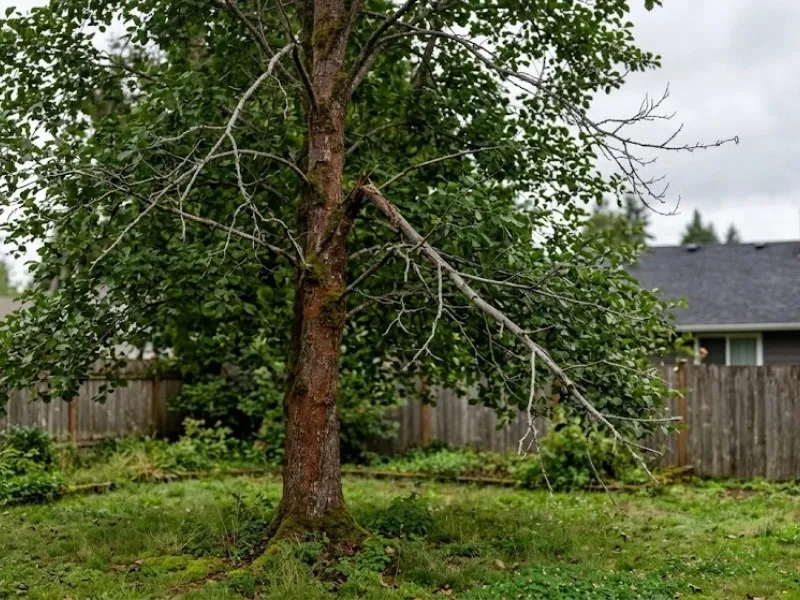
There is no single universal schedule. Frequency depends on species, growth rate, and what you are trying to achieve. Snohomish’s high annual precipitation and mild winters accelerate canopy development compared to drier Washington communities, which pushes most trimming intervals toward the shorter end of the Pacific Northwest average.
Practical frequency guide for Snohomish County trees:
Crown cleaning (dead branch removal): every one to three years for fast-growing species (big-leaf maple, red alder); every three to five years for Douglas fir and Western red cedar; the real trigger is observable deadwood, not a fixed calendar
Crown thinning: every two to three years for fast-growing deciduous trees; every three to five years for established conifers; see our crown thinning guide for Snohomish
General maintenance trimming: every two to three years for most established deciduous trees; a properly maintained tree at year two needs significantly less work at year five than one left unmanaged
Fruit trees: annually during the dry summer window (July to August); wet-season trimming of stone fruits risks bacterial canker infection
Structural pruning of young trees: every two to three years during the formative window (first ten years)
The Snohomish growth-rate factor: Snohomish County’s 40-plus inches of annual precipitation and alluvial soils produce canopy development faster than drier Washington equivalents. Trees that need trimming every three years in eastern Washington may need attention every two years in Snohomish.
Can You Clear Limbs Off My Roof and Power Lines?
Yes — but the approach and safety requirements differ significantly between roof clearance and power line clearance.
Clearing limbs from a roofline: limbs resting on or overhanging a roofline create multiple problems: debris in gutters, sustained moisture on roofing material that accelerates moss and lichen growth, abrasion damage from limb movement in wind, and elevated risk that a storm-weakened branch will cause structural damage. The standard approach is a combination of crown lifting (removing lower scaffold branches to raise the canopy above the roofline) and directional pruning to redirect growth away from the structure. Both are arborist work — do not attempt to cut large overhanging limbs yourself from a ladder on a roofline.
Clearing limbs near SnoPUD distribution lines: SnoPUD manages its own vegetation management program that trims approximately 500 miles of distribution lines annually. For trees near distribution lines, SnoPUD may already have your property on a trimming schedule. For utility service drops — the line from the pole to your home — clearing may be arranged through a certified line-clearance arborist.
Never cut branches touching or near energized power lines. This applies regardless of branch size. Contact SnoPUD to assess any tree in contact with distribution lines — they can send a crew to evaluate, de-energize the line, or handle clearance directly.
SnoPUD 24/7 emergency line (downed or dangerous lines): 425-783-1001
Non-emergency vegetation management: pud.snohomishcountywa.gov
Tree Ninjas provides arborist-quality utility clearance trimming for trees near SnoPUD service lines — with proper cut placement that minimizes regrowth rather than simple stub-cutting that accelerates the problem.
When Is the Best Season to Trim Trees Near Snohomish?
Late winter — January through early March — is the optimal window for most tree trimming in Snohomish. The dormant season makes scaffold structure fully visible, spring bud break compartmentalizes wounds quickly, and fungal and bacterial pathogen activity is lowest.
Snohomish’s wet Puget Sound climate makes timing more consequential than in a drier region. The city receives approximately 35 to 40 inches of annual rainfall concentrated between October and April. Open pruning wounds during the wet season remain exposed to moisture and pathogens for longer than in drier climates. The dry late-January to mid-February period is often the best window within the late-winter season.
Timing guide for Snohomish’s most common trees:
Douglas fir and Western red cedar: year-round trimming is biologically acceptable; late winter preferred for larger structural work
Big-leaf maple and ornamental maples: late winter preferred; expect sap bleeding from February or March cuts — normal and not harmful
Red alder: late winter; alders accumulate interior deadwood aggressively and respond well to dormant-season crown cleaning
Ornamental cherry, plum, and apple: dry summer only (July to August) — bacterial canker enters through fresh wounds during Snohomish’s wet seasons
Fall (October to November): avoid for routine trimming; wound compartmentalization slows and Snohomish’s wet late-fall months maximize pathogen exposure
Pre-storm clearance exception: if a limb over a structure or a widow-maker in the crown needs to come down, address it regardless of season. Timing guidance applies to routine trimming, not safety-driven removal of specific hazards.
Thinning Dense Evergreen Canopies for Windstorm Risk in Snohomish
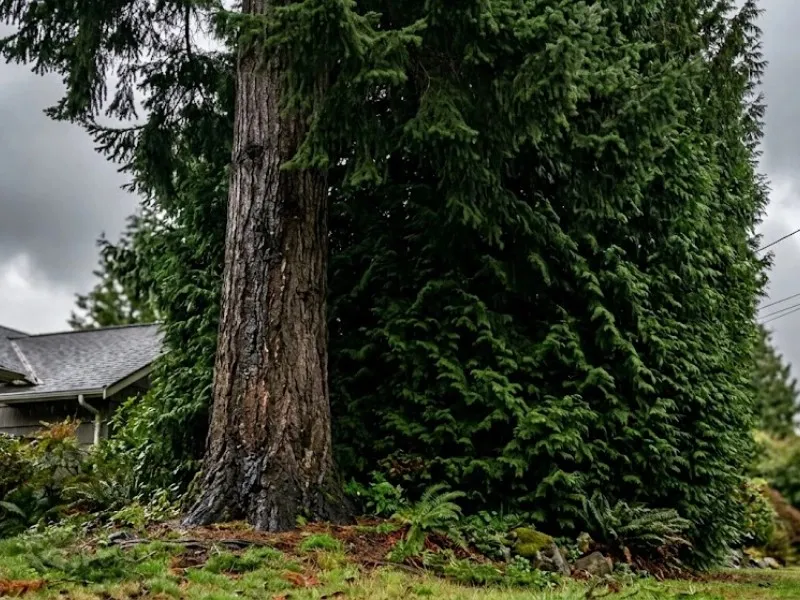
One of the most practical tree management strategies for Snohomish homeowners with large Douglas firs or Western red cedars is crown thinning before storm season — and it directly addresses the most common question we receive: why does a healthy-looking tree keep losing large limbs in windstorms?
The answer is canopy density. A dense, unpruned conifer canopy acts as a sail in high winds. Rather than allowing wind to pass through gaps in the foliage, the dense crown catches the full wind load and transfers that force to the root plate. In Snohomish’s saturated alluvial soils — where root plates have less lateral resistance than in well-drained ground — this sustained wind loading is what causes healthy trees to uproot in storms that would leave similar trees in drier regions standing.
Crown thinning selectively removes 15 to 25 percent of the live interior branches, creating channels through which wind can pass rather than push. The result is a tree with the same height and general form but significantly reduced wind load in storm conditions. Done to ANSI A300 standards, crown thinning improves structural wind response without weakening the tree.
Timing recommendation: schedule crown thinning in September or early October — immediately before Snohomish’s main storm season (November through March) and during a relatively dry window before the wet season begins.
For a full guide to crown thinning including species-specific benefits, frequency, and the lion’s-tailing error to avoid, see our crown thinning guide for Snohomish. For removing the dead and broken material that is the most immediate storm hazard, see our crown cleaning guide.
Tree Trimming Near Snohomish: Where We Work
Tree Ninjas provides tree trimming and certified arborist tree care throughout Snohomish and Snohomish County. Our crews regularly serve Snohomish and surrounding neighborhoods, Lake Stevens, Monroe and the Highway 2 corridor, and Everett.
For the full service area, see our Washington locations page.
Get a Free Tree Trimming Estimate in Snohomish
Trimming scope depends on the specific tree — size, species, canopy density, and proximity to structures and SnoPUD lines all determine what the job involves. Tree Ninjas provides free on-site estimates for tree trimming throughout Snohomish County.
Call or text: (206) 601-9390
Or request a quote at treeninjaspnw.com/contact-us.
Contact Tree Ninjas
Tree Ninjas
31524 NE Cherry Valley Rd
Duvall, WA 98019
Phone: (206) 601-9390
Hours: Available 24/7 for emergency service; office hours Monday through Friday, 8am to 5pm
Serving Snohomish, Lake Stevens, Monroe, Everett, Mukilteo, and surrounding Snohomish County and King County communities.
