What Does Tree Pruning Do For Redmond Fruit Trees?
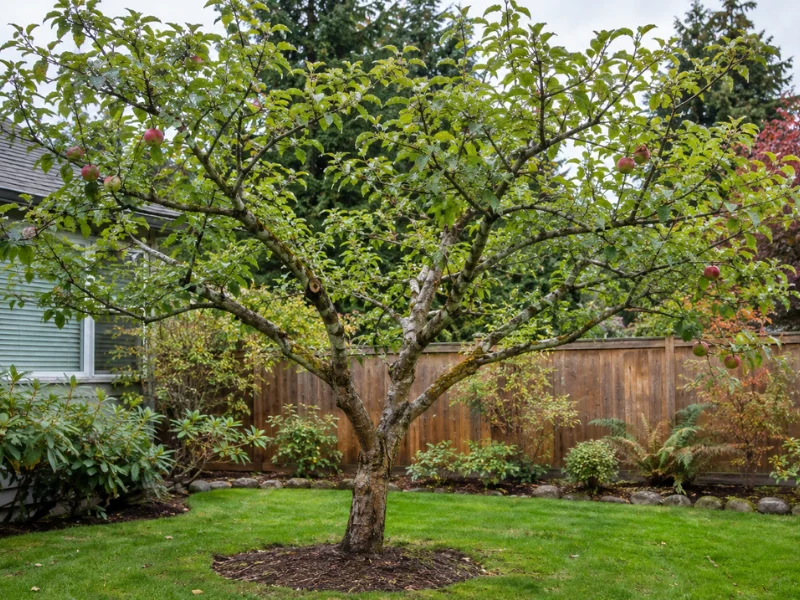
Tree pruning for Redmond fruit trees opens the canopy so sun reaches the fruit, keeps limbs strong enough to carry a heavy crop, lets wet leaves dry faster in our damp climate and holds the tree at a height you can actually pick from. Done well, it also removes diseased wood before problems spread through the tree.
By Daniel Montgomery, Co-Founder · Last updated November 23, 2026
What does tree pruning change on backyard fruit trees?
Tree pruning changes how much light, air and weight each part of a fruit tree handles. A fruit tree left alone grows a thick outer shell of shoots, and the fruit inside that shell ripens small, pale and late.
Here's what a good prune changes:
Light. Apples and pears color and sweeten in the sun. Opening light channels lets that sun reach the middle of the tree, not just the outside.
Branch strength. A long, thin limb loaded with fruit snaps in August. Shortening and thinning it spreads the weight onto wood that can carry it.
Airflow. Leaves that dry quickly after rain are much less welcoming to fungal disease.
Height. A tree kept within reach of a stepladder gets picked. A 20-foot plum mostly feeds the birds.
That last point matters more than most people expect. We see plenty of Redmond yards where the best fruit hangs out of reach every year, simply because nobody held the tree's height in check.
Which cuts do fruit trees get, and why?
Fruit trees get a handful of different cuts, and each one does a specific job. Choosing the wrong cut is the most common reason a tree responds badly to pruning.
Cut | What it does | Where we use it |
|---|---|---|
Thinning cut | Removes a branch back to where it starts | Most cuts, to open light and air into the canopy |
Heading cut | Shortens a branch partway | Sparingly, where we want side branches to form |
Three-cut limb removal | Takes off a heavy limb without tearing bark | Large or dead limbs |
Crossing branch removal | Takes out one of two rubbing branches | Anywhere bark is being worn through |
Water sprout removal | Removes fast, upright shoots | Inside the canopy, where they crowd the fruiting wood |
Where the cut lands matters just as much. The City of Bellevue's tree pruning guidelines describe the three-cut method for heavy limbs and place the final cut just beyond the branch collar. That swollen ring at the base of a branch is what seals the wound, so cutting flush against the trunk does real harm.
The same guidelines call topping a practice that harms trees and shouldn't be used. On fruit trees, topping produces a thicket of upright shoots that shade everything below.
How do western Washington's wet winters shape fruit tree pruning?
Western Washington's long, wet winters make disease the main thing to plan around when pruning backyard fruit trees. Fungal and bacterial problems that barely show up in drier climates are common here.
The diseases we see most on Eastside fruit trees include:
Apple scab, which leaves dark, corky spots on leaves and fruit
Anthracnose canker, which sinks into apple bark and spreads year after year
Powdery mildew, which coats new growth on apples and pears
Bacterial canker and brown rot, which hit plums and cherries hard
Pruning can't cure these, but it does help. Anyone pruning backyard fruit trees in western Washington gets the most benefit from cutting out cankered wood well below the damage, opening the canopy so leaves dry faster, and disinfecting tools between cuts so disease doesn't ride along from branch to branch.
What happens to the cuttings matters too. Diseased wood shouldn't go into a home compost pile, where spores can survive and blow back onto the tree. We haul it away instead.
How much can come off a fruit tree in one visit?
Usually no more than about a quarter of the live canopy should come off a fruit tree in one visit. Taking more than that pushes the tree into a burst of water sprouts the next spring, which undoes much of the work.
It's tempting to take a lot off when a tree looks crowded. The trouble is that a tree treats heavy pruning as damage and responds by growing fast, upright shoots wherever it can. That means more shade, more crowding and a bigger job next time.
Redmond's code points the same way. The city's tree maintenance standard says pruning of protected trees has to follow arboricultural best practices and support the tree's long-term health. Most backyard fruit trees won't be protected trees, but the rule is a good guide for any tree you plan to keep for decades.
So a sensible visit takes out the dead, diseased and crossing wood first, then thins enough to open the tree, and stops there.
What happens on a fruit tree pruning visit?
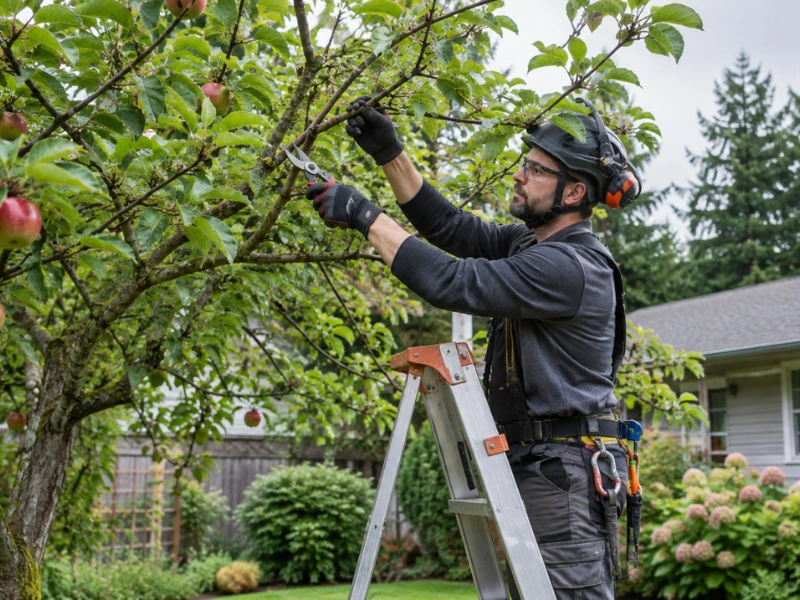
A fruit tree pruning visit follows a simple order: look first, cut second and clean up last. Here's how it usually runs:
Walk the tree. We check for disease, dead wood, weak crotches and how last year's crop sat on the branches.
Agree on a plan. You tell us what matters, whether it's more fruit, a smaller tree or a clear path under it, and we explain what we'll remove.
Prune from the inside out. Dead and diseased wood comes out first, then crossing branches, then thinning cuts to open light channels.
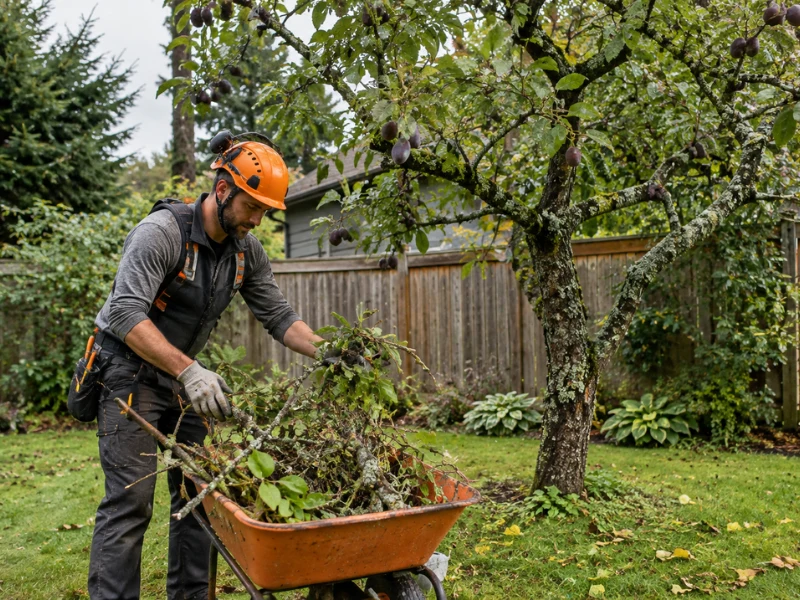
Clean up fully. Healthy wood gets chipped or hauled, diseased wood leaves the property, and the ground under the tree is raked clear.
Leave notes. You get a short summary of what we did and what to watch for before the next visit.
If tall conifers next door are shading your fruit trees, that's worth fixing too. Our post on bringing light into a shaded yard covers how we thin big firs without harming them. For the full range of pruning work we do, see our tree pruning service.
Fruit trees getting out of reach?
Call: (206) 736-3757
Free estimates, with full cleanup on every visit.
Where do we prune fruit trees around Redmond and Bellevue?
We handle fruit and ornamental tree pruning in Redmond WA across Education Hill, Rose Hill, Union Hill and Novelty Hill, where plenty of older lots still have the apple and pear trees planted when the houses were new. Our Redmond page covers the wider range of tree work we do there.
In Bellevue, we prune fruit trees in Bridle Trails, Lake Hills and the neighborhoods around them, and our Bellevue page has more on local service. We also work east into Sammamish and north to Cottage Lake, where larger lots often hold small home orchards.
If you're looking for fruit tree pruning near Redmond and Bellevue WA, ask whoever you call how they'll handle diseased wood and how much they plan to remove. Those two answers tell you whether you're hiring a pruner or just a crew with a saw.
Frequently asked questions
1. When in the year should an apple or plum tree be cut?
Apples are best cut while dormant, from late winter into early spring, while plums are safer cut during a dry summer spell, because winter cuts on plums invite bacterial canker in our wet climate. That's the local answer to when should fruit trees be pruned, and summer is also the time to take water sprouts off apples, since summer cuts slow regrowth.
2. Why has a fruit tree stopped producing much?
A fruit tree usually stops producing much because the canopy has grown so dense that light no longer reaches the fruiting wood, or because heavy heading cuts have pushed it into leafy growth instead of flower buds. Anyone asking why does a fruit tree stop producing on the Eastside should also check for a missing pollination partner, alternate-year bearing after a heavy crop and shade from neighboring conifers.
3. How do you shape a young tree so it does not become a problem later?
You shape a young tree by choosing a strong central leader or three to four well-spaced main limbs in its first few years, then removing competing, crossing or narrow-angled branches before they thicken. Shaping while a tree is small keeps every cut tiny and quick to seal, which is the real answer for anyone asking how do you prune a young tree: a little each year rather than big corrections later.
4. Is an old neglected fruit tree worth bringing back?
An old neglected fruit tree is often worth bringing back if the trunk and main limbs are sound, but the work is spread over about three years so the tree isn't shocked into a mass of water sprouts. Old apples and pears usually respond well, while a badly cankered cherry or a tree with a hollow trunk is rarely worth the effort.
5. How does this differ from pruning an ornamental or a conifer?
Fruit tree pruning aims for open light channels and productive fruiting wood, while pruning young and ornamental trees focuses on natural form, flowering and sound structure, so fruit-tree methods shouldn't be used on them. Conifers differ again, since most firs and cedars only need dead wood removed or lower limbs lifted, and cutting their tops does lasting harm because they can't regrow from bare wood the way fruit trees can.
Visit or Call Us
Tree Ninjas
Address: 31524 NE Cherry Valley Rd, Duvall, WA 98019
Phone: (206) 736-3757
WA License: TREENNL752Q1
Licensed, bonded and insured tree service company
Serving Redmond, Bellevue, Sammamish, Cottage Lake, Duvall and the wider Eastside. Call for a free estimate, or use our contact page to book a visit.
