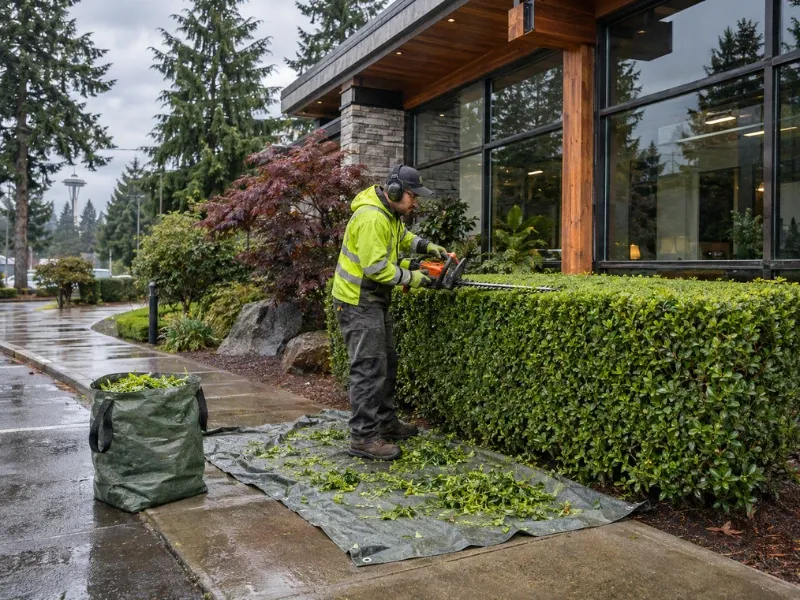
What Does Hedge Trimming Cost and Cover in Kirkland?
Professional hedge trimming in Kirkland is priced by the linear foot, and height drives the rate. A hedge under 6 feet costs the least. Anything taller needs ladders or a lift and costs more per foot. A good job also covers the right cut for the species, haul-off of the clippings and a check of where your property line runs.
By Daniel Montgomery, Co-Founder & Lead Arborist · Last updated November 5, 2026
How is hedge trimming cost per linear foot in Kirkland, Washington figured?
Length, height and condition set the price, in that order. For hedge trimming cost per linear foot Kirkland Washington homeowners can start with LawnStarter's national data: $2.50 to $4 per foot for hedges 6 feet or shorter, and $4 to $6 per foot for taller ones.
Use this grid to estimate your hedge:
Hedge situation | What the crew needs | Where it lands on price |
Under 6 ft, trimmed yearly | Shears from the ground | Low end of the range |
6 to 10 ft, trimmed yearly | Ladders or platforms on both faces | Middle of the range |
Over 10 ft or a wide top | Lift or climbing, extra setup | High end of the range |
Skipped two or more years | Hand pruning, heavy haul-off | Above the range |
Hedge on a slope or retaining wall | Extra rigging and safety time | Above the range |
What else moves the number:
Both sides or one. Trimming the neighbor's face takes their permission and access to their yard.
Haul-off volume. A 100-foot laurel screen can fill a dump truck after a hard cut. Disposal fees show up on the bill.
Access. A gated side yard with no room for a truck means carrying every load to the street.
Recurring service. A hedge on a yearly schedule takes less time per visit than one left for three years.
What a complete visit includes:
A walk-around first. We check species, height, the property line and any nests before the first cut.
Both faces and the top. Unless you ask otherwise, the hedge gets trimmed on your side and across the top.
Cleanup inside the hedge. Remove any excess cuttings caught up in the canopy and on the base of the hedge. These will hold moisture and cause fungus.
Haul-off. Every load leaves with the crew, and berry-laden laurel goes to a yard waste facility.
A written quote. The price, the cut height and the haul-off are on paper before work starts.
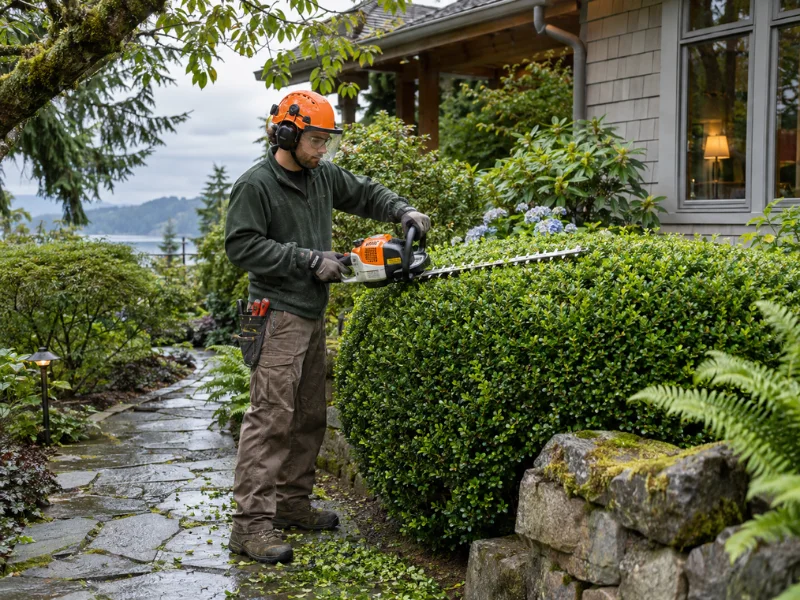
How does laurel hedge trimming in Kirkland, WA differ from other hedges?
Fast growth and tolerance of severe pruning. However, it will punish the wrong tools. Three factors should be considered when deciding on Laurel hedge trimming Kirkland WA homeowners pay for:
Big leaves tear. Power shears slice laurel leaves in half, and the cut edges brown within weeks. For a formal look, we shear and then clean up. For a natural screen, we hand-prune back to a leaf node.
Shot hole fungus. Kirkland's wet springs spread this leaf-spot disease. Trimming dry foliage and clearing clippings out of the hedge base slows it down.
Growth rate. Growing rate: In our climate English laurel grows several feet per year. Most Kirkland laurel hedges will require pruning at least twice a year.
Disposal matters. People ask, "Is English laurel invasive in Washington?" King County lists cherry laurel as a weed of concern. The berries are dispersed by birds in parks and greenbelts, and our home compost heaps are not hot enough to kill the seeds. English laurel is also a species we are encouraged to avoid says Kirkland. We take cuttings with berries to a garden waste site.
How does arborvitae trimming and shaping in Kirkland, WA work?
Arborvitae needs a light hand and a shape that sheds snow. Arborvitae trimming and shaping Kirkland WA hedges need follows a different set of rules than laurel:
Stay in the green. Arborvitae has no hidden buds in its bare interior. Cut into brown wood and that spot stays bare for good.
Taper the sides. The hedge is shaped to be a little wider at the bottom to allow light to penetrate to the lower branches, keeping the base full.
Tie multiple leaders. Emerald Green arborvitae grows several upright stems. Wet Puget Sound snow splays them apart and they stay bent. Soft arborist tie material inside the canopy holds them together.
Top once, then hold. We set the top height once and keep it there with light yearly trims instead of a big cut every few years.
Brown patches. Homeowners ask, "Why is my arborvitae turning brown?" Late-summer drought stress, cuts into old wood and dog urine at the base are the three causes we find most along Kirkland driveways and sidewalks. Brown interior foliage in fall is normal shedding. Brown tips across the outside face point to drought or a bad cut.
When should you trim laurel and arborvitae in Kirkland?
Trim after the spring growth flush hardens and finish before late summer. That window works for both plants in Kirkland's climate.
A year on a typical Kirkland hedge:
March to April. The best window for arborvitae shaping and for any hard laurel renovation cut. Growth starts soon after and covers the cuts.
Late May to June. Laurel's first trim, after the new flush firms up.
August to early September. Laurel's second trim. Arborvitae gets only a light touch-up here.
October to February. Skip shearing. New growth pushed in fall doesn't harden before frost, and it browns over winter.
Nesting season. People also ask, "Should you trim hedges when birds are nesting?" No, not where there's an active nest. Thick hedges of laurel and arborvitae at Juanita, Rose Hill, and Totem Lake provide a great place to nest for songbirds during spring and summer. Active nests of native birds are protected under federal law. We check to see if there are any nests and always leave a piece for next time.
What are the rules for trimming a hedge on a property line?
You can trim branches that hang over your side, back to the line, at your own cost. You can't damage or kill the neighbor's plant doing it, and you can't cross the line without permission.
What that means in practice:
Find the line first. Hedges planted decades ago in Bridle Trails and Rose Hill drift onto both lots. A survey stake or plat map settles it.
Washington's damages law. Under RCW 64.12.030, anyone who cuts down or injures trees or shrubs on someone else's land without permission can owe three times the damages.
Shared hedges. A hedge growing right on the line belongs to both owners. Get the neighbor's agreement in writing before any height reduction.
Corner lots and driveways. Kirkland keeps vegetation clear of sight-distance areas at intersections and driveways. Our guide to hedge trimming near me in Kirkland explains that rule.
Where is the cheaper hedge trim the worse buy?
A lower quote can cost more over the next few years. Here's where it happens:
Topping arborvitae hard to save money. It's fast and cheap once. It also leaves a bare, flat top that never refills.
Shearing laurel with dull blades. It saves labor time. Then the torn leaves brown and the hedge looks worse than before the visit.
Skipping haul-off. Leaving clippings saves a disposal fee. Instead, laurel berries seed into the yard and the nearest greenbelt.
Waiting three years between trims. One big cut costs more than three small ones and stresses the plant.
Where cheaper wins. A short, healthy boxwood or privet border trimmed every year is simple work. A basic yearly trim is all it needs.
For hedges past saving, our tree removal service takes out old screens, and stump grinding in Kirkland clears the roots for replanting. We trim hedges across Redmond, Bellevue and Bothell too, and our hedge trimming service page lists every hedge type we handle.
Frequently asked questions
1. How much does hedge trimming cost in Kirkland, WA?
Hedge trimming can be done at an average of $2.50 to $4 per linear foot for hedges 6ft and under. After this price increases to $4 to $6. Cost will be increased for overgrown hedges, sloping gardens and excessive waste. We will measure your hedge for you and give you a free onsite written quote.
2. How often do laurel and arborvitae need trimming here?
Laurel needs trimming twice a year in Kirkland, once in late spring and once in late summer. Arborvitae needs one shaping in early spring and a light touch-up in summer. A yearly schedule keeps both hedges at size without hard cuts.
3. When in the year should it be done?
Arborvitae should be trimmed in early spring (Pacific Northwest). Laurel should be trimmed in late spring and late summer. Avoid shearing in autumn as new growth will not have hardened off before first frosts.
4. What are the rules for a hedge on a property line?
You are allowed to trim overhanging branches back to the boundary but you will be responsible for the cost. In Washington you are responsible for triple damages if you cause damage to your neighbour's trees/shrubs without permission (RCW 64.12.030). If the hedge is on the boundary it is a shared hedge so we recommend getting a written agreement before trimming it down.
5. Can a badly overgrown hedge be cut back and recover?
Laurel can be as it will regrow from the bare stems. If you do a harsh trim in early spring it will grow back within a season or two. Arborvitae cannot be trimmed back as it has browned inner stems. Overgrown arborvitae will be trimmed back gradually over 2-3 years or replaced.
Visit or Call Us
Tree Ninjas
Address: 31524 NE Cherry Valley Rd, Duvall, WA
Phone: (206) 736-3757
Email: [email protected]
Locally owned, licensed, bonded and insured tree service
Serving Kirkland, Redmond, Bellevue, Bothell, Duvall and the Greater Seattle Area. Call for a free estimate, or use our contact page to book a visit.
