How Hedge Trimming in Duvall Handle Overgrowth?
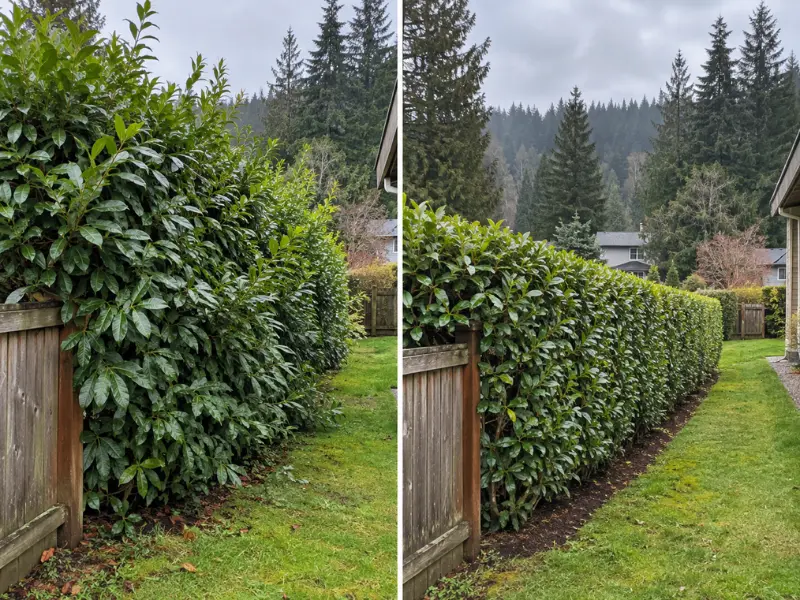
Hedge trimming in Duvall handles an overgrown hedge by reducing it in stages, not in one cut. Tree Ninjas first identifies the species, because laurel regrows from old wood and arborvitae doesn't. We cut back only to where live growth exists, haul away the clippings, and plan any deeper reduction across seasons.
By Daniel Montgomery, Co-Founder · Last updated October 7, 2026
How Is Overgrown Hedge Reduction in Duvall Different From Regular Hedge Trimming?
Regular trimming shapes the current year's growth and keeps a hedge at the size you planted it for. Reduction cuts into older growth to take back size the hedge has already gained. People often ask what the difference is between hedge trimming and hedge reduction, and the honest answer is risk. Trimming is almost always safe. Reduction depends on what's under the leaves.
An evergreen hedge keeps most of its live foliage in an outer shell. Inside that shell, the branches are woody and often bare, because little light gets in. Before we cut a hedge on a Duvall property, we look for live green growth at the depth we plan to cut. If it's there, the cut is safe. If it isn't, cutting deeper leaves a hole that won't fill.
That one test is why overgrown hedge reduction in Duvall is a species decision first and a labor decision second. On the bigger lots in and around town, hedges often run along fence lines and roads where nobody's touched the top in years. So the reduction is usually bigger than the homeowner expects. Our hedge trimming service page covers the routine work we do once a hedge is back under control.
What Does a Staged Reduction Plan Look Like for Laurel and Arborvitae in Duvall?
Laurel and arborvitae hedge trimming in Duvall follows opposite rules. The University of Washington's Miller Library notes that Portuguese laurel makes new growth easily from old wood, so a hedge that needs renovation shouldn't pose a problem. Oregon State University Extension says the reverse about arborvitae, which don't produce new growth if cut back to bare stems. The Royal Horticultural Society adds that drastic renovation is best done gradually, cutting back one side first.
Here's how that plays out when we reduce a hedge:
Stage | Laurel | Arborvitae |
Assess | Check height, width and how much live growth reaches the interior | Find where live green growth ends, since that's the cutting limit |
First cut | Reduce one side and the top toward the target size | Trim back only to live growth, never into bare wood |
Next season | Take the other side down as new growth fills in | Reassess, because width only returns as far as green allows |
If it's still too big | Repeat the reduction over a second season | Plan removal and replanting rather than forcing it |
How long does a hedge take to grow back after hard pruning? For species that respond, the RHS says regrowth should hide the bare patches within one or two growing seasons. Laurel looks rough at first, then fills in. Arborvitae doesn't refill, which is why we'll tell you straight when the honest answer is replanting.
And how do you reduce the height of an overgrown hedge without making it worse? Taper it, so the sides slope inward toward the top. That lets light reach the lower branches and keeps the base from going bare again. The RHS also suggests cutting a little below your target height, since regrowth will add some back, and that's easier to live with than a second reduction next year. If you want a hedge held at a fixed height for good, tell us. It changes how we cut.
How Do Nesting Birds and Weather Change When Hedge Trimming Happens in Duvall?
Hedges are prime nesting sites. The U.S. Fish and Wildlife Service explains that the Migratory Bird Treaty Act prohibits the take of protected migratory bird species, which covers most native birds. So we check for active nests before we cut. If we find one, we stop and work around it.
Weather matters too. Laurel is prone to leaf spot and shothole, so we prefer a dry stretch for cuts over a wet one. When a big reduction can wait, we plan it around nesting activity and dry weather. When it can't, say the hedge is blocking a driveway or a sight line, we tell you and work carefully. The season question has a few more parts, and the FAQ below covers them.
Who Trims Overgrown Hedges Near Duvall?
If you're asking who trims overgrown hedges near Duvall, Tree Ninjas is based on NE Cherry Valley Road in the Duvall area, so we're not driving in from across the county. If you're asking which company near me reduces laurel and arborvitae safely, look for one that identifies the species first, uses certified arborists, and tells you plainly how far back it can go. And if you want to know who cuts back a hedge that has got out of hand in Duvall, we do, including the ones that need two seasons to come back.
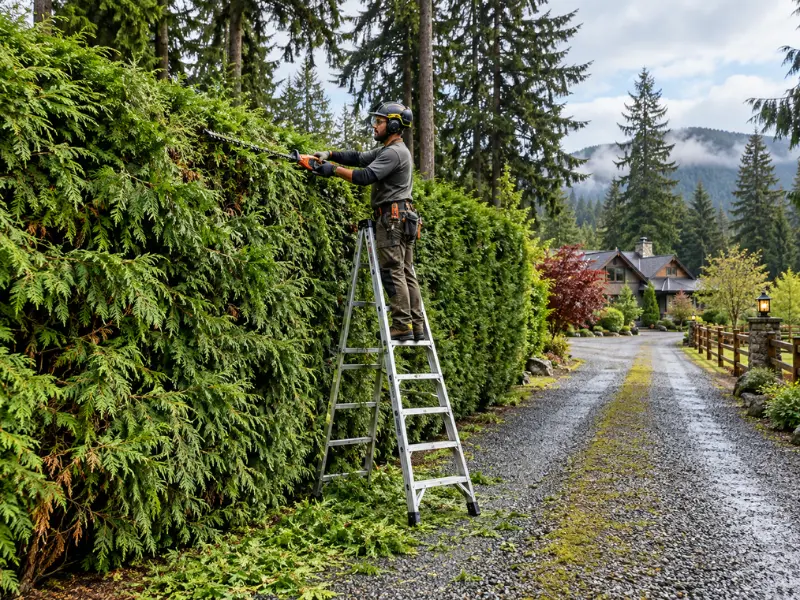
Safety is part of the job. A tall hedge means ladders and power trimmers at height, and a hedge on a slope or over a fence adds to it. Our arborists handle that, and we clear the debris when we're done. If the honest answer is that a hedge has to come out and be replanted, we'll say so at the estimate instead of cutting it and hoping.
We work in Duvall, Carnation, Fall City, Cottage Lake and Redmond, plus the wider King County Eastside. If trees as well as hedges have gotten away from you, our guide to overgrown tree trimming in Duvall covers that side. And our hedge trimming guide walks through the basics for hedges that are still manageable.
Frequently Asked Questions
1. When is the best time of year to trim a hedge?
Late spring to early summer works for most hedges, once the new growth has firmed up. Laurel does best then, and light trimming of arborvitae is fine at most times of year, though hard cuts should be avoided. We check for nesting birds first and prefer dry weather, so a larger reduction may land outside those windows.
2. Can an overgrown hedge be cut back hard without killing it?
It depends on the species. Laurel usually can, because it regrows from old wood, though it looks rough for a season. Arborvitae can't be cut into bare wood, because it won't regrow there. We check for live growth before we cut and reduce only as far as it allows.
3. Why has my hedge gone bare and brown inside?
Because the inside doesn't get enough light. Evergreen hedges grow most of their foliage on the outer shell, and as the hedge thickens, the interior shades out and drops its leaves. On arborvitae, browning can also come from drought or winter damage. Winter browning tends to hit all the foliage, while drought shows up on individual plants.
4. Which hedge species recover from hard reduction and which do not?
Laurel, yew, holly, boxwood, beech, hornbeam and hawthorn generally recover from hard reduction. Arborvitae, Leyland cypress and most other conifers don't, because they won't regrow from old wood. If you're not sure what you have, send us a photo and we'll identify it before we cut.
5. Do you take the trimmings away?
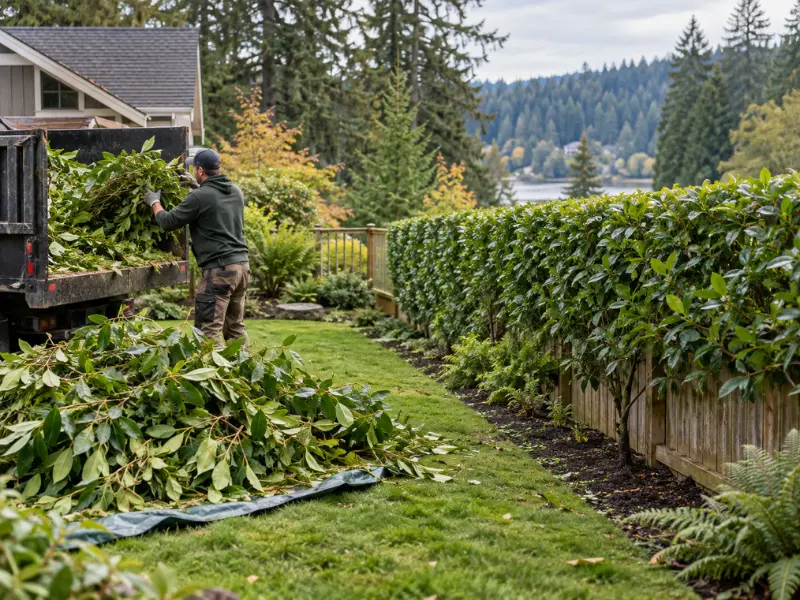
Yes. We collect and haul away the clippings after every visit. A big laurel reduction makes a lot of material, so tell us how large the hedge is when you book and we'll plan for it.
Ready to Get an Overgrown Hedge Under Control in Duvall?
The right first step is a look at the hedge, not a cut. We'll identify the species, find where the live growth ends, and tell you how far we can safely take it. Request a free estimate or call (206) 736-3757.
Visit or Call Us
Tree Ninjas 31524 NE Cherry Valley Rd Duvall, WA 98019 Phone: (206) 736-3757 Hours: Monday to Friday, 8:00 AM to 5:00 PM, with 24/7 emergency response Serving Duvall, Carnation, Fall City, Cottage Lake, Redmond and the wider Eastside.
