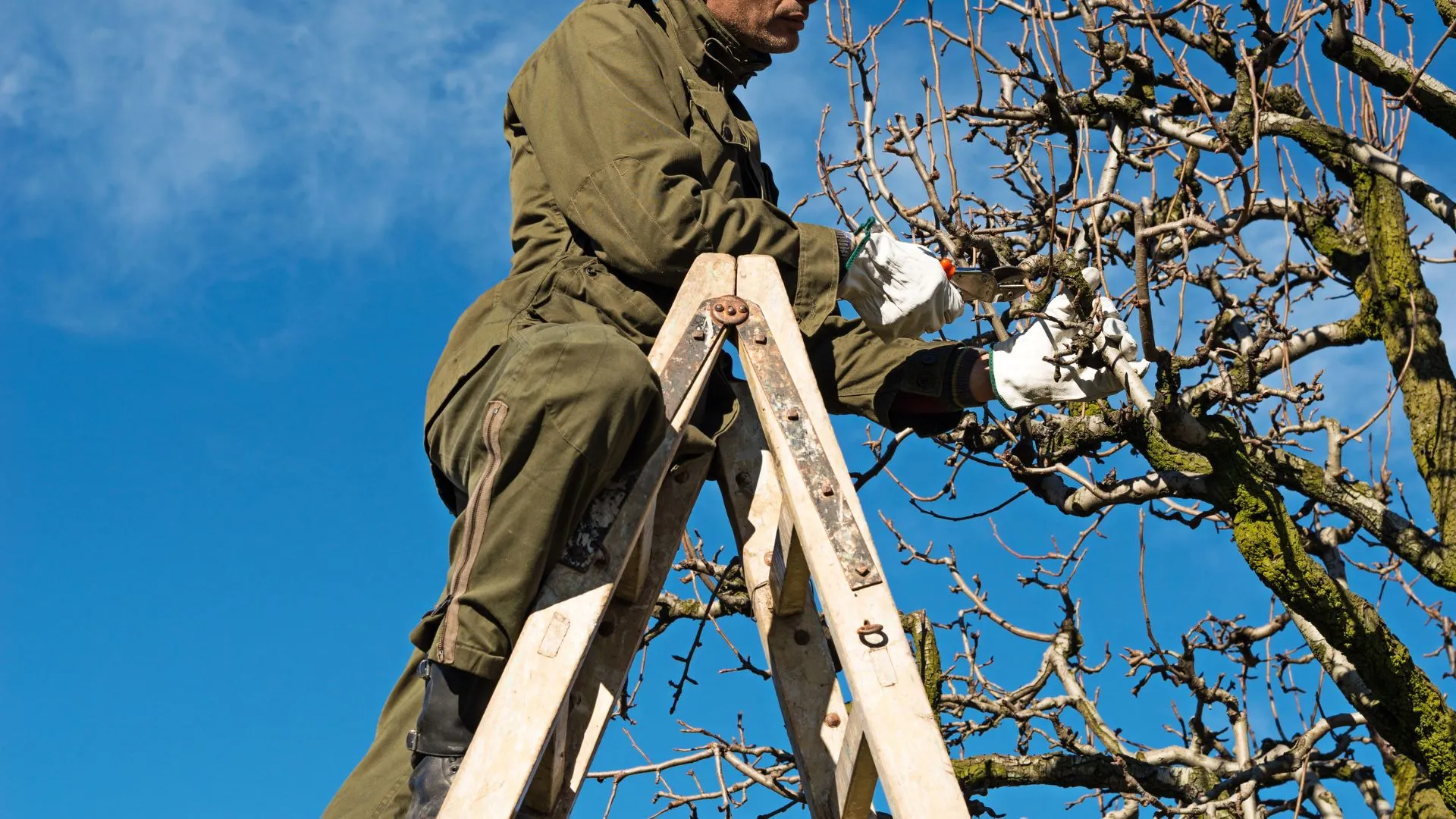
Fruit Tree Pruning in the Pacific Northwest: Apples First, Cherries in August
Fruit tree pruning west of the Cascades runs on two clocks. Apples and pears get cut in winter, before the buds open. Cherries, plums and peaches follow a different rule, because our wet weather lets canker diseases into every fresh cut. Get the timing right and the tree rewards you with fruit. Get it wrong and you can lose a limb.
This guide is for homeowners with a backyard orchard or a handful of fruit trees in the Snoqualmie Valley, on the Eastside and in south Snohomish County. Tree Ninjas is a locally owned tree crew based in Duvall. The timing and technique below come from Washington State University and Oregon State University extension publications, and we link each one so you can check us.
When is the best time to prune fruit trees west of the Cascades?
It depends on the fruit. Prune apples and pears in winter, before the buds open. Prune sweet cherries in August, after harvest, on a dry day. Plums, peaches and apricots can go in late winter during a dry spell, or in summer after harvest. The deciding factor is rain, not the calendar.
Why the split? Apples and pears are mostly threatened by fire blight, a bacterial disease that WSU says is much more prominent on the west side of the state, since warm, wet weather during bloom feeds it. Dormant-season pruning is the standard way to keep it in check. Cherries, plums and peaches face a different enemy: cankers that move into wounds during cool, wet weather. Dormant-season rain is exactly what they want.
Tree | Main pruning window | Avoid |
|---|---|---|
Apple | Winter, before bloom | Heavy cuts on young trees |
Pear | Winter, before bloom; pull water sprouts by end of June | Cutting blight out during routine pruning |
Sweet cherry | August, after harvest, in dry weather | Early dormant-season pruning |
Plum and prune | January–February in a dry spell, or summer after harvest | Cutting in the week before rain |
Peach and apricot | January–February in a dry spell, or summer after harvest | Heading cuts ahead of wet weather |
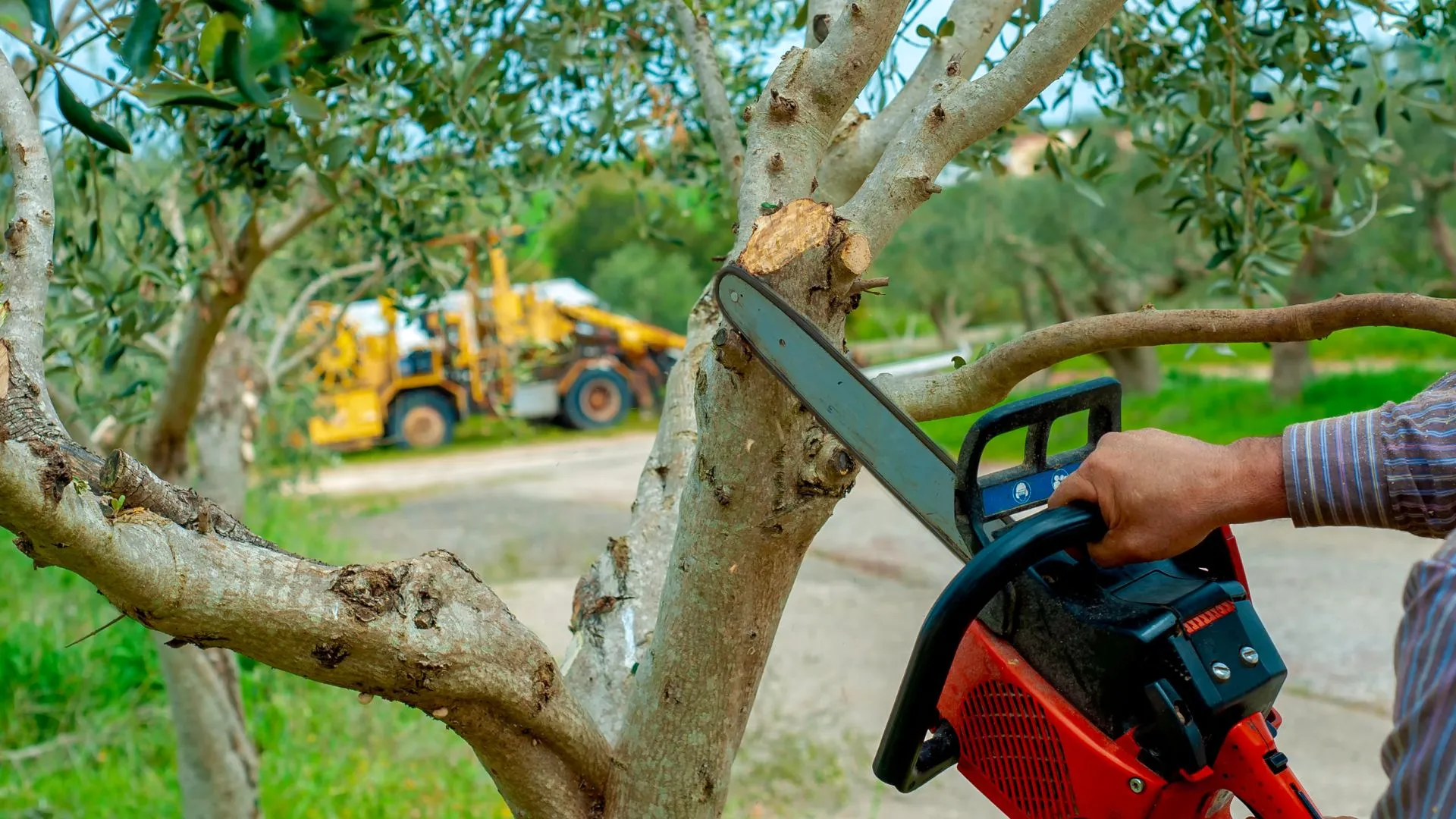
How do you prune apple and pear trees for more fruit?
Open the canopy so sun reaches the fruiting spurs, and remove whole branches instead of snipping tips. Prune young trees lightly, since heavy cuts delay the first crop. Prune mature trees harder in winter to renew weak wood. Then thin the fruit, because an overloaded tree makes small apples.
Two kinds of cut do most of the work. A thinning cut removes a branch back to where it starts. A heading cut shortens a branch and leaves the rest. WSU's western Washington fruit handbook says to favor thinning cuts and avoid heading cuts, because a headed branch sends up a thicket of new shoots that shades the tree. Its rule of thumb is short: when in doubt, thin it out.
Season matters as much as the cut. Winter pruning pushes vigor and leafy growth. Summer pruning does the opposite and slows the tree down. So if your apple throws up a forest of water sprouts every year, chopping harder in January will make it worse. Cut less, and pull the sprouts in early summer. On pears, WSU suggests pulling water sprouts by hand before the end of June.
Pears have their own trick. Oregon State's home orchard guide says to cut back most of the spur systems on Anjou and Comice, which increases fruit size.
Then there's the crop itself. Thin apples within 40 days of bloom and pears within 60. A workable spacing is about one fruit per 6 inches of branch. It feels brutal, pulling off fruit you want, but a tree that carries every apple it sets will give you small fruit and a thin bloom the following spring.
One more thing: height. Keep the top low enough that you can do all the work from a three-step ladder. If you can't reach it safely, you won't prune it, and the tree will keep climbing.
When should you prune stone fruit trees like cherry, plum and peach?
Pick a dry stretch, and favor summer after harvest. Wet-weather cuts on cherry, plum and peach let bacterial canker and silver leaf in. If you prune in winter, wait for January or February and check the forecast first. A fresh cut is most vulnerable during the week that follows it.
Bacterial canker is common in western Washington, and the Pacific Northwest plant disease handbook lists early dormant-season pruning and heading cuts among the things that set a cherry up for it. The same handbook says summer pruning after harvest, when the weather is dry, beats winter pruning. For sweet cherry, Oregon State names August.
Silver leaf is the other one to know. It's a fungus that infects cherry, plum, apricot and other stone fruit through wounds, and the trees are least susceptible from summer through fall when it's dry. The fungus fruits on dead wood. That means a brush pile of last year's prunings is a spore factory. Haul it off the property instead of stacking it by the tree.
How long should the dry window last? Extension sources disagree. One week is the minimum for heading cuts on cherry. For Cytospora canker, wounds should stay dry for two to three weeks. We'd plan for the long end, which is another reason August beats March around here.
And if a limb has a gummy, dead patch ringing most of its circumference, the cure is to cut the limb off.
When is it too late to prune fruit trees?
For heavy cuts on apples and pears, late winter is the last good window. Once leaves are out, switch to light summer work. For cherries, plums and peaches, late autumn is the wrong season entirely: bacterial canker can enter through leaf scars in late fall, and the wet months are the worst time for open wounds.
So when can you prune fruit trees in the fall? For routine work, you can't. Leave it. If you're reading this in November, your apples and pears can wait until winter, and your stone fruit can wait until a dry spell in January or February, or until next August.
The exception is damage. A limb split by a windstorm shouldn't hang there for three months. Make a clean cut just outside the branch collar, the raised ring of tissue at the base of the limb, and leave the rest of the tree alone. Trouble above head height? That's a call, not a ladder job.
How do you prune young fruit trees so they bear sooner?
Go light and go slow. At planting, take off only broken or weak shoots. Then spend about four winters building a frame: three or four scaffold limbs for an open center, or one leader with well-spread branches. Heavy pruning on a young tree delays its first crop.
Most of the early work is shape, not cutting. A nursery tree with few or no side branches gets headed at 24 to 30 inches. A peach gets headed lower, at 12 to 20 inches. Scaffold limbs should sit at least 8 inches apart on the trunk, and four evenly spaced limbs are plenty. A fifth just crowds the others.
Branch angle is the part people miss. Oregon State puts the strongest crotch angle at 45 to 60 degrees. Narrow, upright limbs hold bark inside the joint, and WSU flags angles under 30 degrees as weak. Limbs that aren't spread early tend to break away from the trunk once they carry fruit. Spacers, ties and weights fix that while the limb is still young. Our young tree training guide covers the same early-structure idea for non-fruit trees.
Is an old, neglected fruit tree worth saving?
Often, if the trunk is sound. But don't try to fix it in one season. Extension guidance spreads the renovation over two or three years. Start with dead and crossing wood, cut ladder bays, and bring the top down gradually. A tree with a split or hollow trunk needs an arborist's opinion before you invest the work.
Oregon State describes the typical neglected tree: a dense thicket of upright shoots on top and weak, drooping spurs below. The fix goes in order. Identify the main scaffold limbs. Saw out surplus large branches. Cut a bay so a ladder fits in the center. Lower the main limbs to a height you can reach, then thin the upright shoots and keep the middle open to light.
How much can come off in a year? Iowa State's extension limits it to about 4 to 5 feet of top growth, with any extra spread over a second and third year. Expect a flush of water sprouts afterward. That's normal for rejuvenation pruning, not a sign you did it wrong.
There's a reason not to ignore an old tree. Oregon State warns that untended fruit trees can become breeding sites for serious pests and disease, and that unpicked, overripe fruit draws wasps.
Should you hire a fruit tree pruning service or do it yourself?
Hire out when the work is above a three-step ladder, when a limb is too heavy to control, or when the tree sits near power lines or your roof. Disease cuts deserve a pro too. Small young trees are a fair weekend job for most homeowners.
A good fruit tree pruning service should tell you why a cut is made, not just make it. Ask what the crew will remove, what they'll leave and when the timing changes by species. If someone proposes pruning your cherry in November, treat that as a red flag.
Our own tree pruning service includes fruit tree maintenance, with full debris cleanup and haul-away. We're licensed, bonded and insured (WA State License TREENNL752Q1), and estimates are free and done in person. What we quote is what you pay. If you want to compare arborists first, the ISA keeps a public find-an-arborist directory. For orchard and ornamental work around Duvall and Carnation, start with our Duvall service page.
Not sure whether you need fruit tree trimming or true pruning? Our guide to pruning versus trimming sorts out the difference, and the best time of year to trim trees covers the non-fruiting ones.
Frequently asked questions
Do you need to seal fruit tree pruning cuts?
Mostly no. Oregon State finds no clear evidence that wound dressings reduce rot, and says a cut made just outside the branch collar needs no sealant. The one wrinkle is cherry. The Pacific Northwest disease handbook lists labeled sealants applied within 24 hours as an option against Cytospora canker. Ask before you buy one.
How do you stop pruners from spreading disease?
Dip your blades in rubbing alcohol between cuts on any tree that might be infected. For fire blight, cut 12 to 18 inches below the visible damage on wood that's two years old or older, and don't mix blight removal with routine pruning. WSU's fire blight guide says you can skip sterilizing when you're cutting fully dormant trees.
How do you keep a fruit tree small?
Start with a dwarfing rootstock if you're planting new. After that, prune moderately every year and go easy on fertilizer. Summer cuts slow growth more than winter cuts do. Most fruit trees can stay within reach of a three-step ladder if you stay on top of them.
Ready for a second set of eyes on your orchard?
Text us a photo of the tree and tell us what it is. Tree Ninjas handles fruit tree maintenance across Duvall, Carnation, Monroe, Snohomish, Sammamish and the rest of King and Snohomish counties. Call or text (206) 736-3757 for a free estimate. If you'd like the wider picture on why pruning matters, start with our Monroe pruning guide.
By Daniel Montgomery, Co-Founder & Lead Arborist, Tree Ninjas.
